


 Shkruar nga Pamfleti
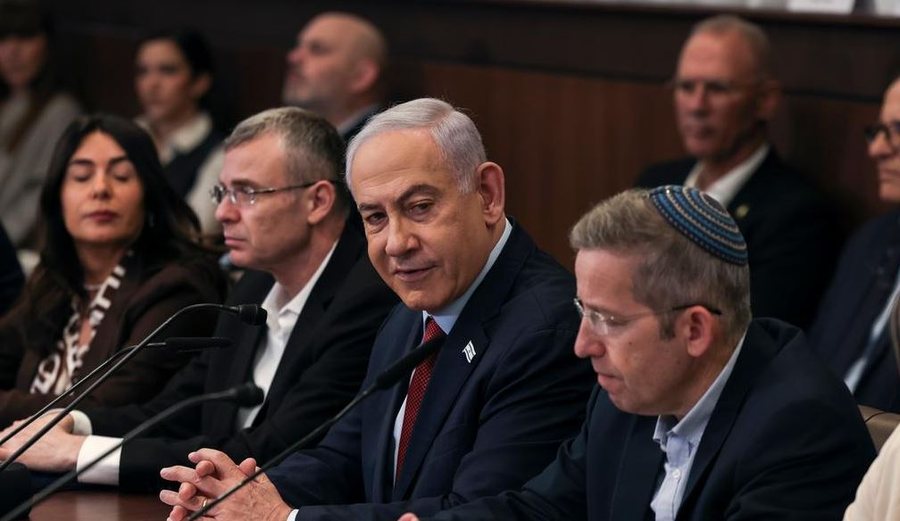
In the conflict between Israel and the Palestinians, Prime Minister Benjamin Netanyahu's approach is to preserve the status quo at all costs.
This is in contrast to his keynote speech at Bar-Ilan University, in which he agreed in principle to the creation of a Palestinian state in 2009. However, his actions show that he and his governments are more interested in maintaining the inter-Palestinian conflict between Hamas and the Palestine Liberation Organization (PLO) even at the cost of keeping Hamas alive.
Hamas is a Palestinian Islamic militant group that wants to eliminate the state of Israel. Germany, the European Union, the US and some Arab states classify it as a terrorist organization.
According to the conservative right-wing website Mida, Netanyahu told his Likud party in 2019 that they should allow Hamas to receive financial support from Qatar - a key factor in preventing a Palestinian state. "This is part of our strategy: to create a division between the Palestinians in Gaza and the West Bank," he said.
In recent years, large parts of Israeli society have been relatively indifferent to the actions of the head of government. However, since October 7, the situation has changed.
Changing the concept: different approaches are needed
One of the most used expressions since the horror of the Hamas terrorist attack on October 7 is "shinui konception", which means "conceptual change". People expect different solutions than what actors on both sides of the political spectrum have previously offered them. Netanyahu has yet to offer any solutions.
It must be said: As US Secretary of State Antony Blinken has already said, large parts of Israeli society currently do not believe there is any solution to the conflict.
Liberal and left-wing Israelis are calling for elections - they want Netanyahu replaced. The government, with its far-right members, is trying to use the war to rebuild Israeli settlements that were evacuated when Israel withdrew from the Gaza Strip in 2005.
Netanyahu himself has repeatedly said that Israel has no intention of doing so. His coalition partners, on the other hand, led by far-right National Security Minister Itamar Ben-Gvir, are roaming TV studios and calling for a so-called "voluntary exodus" of Palestinians from the Gaza Strip.
Netanyahu is not in control of his government
Ben-Gvir's rise also shows how much Netanyahu has lost control of his government. Previously, all other political parties - including Likud - clearly opposed the radical elements of the Israeli right. Then Netanyahu publicly supported Ben Gvir, the most prominent right-wing figure, to ensure his political survival. In this way, he gave political legitimacy to a man who had been legally convicted of supporting a terrorist organization.
Polls show support for Netanyahu dwindling - while Itamar Ben Gvir's far-right Otzma Yehudi party could possibly win even more seats in parliament than the six it has so far.
Whatever happens, Israeli society after October 7 will be very, very different from before it, politically and in other respects, it will have to appreciate Netanyahu's recent statements that Israel must exercise security control in the Strip. of Gaza after the end of the war.
Netanyahu's place in history will be determined by the answers to two questions: Is Hamas still a threat to Israel? And can the Israeli hostages be returned safely? Netanyahu is Israel's longest-serving prime minister, and he has often said he wants to be remembered as "Israel's defender." But if his government fails to achieve the goals he publicly espouses, his legacy will be that he started the first war the country lost./DW





Lini një Përgjigje