


 Shkruar nga Pamfleti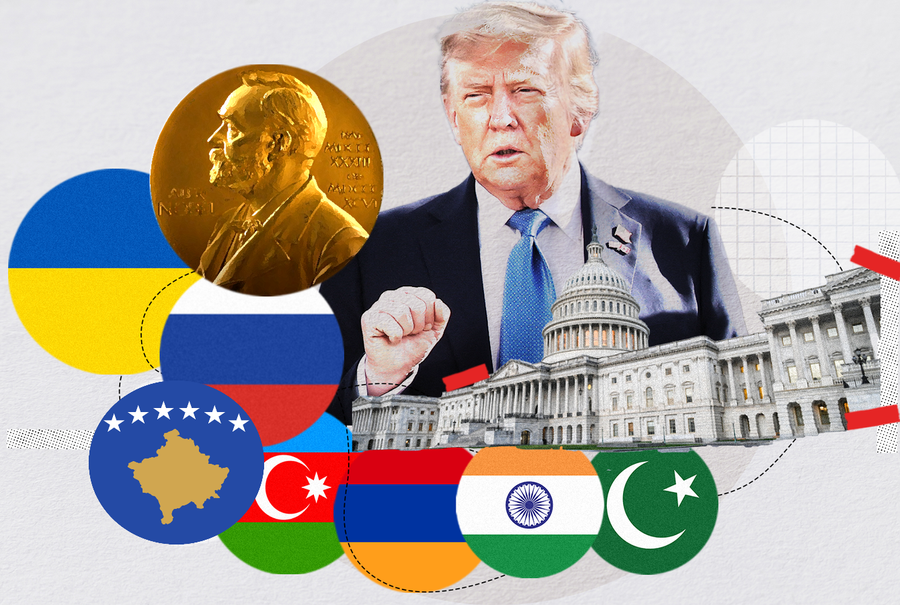
Donald Trump, in search of great glory...
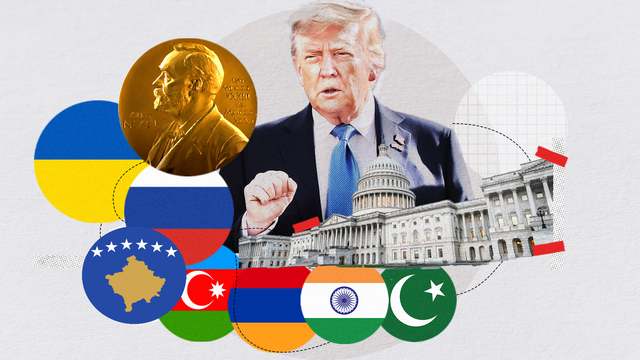
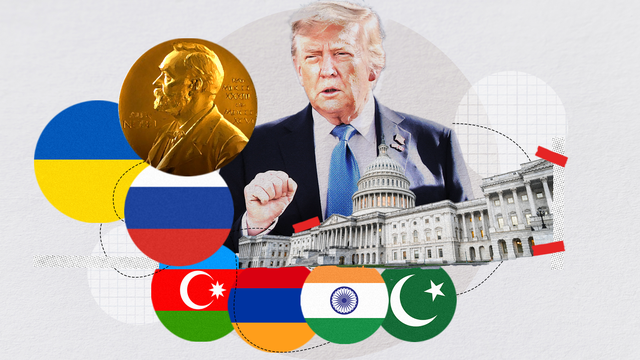
Donald Trump has brought one of his earliest ambitions back into the spotlight: the Nobel Peace Prize.
After an August 18 meeting with Ukrainian President Volodymyr Zelenskyy and European leaders in Washington, Trump declared flatly: “I’ve ended six wars.” The next day, in an interview with Fox News, he corrected himself: “Actually, seven.”
These statements are not new to him. Trump has for years tried to place himself in the ranks of Nobel Prize-winning world leaders, calling himself the "peace president" and mocking his rival Barack Obama, who received the prize only nine months into his presidency. The US president also claims to have ended seven conflicts.
A long history with Nobel
2019 – Trump said that former Japanese Prime Minister Shinzo Abe had nominated him for the Nobel Peace Prize, following his summit with Kim Jong Un over North Korea's nuclear program. "They gave it to Obama in 15 seconds, they'll never give it to me," he declared.
2020 – He complained that the Nobel Prize was awarded to Ethiopian Prime Minister Abiy Ahmed for peace with Eritrea, while, according to him, it was Trump who had avoided war.
2024 – At a pre-election rally, Trump said: "If they called me Obama, I would win the Nobel Prize in 10 seconds."
2025 – During a meeting with Netanyahu and then with Zelensky, he said: “I deserve the Nobel, but they will never give it to me.”
Trump's "seven wars"
Armenia-Azerbaijan
On August 8, 2025, a peace agreement between Yerevan and Baku on Nagorno-Karabakh was announced at the White House. The two leaders even nominated Trump for the Nobel Peace Prize. Analysts recognize this as the most tangible achievement, but emphasize that the weakening influence of Russia in the Caucasus was a decisive factor.
Thailand-Cambodia
After bloody fighting erupted in July, Trump threatened trade tariffs if the sides did not accept a ceasefire brokered by Malaysia. The fragile agreement temporarily halted the violence, but long-standing border conflicts remain unresolved.
Rwanda-Democratic Republic of the Congo
In June, Trump brought the parties to Washington after the M23 rebels returned to eastern Congo. An agreement was signed to renew the ceasefire through 2024. Trump called it “one of the most horrific wars ever stopped.”
Israel-Iran
After 12 days of fighting and US bombing of three Iranian nuclear facilities, Trump declared the war over. Netanyahu thanked the US, while Khamenei called it a “victory for Iran.” Experts stress that there was no real peace deal – just a temporary pause.
India-Pakistan
The four-day fighting in Kashmir ended on May 10, 2025. Trump claims to have brokered the deal, but India denies any American role, saying the deal was a direct one between the two sides. Pakistan, however, nominated Trump for the Nobel Peace Prize.
Egypt-Ethiopia
The crisis over the giant GERD dam on the Nile remains unresolved. Trump said the US “partially financed” the dam and was “keeping the peace” between the two countries. Addis Ababa dismissed this as a farce. There is no concrete agreement.
Serbia-Kosovo
Trump claims to have prevented a new escalation in the Balkans by threatening Serbia and Kosovo with trade isolation. Kosovo President Vjosa Osmani said she had information about such intervention. The White House referred to the 2020 economic agreement as the basis for the claims.
What do the experts say?
Experts warn that Trump often confuses conflict management with conflict resolution. Many of the agreements he mentions are merely temporary ceasefires, not lasting peace.
Dr. Samir Puri of Chatham House says: “Trump uses economic pressure or threats to force the parties to stop the war, but does not address its causes.”
Dr. Theo Zenou of the Henry Jackson Society adds: “There is absurdity in his claims, but there are also seeds of truth among them – he intervenes without bringing the US military directly in, which is not to be underestimated.”
Abraham Accords and the big test: Ukraine
Despite his statements, Trump's greatest diplomatic achievement remains the Abraham Accords (2020), which normalized relations between several Arab states and Israel – a historic moment that still stands, even after the current war in Gaza. But the absence of Saudi Arabia from this agreement remains his main challenge.
Today, the world's focus is on Ukraine. If Trump manages to bring peace there, it could mark the turning point that would pave the way for a Nobel. But as analysts warn, the world will judge him not by his words, but by his concrete results.
Donald Trump is using the Nobel as a political tool and as part of his campaign for his historical legacy. But are “seven wars closed” evidence of a peace-loving president, or just exaggerated rhetoric? That remains unclear.
One thing is certain: Trump has turned the Nobel Prize into the next arena of his political battle, making it not only a matter of personal prestige, but also an element of his permanent campaign for power and glory. /Adapted from "Pamphlet" by "Sky News"





Lini një Përgjigje