


 Shkruar nga Pamfleti
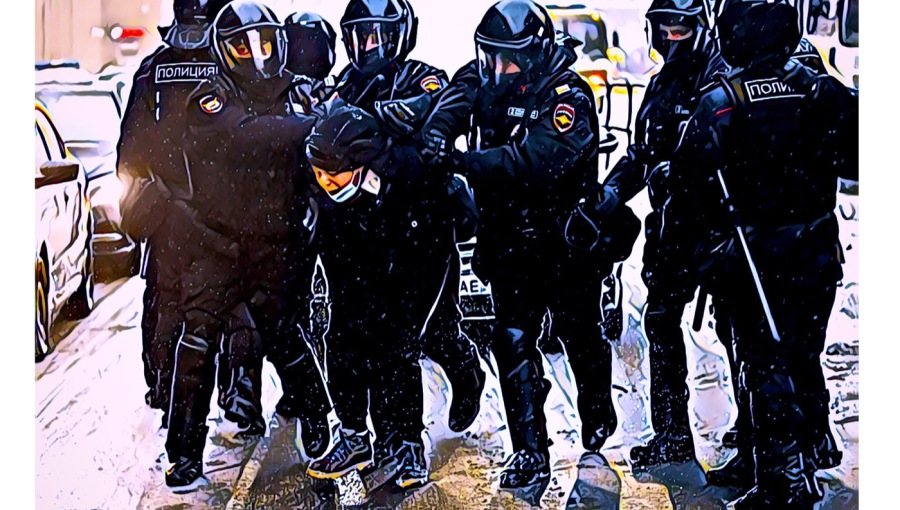
In Romania and Serbia, protests have evolved into broad-based anti-government movements, reflecting deep-rooted political discontent.
A wave of protests in several developing countries (EMs) is reviving concerns over economic stability and long-term financial health.
From Turkey to Indonesia, social unrest has flared due to political repression, economic grievances and policy changes, with the potential to reshape investor sentiment across the developing world.
Behind these problems there is a fundamental shift that is altering expectations, and the liberal rules-based international order is slowly giving way to a multipolar world order of new transactions that is the result of years of polycrisis, but now catalyzed by the arrival of Donald Trump in the White House.
Unrest in Turkey is currently making headlines as the country plunges into its worst political crisis since the 2016 coup attempt. Mass demonstrations have erupted following the arrest of a leading opposition figure, Istanbul Mayor Ekrem Imamoglu.
"There is clearly a risk that prolonged protests will increase the risk premium and put further pressure on the lira," said Shilan Shah, deputy chief emerging markets economist at Capital Economics.
Turkey's Finance Minister Mehmet Simsek told investors on March 25 that the economic impact of market volatility caused by a sell-off of Turkish assets following the arrest of the Istanbul mayor would be "limited and temporary," but investors are still not convinced. Turkish President Recep Tayyip Erdogan has been criticized as a "dictator" and what little ability he had left as leader of a "democratic" country has been shattered.
In this context, although Turkey’s financial situation has improved recently, years of mismanagement could return as the economy comes under renewed pressure. Shah notes that “weak balance sheets are still a bigger problem in Turkey and Romania than in Indonesia.”
Elsewhere, Hungary has also experienced ongoing mass protests over the government's ban on LGBTQ+ Pride events, while in Indonesia, demonstrations against President Prabowo's policies have intensified.
In Romania and Serbia, protests have evolved into broad-based anti-government movements, reflecting deep-rooted political discontent.
In Serbia in particular, Serbian President Aleksandar Vučić has failed to curb the largest demonstrations the country has ever seen, sparked by a tragedy that killed 15 people after a concrete slab collapsed at a railway station in Novi Sad.
Romania's balance sheet issues, in particular, pose a significant challenge, according to Capital Economics. "The budget deficit last year reached more than 8% of GDP, meaning there is little room for policy easing," warns Shah.
"But also, efforts to curb it could fuel a broader increase in support for extreme parties," he said.
According to Shah, there are four key factors that determine whether protests leave a lasting economic impact: their duration and intensity, the strength of national balance sheets, disruption in critical economic sectors, and the potential for policy change. “A one-day peaceful protest will be less damaging than a 90-day violent protest,” he notes, noting that the degree of disruption is often more important than the sheer number of protesters.
One of the most sensitive areas is tourism, which remains highly vulnerable to perceptions of instability. The 2019 Hong Kong protests, for example, pushed the economy into recession as collapsing tourism revenues and retail spending took their toll.
In a similar vein, the Arab Spring protests that erupted in Egypt and Tunisia were followed by severe balance of payments crises fueled by falling tourist arrivals. Egypt's GDP growth rate fell from 5.1% in 2010 to 1.8% in 2011, while Tunisia experienced a similar contraction from 3.1% to -1.9%.
Protests affecting manufacturing and transportation can also do untold damage. Shah recalls how “truck drivers’ strikes in Brazil in 2018 caused a sharp, albeit temporary, drop in activity and a spike in inflation.” Brazil’s GDP growth in 2018 was 1.1%, down from 1.3% in 2017, as the strike paralyzed transportation and disrupted supply chains across the country.
Disruptions in key industries are often the cause of economic distress, especially in economies that rely on specific sectors to drive growth.
But the most crucial factor, Shah believes, is whether the unrest results in permanent shifts in policies or perceptions of political risk.
"The protests in Chile in late 2019 began over a subway fare increase, but turned into a much broader debate about the relationship between the state and the public," he notes.
While none of the current protests in the countries where they are taking place have yet caused drastic policy changes, the potential for significant economic consequences remains.
“The likelihood of a fundamental policy shift is greatest in Serbia and Romania, given that protests there have been ongoing for several months,” Shah says. The protests in Romania, he adds, could even signal a broader turn toward populism in the upcoming rescheduled presidential elections.
In contrast, Indonesia appears to be on stronger ground. Its balance sheet is healthier and the scale of protests remains relatively small given the country's large population.
The broader lesson from these protests is clear: emerging markets with weak economic fundamentals are more likely to see social unrest, which then translates into economic instability. As investors grapple with heightened geopolitical uncertainty, the specter of prolonged protests in fragile economies is likely to weigh heavily on their decision-making. / Adapted from Intellnews Pamphlet /





Lini një Përgjigje