


 Shkruar nga Pamfleti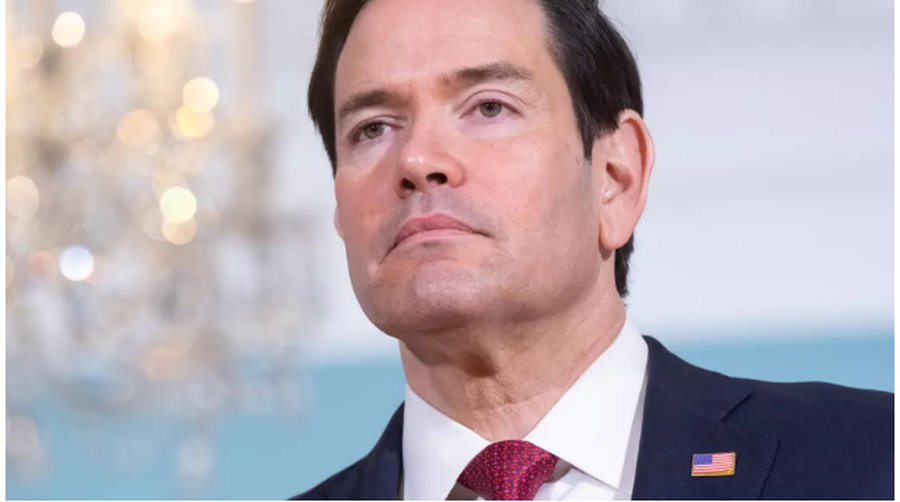
Representatives of the two countries are meeting for the first time in decades in a direct format, with American mediation, while Hezbollah warns that it will not recognize any agreement that may emerge from these contacts...
Lebanese and Israeli envoys meet in Washington on Tuesday for the first face-to-face talks between representatives of the two countries in decades, mediated by US Secretary of State Marco Rubio. The Lebanese militant group Hezbollah has warned that it will not respect any agreement that may emerge from the talks, calling them “futile.”
Representatives from Lebanon and Israel are expected to meet in Washington on Tuesday for US-brokered talks to end the war in Lebanon, but the chances of an agreement appear slim.
Naim Qassem, the leader of pro-Iranian Hezbollah, which is facing off against Israel, called for the talks to be canceled before they even began, calling them “futile.” Lebanon was drawn into the Iran-linked regional war on March 2 after Hezbollah attacked Israel.
Since then, Israeli attacks, including a particularly heavy strike on Beirut on April 8, have killed more than 2,000 people and displaced over a million others, despite international calls for a ceasefire. Meanwhile, Israeli ground forces have entered southern Lebanon.
The meeting, mediated by Secretary of State Marco Rubio, will include the ambassadors of Israel and Lebanon in Washington, as well as the US ambassador in Beirut.
"The governments of Israel and Lebanon are engaging in open, direct, and high-level diplomatic talks, the first of their kind since 1993, facilitated by the United States," a State Department official said, speaking on condition of anonymity.
"This conversation will set the framework for continued dialogue on how to ensure the long-term security of Israel's northern border and to support the determination of the Lebanese government to regain full sovereignty over its territory," he added.
However, the two sides remain deeply at odds.
"This dialogue between Israel and Lebanon aims to disarm the terrorist organization Hezbollah, remove it from Lebanon, and establish peaceful relations between our two countries," Israeli government spokeswoman Shosh Bedrosian said on Monday.
"We will not discuss a ceasefire with Hezbollah, which continues to carry out uncontrolled attacks on Israel and our civilians," she added.
"Expectations are low"
Israeli Prime Minister Benjamin Netanyahu declared on Saturday that "we want the dismantling of Hezbollah's weapons and we want a real peace agreement that will last for generations."
On the Lebanese side, President Joseph Aoun said on Monday that he hopes the talks in Washington will bring "an agreement, for a ceasefire in Lebanon, with the aim of starting direct negotiations between Lebanon and Israel."
Meanwhile, American diplomats have faced a difficult situation in recent days regarding the conflict in Lebanon, fearing that it could hinder talks with Iran, which failed to make progress on Sunday in Pakistan.
President Donald Trump's administration insists on disarming Hezbollah, but also on respecting Lebanon's territorial integrity and sovereignty, while simultaneously defending Israel's rights, positions that seem difficult to reconcile.
It would take "a lot of imagination and optimism to think" that issues between Israel and Lebanon could be resolved on Tuesday in Washington, said a former Israeli defense official, speaking on condition of anonymity, adding that "expectations are low."
"It will be very difficult to reach any agreement and Israel will create a buffer zone in the north very similar to what we have in Gaza," he added.
According to a poll by the Israel Democracy Institute, the results of which were released on Monday, 80 percent of Jewish Israelis "think that Israel should continue fighting in Lebanon against Hezbollah, regardless of developments in relation to Iran, even if this brings clashes with the American administration."
Hezbollah entered the Middle East war on March 2 to avenge the death of Iranian Supreme Leader Ali Khamenei, who was reportedly killed on the first day of the Israeli-American offensive on February 28.
Israel responded with widespread and deadly airstrikes across Lebanon, as well as a ground offensive in the south of the country.







Lini një Përgjigje