


 Shkruar nga Pamfleti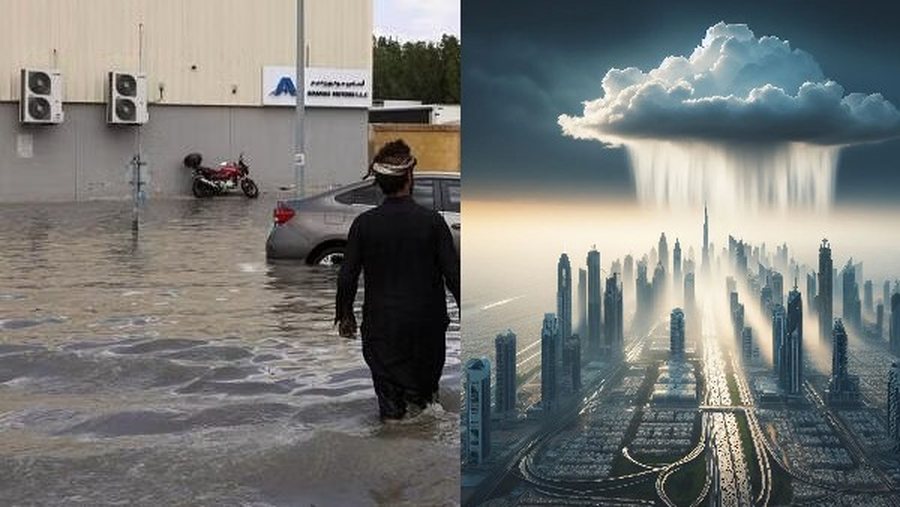
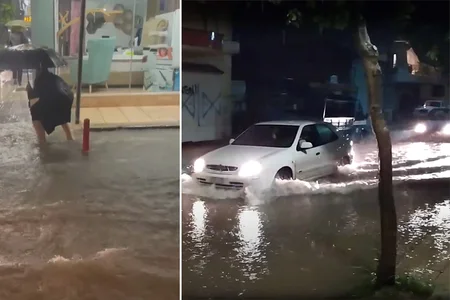
If Dubai is the best city on Instagram, this week the filters have been removed. For about 48 hours, the skies of the United Arab Emirates have darkened and torrential storms have washed away Dubai's picture-perfect image.
In a single day, almost twice the annual average rain fell in the United Arab Emirates, leaving much of the city's outdoor infrastructure under water.
Jordache Ruffelsi, a Briton living in Dubai, said that experiencing the storms was "like living through the apocalypse". From his apartment, he has seen furniture blown off balconies by strong winds and Rolls Royce cars abandoned on streets now turned into rivers.
"We live on high floors and we could hardly see anything beyond the balcony... It seemed like midnight in the middle of the afternoon," he said. The United Arab Emirates was hit by four major storms one after the other. Each reached nearly 15 kilometers into the atmosphere, according to BBC Weather forecasters.
Heavy rainfall over the desert landscape of the Gulf is not the first. Residents had been warned through the public alarm system - but Dubai's weather infrastructure was unprepared for the heaviest rain since 1949.
In many ways, few modern cities could handle the amount of flooding that has hit Dubai this week.
The city's main attractions – most already closed to protect them from the heat – have struggled to cope with the sudden influx of water.
Caroline Seuberti, 29, from the United Kingdom, was with her husband at a shopping center when the storm hit.
"The center was flooded, the ceiling was falling", she confessed. "We were told to leave, but the subway was out of order and the taxis weren't working. We were trapped and had to spend the night in the lobby of the center."
Matt Weiri, a British teacher who has lived in Dubai for 10 years, said "people were aware" that a storm was coming, but its strength "left neighborhoods under water".
Although next week is forecast to be warmer, the possibility of storms has not been ruled out - and with roads and other infrastructure still damaged, Dubai's leaders are counting the costs.
The President of the Emirates, Mohammed bin Nahyani, has issued a public order for "the authorities to work quickly to study the condition of the infrastructure throughout the country and to calculate the damage caused".
Government employees have been told to work from home until the end of the week and private firms have been encouraged to do the same. Schools across the country are closed.
Si pasojë e përmbytjeve dhe stuhive në Emirate e ka humbur jetën një burrë i moshuar i cili ka vdekur kur makina e tij ishte hedhur nga era në Ras Al Khaimah, sipas mediave lokale.
Disa nga problemet më të mëdha i ka përjetuar Aeroporti Ndërkombëtar i Dubait – i dyti më i ngarkuari në botë – ku gati 90 milionë njerëz priten të kalojnë në vitin 2024. Është qendër e rëndësishme për udhëtimet për në Gji dhe fluturimet lidhëse për në vendet më të largëta – por dëshmitarët thonë se është përmbytur.
Përmbytja e rrugëve lidhëse e ka bërë të pamundur që aeroplanët të arrinin pistën dhe pasagjerët mbetën të bllokuar në terminal.
Linja ajrore e vendit, “Emirates”, është detyruar ta ndalojë pranimin e pasagjerëve. Edhe pse tashmë ka rihapur ‘check-inin’ e pasagjerëve, ajo thotë se shumë pasagjerë “janë duke pritur akoma për të udhëtuar”.
Jo Reilly është në mesin e udhëtarëve që ka mbetur në pritje. 41-vjeçarja ishte duke fluturuar për në Mbretërinë e Bashkuar nga Vietnami përmes Dubait me vajzat e saj Holly, 13-vjeçare dhe Ruby 9-vjeçare, kur ka goditur stuhia.
Pas dy orëve e gjysmë mbi Gji duke pritur për një mundësi për të aterruar, ata më në fund janë ulur në një tjetër aeroport të Dubait, para se t’u thoshin në mes të natës të hipnin në një autobus për t’u nisur drejt destinacionit të tyre të parë.
Kur më në fund kanë arritur në Aeroportin Ndërkombëtar të Dubait, situata nuk ishte më e mirë. “Ne pyetëm se a mund të marrim pak ujë ose ushqim? Asgjë. Nuk kishte asgjë atje. Njerëzit janë në gjendje vërtetë të keqe”, ka thënë ajo. “Na kanë thënë se dita më e hershme që mund të shkojmë në shtëpi është mbrëmja e së dielës dhe me sa duket jemi mjaft me fat që e kemi atë opsion. Emiratet janë duke thënë se nuk ka dhoma hoteli kështu që i kam pyetur, ‘Oh, të vazhdojmë të flemë në tokë atëherë?’ Dhe ata më kanë thënë, ‘Po, rehatohuni atje’ duke treguar me gisht kah qoshja e zonës së check-init”.
Jonathan Finchetti, gjithashtu nga Mbretëria e Bashkuar, e ka përshkruar situatën “apokaliptike” në aeroport, ku njerëzit kanë arritur aty vetëm për të parë që fluturimi i tyre është anuluar.
Radhët në tavolinat e biletave ishin “kaos i vërtetë”, ka thënë ai, duke shtuar se “ka pasur qindra njerëz që nxitonin drejt saj, si të egërsuar”. “Papritur kishte gra që bërtisnin duke thënë se nuk mund të merrnin frymë”, ka shtuar ai.
Emiratet kanë thënë se e kanë vlerësuar “se sa e vështirë ishte për të gjithë të prekurit” dhe se oraret do të ktheheshin në normalitet. “Sa më shumë që ka qenë e mundur, ne kemi siguruar ndihma të nevojshme dhe rehati për mysafirët e prekur, por për shkak të bllokimit të rrugëve, na është dashur kohë më e gjatë se sa që kemi pasur dëshirë”, thuhet në njoftimin e Aeroportit Ndërkombëtar të Dubait.
Sa i përket asaj se si janë gjërat tani në qytet, Jordache Ruffelsi ka thënë se gjërat “praktikisht janë kthyer në normalitet” pas veprimit të shpejtë nga autoritetet. “Ka një ndjenjë uniteti dhe bashkimi në kohëra si kjo”, ka shtuar ai.
Dubai has more than 3.5 million inhabitants. In the 70s, there were only 100,000, but it experienced growth thanks to oil development.
There is also an annual influx of 14 million tourists, including influencers and celebrities seeking luxury hotels and glamorous accommodations.
Its modern image flows alongside strong regulatory and political control of media content where even foreign publications can be censored before distribution.
Matthew Hedges is an academic researcher who has written a book about the Emirates. In 2018, he was arrested and tortured after being wrongly accused of espionage. He has said that he has spoken with residents who are upset with the lack of preparation for these floods and who know that extreme weather is a long-term problem facing the country.
“They have absolutely no way to legitimately or safely voice their concerns. If they do, they will be punished and oppressed", he said. He was also concerned about poor migrant workers in the Emirates - who make up the majority of the population and are likely to be hit hardest by these climate events.




Lini një Përgjigje