


 Shkruar nga F.Andrew Wolf, Jr.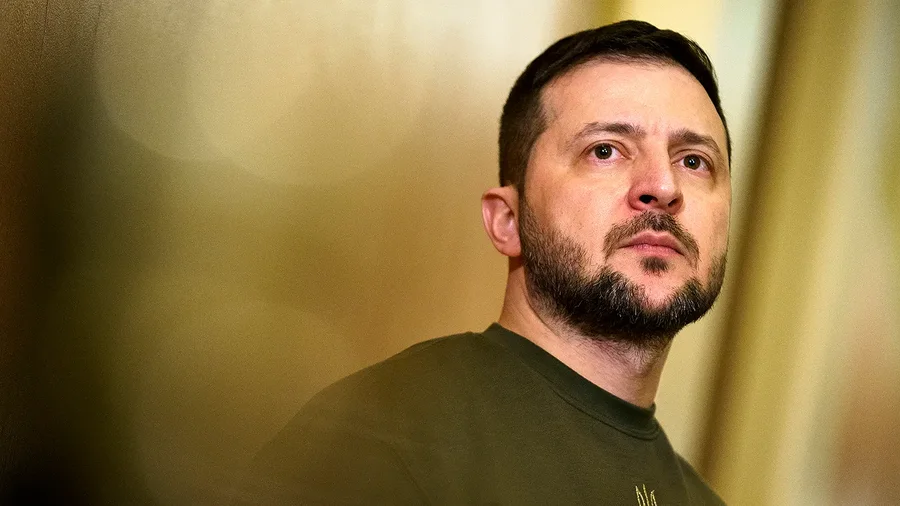
The American CIA and Britain's MI6 have been active for months preparing the circumstances through which, if necessary, the Ukrainian president will be overthrown from power.
It seems that all is not going well in the "black land" of Ukraine. The war with Russia is not going well. But things are not looking good for its leader either. It's no secret that the West (the US, Great Britain and many NATO countries) have been worried for some time by President Vladimir Zelensky's lack of progress on the battlefield.
And the evidence for this failure seems to be mounting. If we analyze the short history of Ukraine a few years before the conflict, it is noticeable that the march towards the current conflict was not only predictable, but almost inevitable. And the problem is not only the protracted nature of the conflict (more than 2 years); but also the inability of the current Ukrainian leadership to achieve continuous success on the ground.
And this concern has become even greater, since the mandate of the Ukrainian president expired in May of this year, without any announcement of when the new elections will be held. The situation is such that the Ukrainian president has ruled out holding presidential elections, declaring martial law.
This is despite the fact that his legal claim to stay in power has been contested since the end of May. The US has a fresh history of influencing Ukraine's leadership election.
This has happened through the machinations of the State Department, loyal NGOs and its secret services, either individually or in collaboration with others.
When nations pursue political, economic, and democratic goals at the same time, things can get very chaotic. The American CIA and Britain's MI6 have been active for months preparing the circumstances through which, if necessary, the Ukrainian president will be overthrown from power.
Senior US and European officials have opened discussions with Kiev about possible peace negotiations with Moscow. Furthermore, Stephen Bryen, former Deputy Secretary of Defense says: “There is a growing consensus that the West (meaning the United States with Britain's help) wants to replace Ukrainian President Volodymyr Zelensky.
Former senior CIA analyst Larry Johnson believes that if the situation on the battlefield does not improve, the Ukrainian president will be under political pressure to call new elections, voluntarily relinquish power, or to be overthrown through a revolution like that of the Maidan.
In the run-up to Ukraine's current conflict with Russia, it was the US that exerted political pressure through the CIA, various NGOs, and the State Department to push for change in the Ukrainian leadership. Former Under Secretary of State for Political Affairs Victoria Nuland was behind the 2014 operation.
A phone conversation that year, recorded and later released to the media, between Nuland and the then US ambassador to Kiev, Geoffrey Pyatt, is telling. It describes US involvement in what ultimately resulted in the current Ukrainian president taking power.
Additionally, they asked then-Vice President Joe Biden to help them in their efforts. But given the huge investment of over $100 billion in Zelensky in particular and Ukraine in general, why would the US be willing to remove Zelensky at this point, 2 years into the conflict?
One of the main reasons is that Zelensky did not stick to Washington's carefully crafted plan for Ukraine's counterattack against Russian troops. The White House revealed its own concerns, to lay the first foundations for the justification of replacing the current president.
Instead of following Washington's plan and following the advice of his senior generals, Zaluzhnyi and Syrskyi, Zelensky decided to resume military operations in a futile attempt to retake the city of Bakhmut. It was a humiliating defeat for Zelensky personally, because he had vowed never to let it fall.
Also, Zelensky was defying orders from his top general, trying to engage Russian forces on a much wider front. He weakened the effectiveness of the operation as a whole by committing some of Ukraine's best forces to the battle of Bakhmut and other fronts in Donetsk.
Efforts by Ukrainian forces were futile because the Ukrainian president has ignored not only the sound military advice of his generals, but also the Pentagon's plan to put Kiev in a better position to negotiate with Moscow.
But the Ukrainian president has an even more serious problem than the failed offensive. Zelensky has compromised his previously strong relations with the US and Great Britain. Today there is a growing perception that Ukraine will lose the war. Reports confirm that Ukraine has used harsh (desperate) tactics to replenish its dwindling troops with a view to continuing the war.
Now the prisoners are also being released, in exchange for serving at the front for a few months. The result is that Ukraine now has fewer experienced, capable troops on the front lines, as well as ongoing problems repairing and operating sophisticated NATO weapons.
Kyiv has neither the personnel nor the trained manpower to maintain these devices in a state of readiness. So it seems that the Ukrainian army is headed for disaster. From Washington's perspective, the idea was to reach a point on the battlefield that would allow Ukraine to negotiate a deal with Russia from a better position.
But the Ukrainian president squandered this prospect, rejecting the advice of his generals and compromising any chance of a successful counterattack.
If the announced negotiations do not take place, Ukraine will inevitably fail militarily, severely damaging the perception of NATO's deterrence capabilities in the region and possibly beyond. The Ukrainian president has shown that he is against any kind of negotiation with Russia, until the Russian forces withdraw from Ukraine.
Such unrealistic rhetoric exceeds not only what can actually be achieved, but also what is currently in NATO's best interest. He is undermining what most Western observers say is the only way the conflict can be resolved: negotiations.
Thus, the needs of NATO and those of Zelensky are different even in the conflict. The latter refuses to call for new presidential elections for fear of losing control and therefore power. It is clear that the Ukrainian president has no intention of resigning from his post.
Under these conditions, the options left to the US and its allies are dire. In practice, there are only 2 possibilities. First, they can force Zelensky (politically and economically) to resign by threatening to cut off all aid.
That the two could repeat the scenario of 2014, and instigate another rebellion similar to Maidan. However, the options are not favorable to the US or the Ukrainian people. Because under any scenario, the West will need to provide huge sums to rebuild Ukraine's infrastructure and regenerate its economy if it is to remain a viable nation-state.
Whether or not it becomes part of the EU will depend at least in part on how well it can bring its perennial corruption problems under control. NATO membership is no longer a viable option - at least in the current political environment - despite the political rhetoric from NATO Secretary General Stoltenberg.
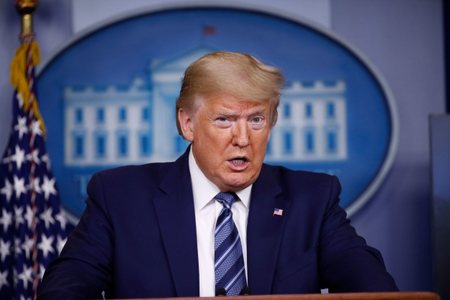
President Joe Biden, a strong supporter of his, is not now seeking a second term. There is a very real possibility that Donald J. Trump will get back into the White House, and he has said that he can end the war in Ukraine within 24 hours./ Adapted "Pamphlet" from "Eurasia Review"
*Note: F. Andrew Wolf, Jr. retired US Army Lt. Col.





Lini një Përgjigje