


 Shkruar nga Dominique Moïsi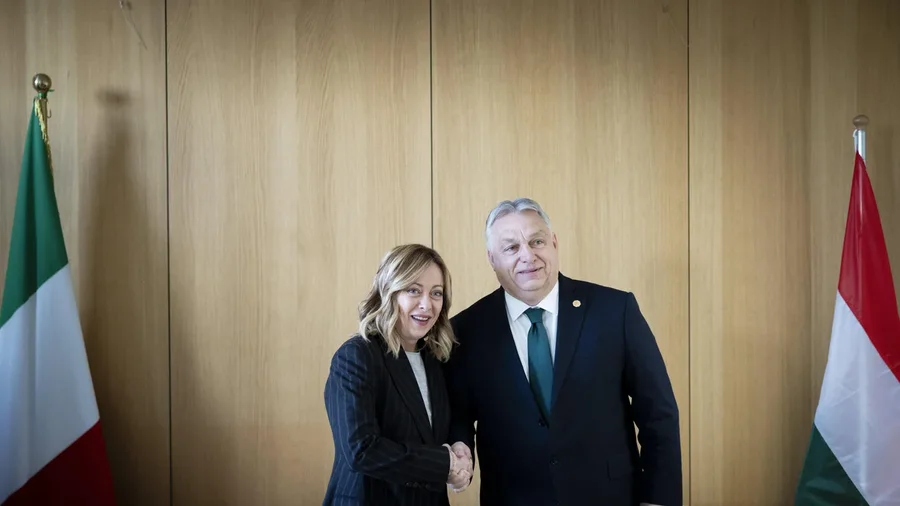
In one camp are those who are most afraid of migrants and in general of migratory phenomena, for reasons of security and identity. In the second, there are those who believe that the war in Ukraine has fundamentally transformed the situation on the European continent and who place Russia at the top of the list of threats to Europe.
The European elections, which will be held on June 6-9, do not have the same geopolitical importance for the world as the US presidential elections on November 5. The US, despite its divisions and weaknesses, remains the world's leading military and economic power.
But at a time of rising populism and with war returning to Europe, the European vote is no less essential. And, as in the United States, the vote will undoubtedly translate into the deep polarization of societies between reason and emotion.
"Tell me what you fear most, and I'll tell you who you are."
To get straight to the point, in Europe today, there are two camps when it comes to fear. In one camp are those who are most afraid of migrants and in general of migratory phenomena, for reasons of security and identity. In the second, there are those who believe that the war in Ukraine has fundamentally transformed the situation on the European continent and who place Russia at the top of the list of threats to Europe.
Is the main risk mainly internal or external? Is closing our borders to immigrants a priority? To deport all foreigners who are already here irregularly and who represent a threat to our security - perhaps even to our identity?
Or is the priority to come together against an external enemy who, if he were to win in Ukraine, would not stop there. And, with an ever-increasing appetite, would it become a direct threat to the European way of life and fundamental values, starting with freedom?
Credibility questions
The priority of these threats is largely - but not exclusively - a matter of geography and history. It would be tempting to say that the further away from Russia and the closer to the Mediterranean, the more migration issues prevail. And that the Russian threat is a bigger concern closer to Moscow.
This dichotomy does not take national specificities into account. In Eastern Europe, Viktor Orban's Hungary stands as a notable exception to the rule. Conversely, Giorgia Meloni's Italy, with a modernized and more "serious" extreme right, both geopolitically and economically, clearly addresses the issue of the Russian threat. This is not the case of the Rally National (RN) party in France.
At a time when Russia – sensing that time may play against it in Ukraine, with the planned arrival of US weapons – is playing more than ever with the nuclear threat, a geopolitical theme should prevail. And this should prompt the Europeans to come up with simple answers to a simple question.
How can Europe respond in the most united and credible way to Russian President Vladimir Putin's intimidation efforts? The more Russia threatens and the more the US hesitates, the more Europe must have, both qualitatively and, arguably, quantitatively.
The expansion of Europe
Exactly 20 years ago, the enlargement of the EU to include former communist countries in the east and center was a remarkable success. Today, to strengthen and unite in freedom, Europe must prepare for a new enlargement that would increase its membership from 27 to 35.
Whatever the difficulties, obstacles, delays, contradictions, hesitations, the EU continues to act with capillarity, through the attractive power it has always had on all those who dream of becoming a member. Geopolitical issues are infinitely more dramatic for Europe now than they were 20 years ago.
The fact that the EU is "mortal", as French President Emmanuel Macron rightly put it, does not make it any less attractive. Of course, Europe should not be out of touch with reality. This new expansion will be even more difficult than the one carried out 20 years ago.
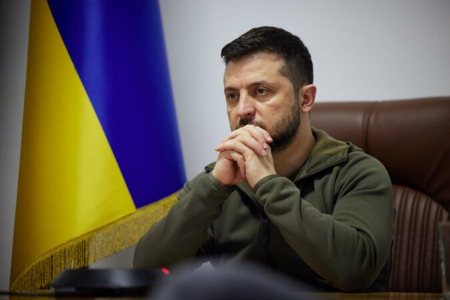
The integration of Ukraine, which represents the key and culminating point of this process, will be complicated, even if the Ukrainian economy is not so different today from the candidate countries in 2004.
But above all, the geopolitical issues are infinitely more dramatic for Europe now than they were then. In the face of Russia's ambitions, Europe's best response can be summed up in three words: determination, unity and enlargement.
Reason versus emotion
The problem is that this clear and rational vision has a lot of unanimous support. The Russian threat remains - despite Putin's considerable efforts - abstract to most Europeans, who have no desire to die for Ukraine.
This threat, although very real, does not have as strong an impact as tragic domestic news. It's only natural that news of someone perceived as a radicalized alien carrying a gun nearby is scarier than the entire Russian military arsenal.
Solidarity with Ukraine is generally shared by most Europeans. But how do we convey the idea that the best way to avoid war is not to submit to Moscow's blackmail? How can we explain to Europeans - at a time when the temptation to turn inward has never been greater - that a new "Big Bang" in terms is expansion necessary? And how do we do it quickly?
While the main threat comes from the east, it is mostly seen coming from the south.
Europe's two main powers, France and Germany, have simultaneously faced the rise of populism – although the AfD (Alternative for Germany) is far from achieving the results of the RN in France.
While the main threat comes from the east, it is mostly seen coming from the south. While it is primarily political in nature (Eastern despotism), it is primarily felt as religious (radical Islamism). I am well aware of the reality of the latest threat; the recent Belgian film Amal: A Free Spirit illustrates the devastating effects of Salafism in a high school in Brussels.
The problem is that the fear of migration works much more clearly in favor of the populist forces (parties of emotions), than the Russian threat to the parties of reason, a very dangerous change./ Adapted "Pamphlet" from "WorldCrunch"



Lini një Përgjigje