


 Shkruar nga Pamfleti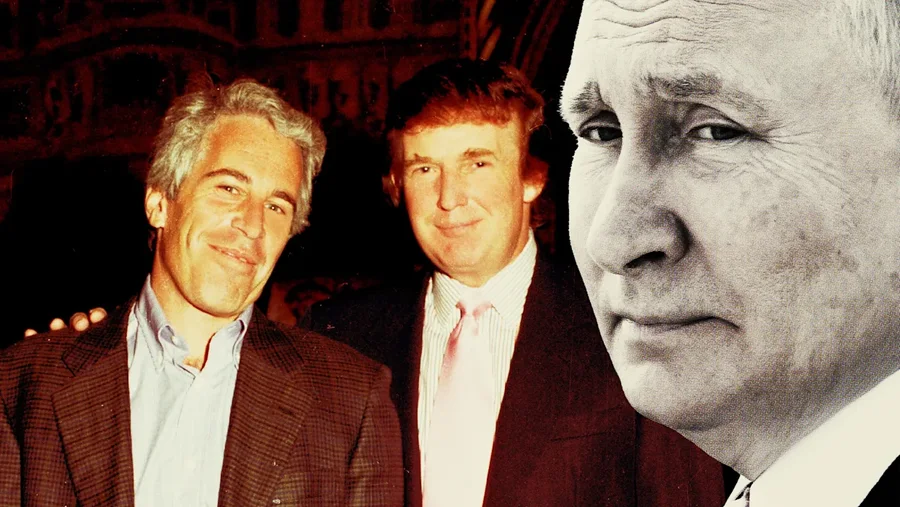
"I think you might suggest to Putin that Lavrov would be better off talking to me," Epstein wrote in a June 24, 2018 email...
Almost a month before President Donald Trump met with Russian leader Vladimir Putin in Helsinki in 2018, Jeffrey Epstein tried to convey a message to Russia's top diplomat: If you want to understand Trump, talk to me.
“ I think you could suggest to Putin that Lavrov would be better off talking to me ,” Epstein wrote in a June 24, 2018 email to Thorbjorn Jagland, a former Norwegian prime minister who led the Council of Europe at the time of the exchange. Lavrov was an apparent reference to Sergei Lavrov, Russia’s longtime foreign minister.
In the email exchange, one of hundreds released Wednesday by congressional investigators, Epstein indicated that he had previously spoken about Trump with Vitaly Churkin, Russia's powerful ambassador to the United Nations, before Churkin died in 2017.
"Churkin was brilliant. He understood Trump after our conversations. It's not complex. You have to see him to understand something, it's that simple," Epstein wrote.
The exchange was among dozens of exchanges that showcase Epstein's extraordinary network of international associates, with whom he frequently corresponded about the policy decisions of Trump's first term.
The White House did not immediately respond to a request for comment about the emails, but press secretary Caroline Leavitt said at a press conference Wednesday that the broader set of emails proves absolutely nothing other than that President Trump did nothing wrong.
"Democrats are trying to bring up the Jeffrey Epstein scam again because they will do anything to avoid how poorly they performed during the US government shutdown ," Trump later posted on Truth Social.
In the emails, Jagland said he would meet with Lavrov's assistant the next day and suggest a connection with Epstein. It is not clear whether anything came of the proposed contact.
But Epstein would later express his opinion about Trump's fateful meeting with Putin, who was criticized around the world for his apparent capitulation to the Russian dictator.
“Do the Russians have information on Trump? Today was terrible even by his standards ,” Larry Summers, former Treasury secretary in the Clinton administration and economic adviser to the Obama administration, wrote in an email to Epstein on July 16, 2018, the day of the Helsinki summit with Putin.
" My email is full of similar comments. Wow. I'm sure his point is that everything went very well. He thinks he's charmed his opponent... Admittedly, he has no idea of symbolism. He has no idea of most things ," Epstein replied the next day.
He also called the way Trump handled the summit with Putin "predictable."
Summers did not immediately respond to a request for comment. A few days later, Epstein was showing off his foreign relations in an email exchange with former Trump adviser Steve Bannon, telling him in a July 23, 2018 message that Bannon needed to be physically present in Europe to exert influence on the continent.
"If you're going to play here, you're going to have to spend time, Europe at a distance doesn't work ," Epstein wrote.
Epstein told Bannon that he could arrange one-on-one meetings with foreign leaders, but that he would have to stay for several days.
" The fear is that you will arouse their hopes and emotions and then abandon them. I think you have to be an insider, not an outsider who comes in and out quickly ," he wrote.
Epstein often relied on his foreign contacts to learn about their views on Trump as he obsessively followed the new president's actions. And at other times, he simply displayed his deep connections around the world in emails to other associates.
“Can you believe MBS sent me a tent, carpets and everything else ,” Epstein wrote to billionaire businessman Tom Pritzker in December 2016, referring to Mohammed bin Salman, who is now the Saudi crown prince.
"A tent? Hmmm…! I think that's code for 'I love you'. Or maybe code for 'go make sand'. Better check your urban dictionary of the Kingdom of Saudi Arabia," Pritzker shot back.
A year before turning to Jagland for help with the Russians, Jagland asked Epstein to visit him in Strasbourg, France, so that Epstein could help him understand more about Trump and what was happening in American society.
Among Epstein's international connections was Sultan Ahmed bin Sulayem, a businessman based in the United Arab Emirates. Sulayem asked Epstein two weeks before Trump's first inauguration whether he should "accept the invitation" extended to him by Trump associate Tom Barrack, who oversaw the event.
Epstein responded that it would be "very crowded," but it might be worth making connections in Washington or New York before and after the festivities.
“Do you think it would be possible to shake hands with Trump ?” Sulayem replied. It is not clear whether Epstein responded. / Adapted from “Pamphlet” by “Politico”



Lini një Përgjigje