


 Shkruar nga Pamfleti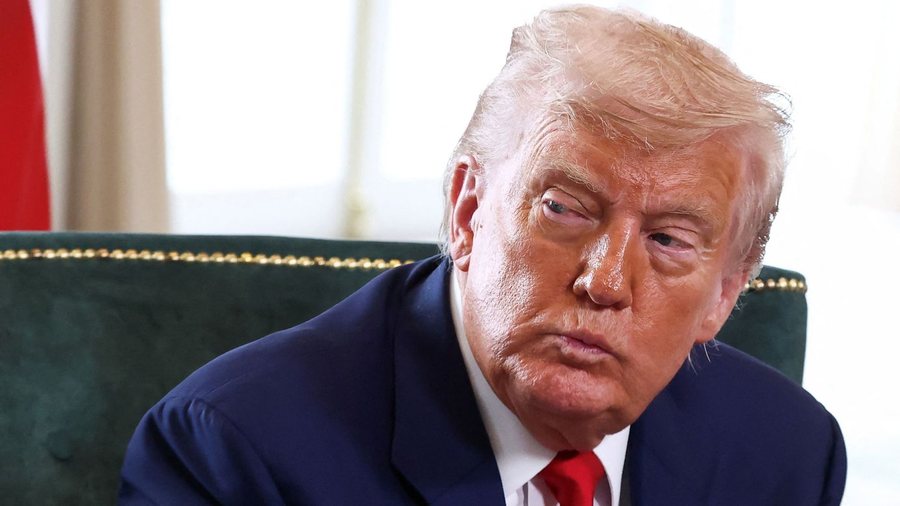
Blockades are designed to work slowly, with pressure building up over time...
It should have come as no surprise when President Trump announced on April 12 that the United States would begin a blockade of Iranian ports to force Tehran to accept a peace deal.
Trump prides himself on being unpredictable. But he follows recurring patterns, and blockades have quickly emerged as one of his favorite military tactics since returning to the White House. He has already used them against Venezuela and Cuba. Now his administration has expanded the embargo on Iran and begun seizing Iranian-linked ships on the high seas.
Iran’s control of the Strait of Hormuz was not the reason the United States went to war. Before the conflict, traffic flowed freely through the narrow waterway. But Tehran’s effective closure of the strait, since the U.S. and Israeli attacks two months ago, has become the most complicated problem of the war, and one that Trump is eager to resolve. He hopes that by imposing a blockade of his own, he can hit the Iranian economy and force the country’s leaders to reopen the strait and accept Washington’s terms.
This is unlikely to work for the same reasons that the United States is facing strategic defeat against a weaker adversary: a mismatch of interests and time horizons. While Iran has gained the advantage by prolonging and enduring what it sees as an existential war, Trump wants a quick and decisive victory, something a blockade cannot provide. A blockade may impose costs on Iran’s economy and population, but it will not deliver the swift blow the Trump administration seeks.
Blockades are designed to work slowly, with pressure building over time. At the start of the American Civil War, for example, President Abraham Lincoln ordered a blockade of Confederate ports, targeting some 3,500 miles of coastline. It had the desired effect, cutting Southern cotton exports by up to 90 percent and severely damaging the Southern economy. But it did not bring a quick end to the war: fighting continued for four years.
A similar story unfolded during the British naval blockade of Germany in World War I. Imposes almost immediately after the war began in 1914, it was intended to restrict Germany's access to essential goods such as food and medicine. The blockade caused great hardship for the German population and hampered military operations, but Germany did not immediately surrender. The war continued until the end of 1918.
The fact that blockades often fail to quickly change an adversary’s behavior is something that Mr. Trump and his advisers should know. Earlier this year, the United States began to halt oil shipments to Cuba in an attempt to force Havana to make political and economic concessions. The island is now on the brink of humanitarian collapse, but the Cuban regime has not yet given up. The blockade of Venezuela’s oil exports was also ineffective: after failing to produce results, further escalation was called for.
Iran could show even more resilience. The blockade has reduced oil revenues, but the consequences may take time to become unbearable. In the meantime, some shipments have managed to evade the blockade and can be sold at higher prices.
To prevent this, the administration has declared that the US military will pursue any ship assisting Iran, anywhere in the world, an action with unclear legal basis under international law. A blockade must be “effective,” with clear boundaries and humanitarian provisions. The US blockade does not fully meet these criteria.
Domestically, Iran has ways to cushion the effects of the blockade, including its oil reserves and land trade routes. It could withstand the pressure for months and choose to continue the war rather than accept American terms.
For Trump, this length of time is problematic. The war is unpopular in the US and is affecting the domestic and global economy. A prolonged blockade could increase oil prices and inflation, affecting domestic politics as well.
Instead of weakening Iran, the blockade could prolong the conflict and increase the costs for the US. In this confrontation, Tehran has the advantage because of its patience and willingness to withstand long-term pressure./ Adapted from “Pamphlet” by “TheNewYorkTimes”


Lini një Përgjigje