


 Shkruar nga Pamfleti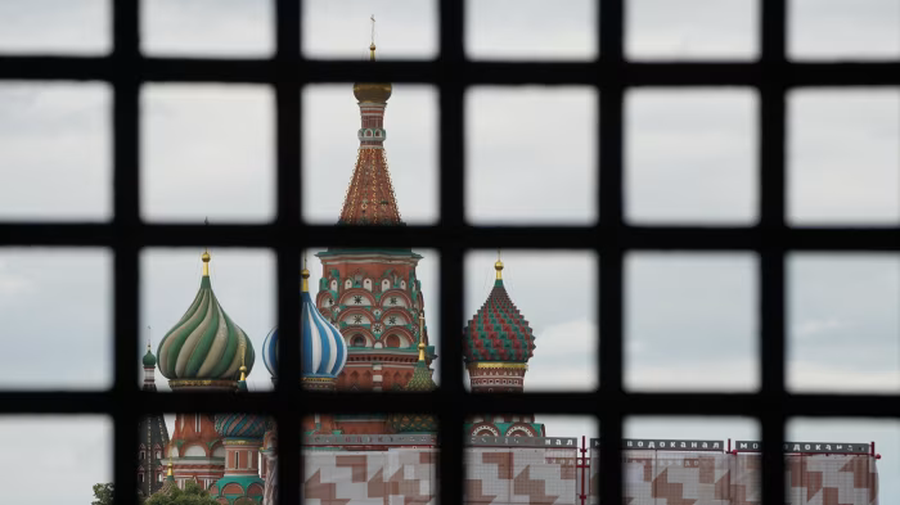
Germany lost most of its overseas possessions after World War I. But the countries that seized them could only activate their powers of confiscation by declaring war on the Kaiser.
The Western campaign of economic pressure against Russia is opening up a new area of discussion: the seizure of sovereign assets. By March 2022, the US and EU had frozen approximately $300 billion of Russian central bank reserves to retaliate against Vladimir Putin's invasion of Ukraine. Now the G7 countries are debating whether they should confiscate these assets.
In a recent discussion paper, the US government supports confiscation as a "countermeasure" for states "injured" and "particularly affected" by Russia's war. This claim invokes the international legal doctrine of retaliation: when one state causes harm to another, for example by trespassing on its territory, the injured party may take proportionate countermeasures against the wrongdoer. Reprisals are intended to force compliance with the law.
Continued Western aid to Ukraine is morally, legally and strategically urgent. However, as a justification for confiscating Russian state assets, the retaliation argument has three problems: it lacks strong effect, it is being invoked by the wrong parties, and it undermines the rules-based order that Western governments purport to protect.
The push for asset confiscation is fueled by domestic political difficulties in securing long-term financing for Kyiv. As an instrument of pressure, it is of little use. Any confiscation of reserves that have not been available for almost two years will not compel Putin to end his war now. Moreover, the current account surplus of $227 billion that Russia recorded in 2022 has replenished a significant portion of that lost in the initial freeze. Expropriation does not exert significant additional economic pressure.
Economic retaliation is the prerogative of injured states, not third countries. Warring parties may also expropriate public and private property belonging to the state and citizens of their adversaries. Ukraine exercised this right by seizing at least $880 million in Russian-owned properties and businesses within its borders in May 2022.
However, Kiev's allies are not at war with Russia. Belgium and France have frozen most Russian assets, holding 206 billion euros of securities in Brussels-based depository, Euroclear and other financial institutions. But to expropriate these, they would have to become a more direct party to the Russian-Ukrainian war. While one could argue that Eastern European states have been "specially affected" by the war's widespread economic and military effects, it is much harder to make the case for Western European countries where most of Russia's reserves are stationary.
When confiscation has played a role in the response to aggression, it has sooner or later involved open warfare between the seizers and the seized. Germany lost most of its overseas possessions after World War I. But the countries that seized them could only activate their powers of confiscation by declaring war on the Kaiser. Another precedent is the seizure of foreign Iraqi assets to punish Saddam Hussein for his invasion of Kuwait in 1990. However, this followed the UN's authorization of an international intervention to restore peace. Such examples suggest that Ukraine's allies cannot operate with double standards, claiming wartime powers while insisting they are not at war with Russia.
The ultimate issue is the destabilizing precedent that Western countries would set by seizing assets to end a war in which they are not openly involved. This would expand the coercive actions states can take on disputes to which they are not a direct party. If the interpretation proposed by the West had been in place then, Asian countries could have seized the foreign assets of any country in the US-led coalition that invaded Iraq.
Apart from these political, legal and diplomatic problems, the best argument against confiscation is that it is economically unnecessary. US and EU aid to Ukraine, both military and economic, has so far totaled more than $100 billion a year. This amount is easily sustainable for the transatlantic economy. A less risky approach would involve financing Ukraine with several billion euros of annual profits collected from Russian assets. As this would redirect revenue streams rather than affect the base, the international legal consequences would be milder.
Helping Kiev fend off Russian aggression protects national sovereignty and territorial integrity. But advocates of a rules-based order destroy their credibility if they respond to Moscow's criminality with illegal measures of their own. Such behavior will accelerate the dissolution of the line between war and peace, alienate many states outside the sanctions coalition and dismantle a building block of the world they claim to protect./ Adapted "Pamphlet" from "Financial Times"





Lini një Përgjigje