


 Shkruar nga Pamfleti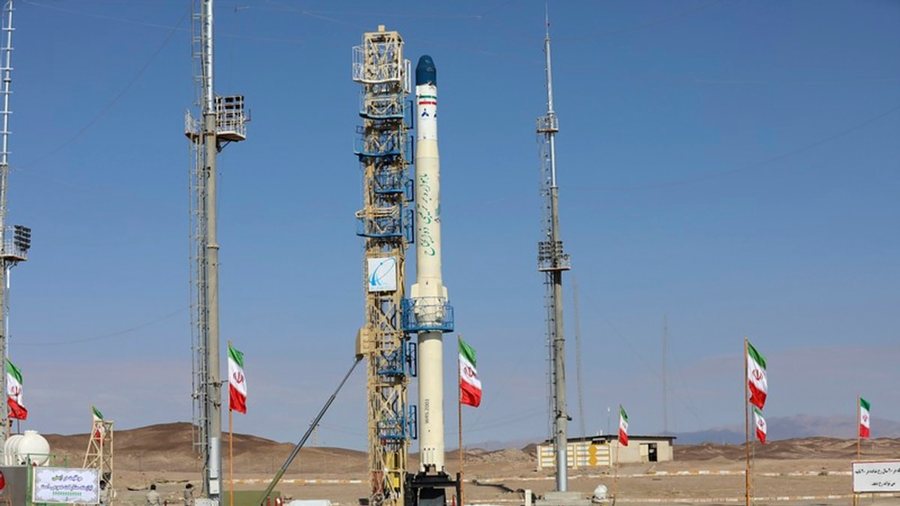
The possession of nuclear weapons has long been a taboo subject in Iran. Iran's supreme leader has declared nuclear weapons "un-Islamic".
However, in recent weeks, the number of Iranian officials who have openly suggested that the Islamic Republic may turn its nuclear program into a weapons program has increased. Tehran has long claimed that its nuclear program has civilian purposes.
The change in rhetoric coincides with increased hostilities between Tehran and Israel. Last month, Israel launched an attack on Iran in response to Tehran's unprecedented missile and drone attack on its sworn enemy.
Experts said Iran's growing threats to develop nuclear weapons were worrisome, although they noted that the officials' statements were likely aimed at deterring another attack on Iranian soil.
Eric Brewer, vice president of the Washington-based Nuclear Threat Initiative, said the Iranian threats appeared to be "conditional."
"I think that if Israel or the United States carries out an attack on Iran's nuclear program, it is very likely that Tehran will, in fact, decide to develop nuclear weapons," he said.
Truth or rhetoric?
Kamal Kharazi, former foreign minister and current adviser to Supreme Leader Ayatollah Ali Khamenei, warned on May 13 that if Israel threatens Iran, "we may review our nuclear doctrine."
"We don't want nuclear weapons and that's why the fatwa of the supreme leader exists. But if the enemy threatens you, what would you do?" he said.
Days ago, in an interview with Al-Jazeera, Kharazi said that Iran "has the capacity to produce a bomb" even though the country has not taken steps to produce such a bomb.
Before Israel attacked Iran on April 19, the commander of Iran's Islamic Revolutionary Guard Corps warned that an attack targeting Iranian nuclear facilities would prompt a reciprocal attack on Israel and could prompt Iran to rethink its stance on nuclear weapons.
Brewer said doing so would bring the threats "to a level of credibility" that Iran's nuclear program is far more advanced today than it has been in the past.
The landmark agreement between world powers and Iran in 2015 curbed Tehran's nuclear program in exchange for easing international sanctions. But then-President Donald Trump pulled the United States out of the deal and reimposed sanctions on the Islamic Republic in 2018. This prompted Tehran to accelerate uranium enrichment and limit international inspections of its nuclear facilities.
Farzan Sabet, senior researcher at the Graduate Institute in Geneva, said the failure of international efforts to revive the nuclear deal may lie behind Tehran's recent threats to build nuclear weapons.
Another reason, he said, could be "to prevent the current or future US administration from undertaking even a campaign of 'maximum pressure' economically and militarily against Iran."
The fatwa is not an obstacle
In 2010, Khamenei issued a fatwa, or religious decree, stating that Iran considers the use of nuclear weapons "haram" and that the country is not aiming to have such weapons.
The fatwa has been used as evidence by Iranian officials to argue that the Islamic Republic does not want to possess nuclear weapons.
But Brewer said Khamenei's fatwa "is not a meaningful deterrent to Iran building a nuclear bomb."
"In theory, Iran could do most of the work on nuclear weapons while the fatwa is in place, and then Khamenei could withdraw the fatwa at the last minute," he added.
Despite public statements made by Iranian officials, the Foreign Ministry has insisted that there has been no change in the country's nuclear doctrine.
Sabet said the dual message may "reflect a debate within the system in Iran, in which the balance of power or consensus until recently was not in favor of building and deploying nuclear weapons, but this position may have changed."
Some Iranian media have reported that the country has enough enriched uranium to produce ten nuclear bombs.
Brewer said U.S. estimates suggest it would take Iran about two weeks to produce enough nuclear weapons-grade uranium to build a bomb. But he said that producing a usable nuclear device could take months or even more than a year. / REL







Lini një Përgjigje