


 Shkruar nga Pamfleti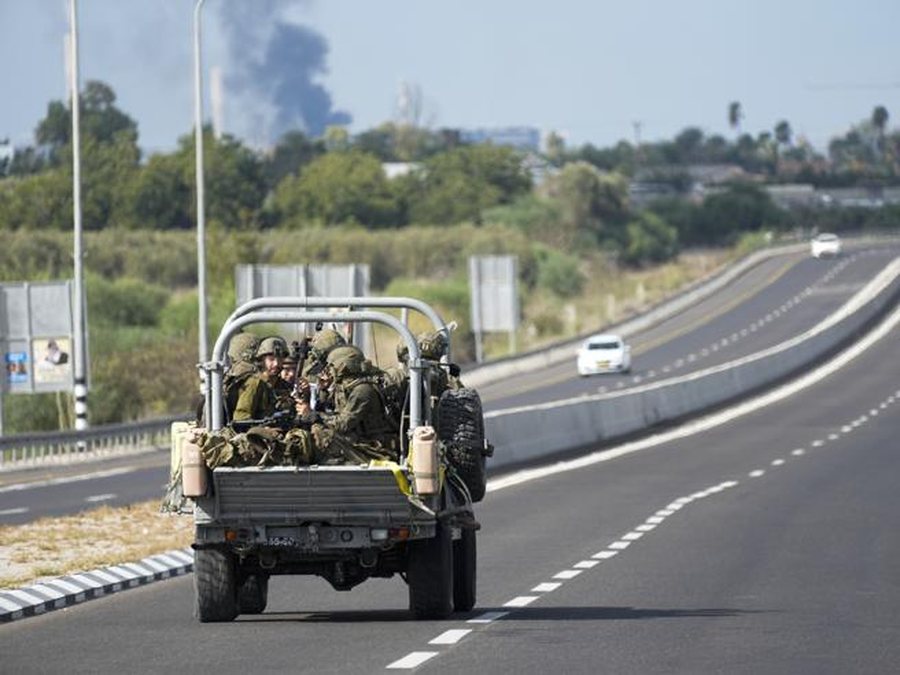
The attack began at 6:30 a.m. Saturday with a barrage of rockets on Israeli positions on the border with Gaza. It was a devastating blow.
reaction
One soldier recounted: "I had just woken up when the attack started, we didn't know what to do." Militiamen of Nuvka, an elite unit of Hamas, blinded surveillance systems by targeting them with snipers, while towers equipped with remote-controlled machine guns were destroyed by drones. There are those who say that they also resorted to electronic means, details to be confirmed.
The besieged had no precise orders and were overrun by their opponent. A few experienced elements were among the first to die, such as a platoon of the Golani Brigade. However, intelligence had sent a note detecting unusual movements during the night. But it was decided by the army and the Shin Bet (military secret service) not to raise the alert level. Moreover, the military deployment was weak. For several reasons: trust in the wall erected at the border and sensors; the idea that the enemy would not be able to carry out extensive actions or the randomness of the party.
Those who were supposed to lead the response were injured, killed or captured. Air support would have been important, but targets were needed. Positions were paralyzed, in some cases hastily abandoned.
Everything fell apart in front of the shoulders of over a thousand Mujahideen, themselves surprised by the speed of the advance. Salah al Aruri, number two in the Politburo, confirmed this: within three hours we had everything under control.
reaction
Even the general staff must not have understood. The army's first statement at 6:30 a.m. refers to the launch of rockets, and only at 7:40 a.m. does it speak of "infiltration" from the Strip. It was already too late, because the militants were spreading by then to commit themselves to the great massacre.
Video camera recordings at the entrances of the villages show the arrival of the terrorists between 7 and 7.30 in the morning, with the settlements almost undefended, possibly because security personnel had reached the shelters due to the bombardment with over 2,000 rockets.
Countermoves were sporadic: twenty members of the elite Shaldag unit were airlifted to Be'eri, but many were killed.
Tricks
Mohammed Deif's attackers say they were preparing for two years. They certainly spied and studied, developing a meticulous plan.
The reports - still sketchy - offer some clues: some had disguised themselves as Israeli soldiers and managed to outwit the guards, surprising drivers who thought they would find help instead; others were assisted by some Palestinian workers acting as guides; On the corpses of the militiamen were found maps of the weak points of Israeli tanks and photos of satellite maps with targets.
Added to this was the ability to routinely go through exercises with airplanes, explosives and boats.
Resistance
Inbar Lieberman is a woman in charge of security at Kibbutz Nir Am, just 500 meters from the Strip. When he heard the first explosions he opened the arsenal distributing the rifles to the collaborators and civilians; then, he created a perimeter. So they kept the guerrillas at bay, killing at least three of them.
A colleague of his did the same in another village, while a handful of guards tried to fight with guns the commando who parachuted from the sky into the rave party. Stories that will need to be considered when authorities must develop countermeasures to protect communities.
There must be a local shield. The army cannot be everywhere, armored shelters are not always the solution. In some cases they represented salvation, but in others they became cruel traps. When the attackers failed to gain entry, they set the houses on fire. / Corriere Della Sera




Lini një Përgjigje