


 Shkruar nga Yuriy Matsarsky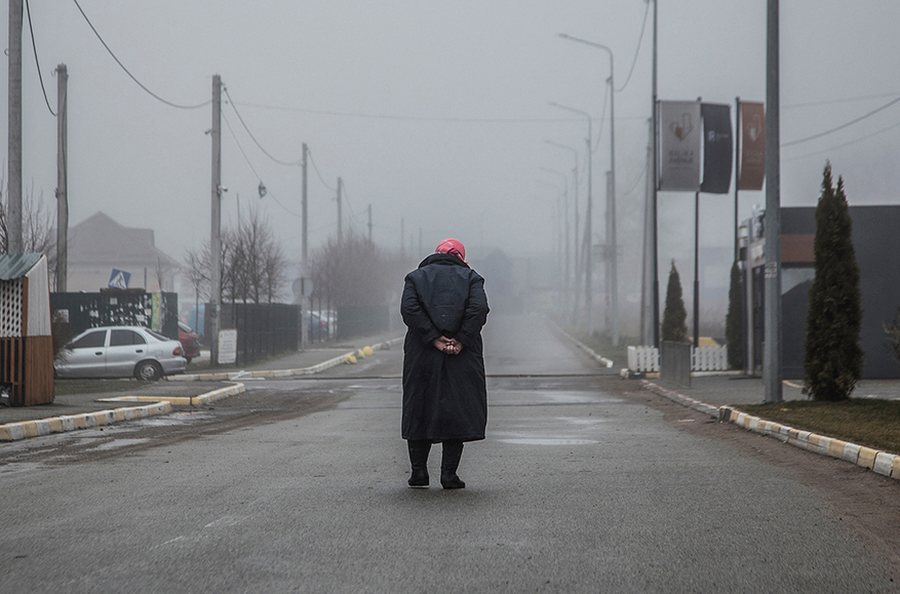
Ukrainians are not faced with the choice "War against peace", but "War against massacres like the one in Bucha"...
In recent months, the topic of peace talks has been increasingly in the headlines, both in relation to the war in Ukraine and the war in Gaza. But while Israel has experienced street protests calling for a ceasefire, nothing of the sort is happening in Ukraine.
Nearly half of all Israelis support Joe Biden's plan to end their conflict with Hamas terrorists. Meanwhile, despite having suffered a longer war that has claimed many more innocent lives, Ukrainians do not want to hand over 5 regions of their country to Putin.
Ukraine and Russia
When the Russian invaders entered Serhii's home in his village, he was at his neighbors' house helping them pack to avoid facing the rapidly approaching invaders. Serhii thought he had a few more days before he left, but he was wrong.
His village in the Zaporizhzhia region was occupied on the third day of the large-scale occupation. When he returned home, two Russian officers were searching his garage. When they saw Serhii, they asked him for food and vodka, and asked if he had dollars or euros at home.
Serhii took them to the kitchen, sat them down at the table, brought out a bottle of vodka, filled their glasses, took out some food from the fridge, and said he would go get the money. The Russians took off their helmets, put their weapons in the corner, and began to eat. Meanwhile, Serhii went to the next room, got a double-barreled shotgun.
The shots tore through their skulls before the two soldiers realized what had happened. Serhii dragged the bodies to the garbage pit, took their weapons and ammunition and started to leave quickly. Traveled on foot for about a week, mostly at night to avoid Russian patrols.
During the day, it hid in farms or forests, which are rare in the steppe region. It was still winter, and he was freezing under the snow and rain, but in the end he managed to escape from the occupied territory. He realized this only when he saw a checkpoint with a Ukrainian flag. Approaching, he shouted in Ukrainian to the soldiers that he was one of them, put down the Russians' weapons, raised his hands, and asked if he could volunteer for the Armed Forces of Ukraine.
When I met Serhi last fall, he had been in the army for over a year, and was determined to fight until he liberated his home village. He has nowhere else to go: his children are grown and living in Europe, his wife died a few years before the outbreak of war, and all he has left is a house and a few hectares of land in the occupied territory.
Ai kishte jetuar atje gjithë jetën. Por rasti i tij nuk është unik. Si ai ka me mijëra në ushtrinë ukrainase. Batalione të tëra të forcave të armatosura, janë formuar nga banorët e qyteteve të pushtuara të rajoneve Zaporizhzhia, Kherson, Donetsk dhe Luhansk.
Ekziston edhe një batalion i përbërë kryesisht nga tatarët e Krimesë, të cilët u detyruan të largoheshin nga gadishulli pas aneksimit rus të vitit 2014. Shumë prej këtyre ushtarëve i kanë ende familjet në territoret e pushtuara, duke u përballur me dëbimin, sekuestrimin e pronave, burgosjet e paligjshme, abuzimet, torturat dhe kërcënimin nga mobilizimi i detyruar në ushtrinë e pushtuesit.
Njerëzit po arratisen nga këto zona me çdo mënyrë që munden. Që nga fillimi i pushtimit në shkallë të plotë, rreth 3.5 milionë ukrainas janë shpërngulur në pjesën e lirë të vendit. Nëse numërojmë ata që janë detyruar të largohen nga Krimea dhe Donbasi pas vitit 2014, shifra arrin në 5 milionë.
Dhe kjo vetëm sipas statistikave zyrtare. Dhënia fund e luftës pa çlirimin e tokave të pushtuara, do të thotë jo vetëm t’i lësh qytetarët ukrainas peng të pushtuesve, por të privosh 5 milionë ukrainas - shumë prej të cilëve po luftojnë - nga mundësia për t’u rikthyer në shtëpi.
Një veprim i tillë jo vetëm që do të ishte imoral, por edhe i paligjshëm, pasi Kushtetuta e Ukrainës u garanton të gjithë qytetarëve që i binden ligjit të drejtën e lirisë dhe të paprekshmërisë, e cila nuk mund të sigurohet nën pushtimin rus. Edhe në këmbim të paqes me Rusinë, qeveria ukrainase nuk mund të heqë dorë nga miliona qytetarë të saj që të mbeten nën pushtim apo që kanë rrezikuar jetën e tyre për të shpëtuar prej tij.
Propozimi për të lëshuar 5 rajone (4 të listuara nga Putini plus gadishullin e Krimesë, i pushtuar që nga viti 2014) me një marrëveshje paqeje të pazbatueshme është një mashtrim.
Në rastin më të mirë, ai do të sigurojë një armëpushim të shkurtër, dhe vetëm ata që janë më me fat të jenë në një territor të lirë do të ndjejnë përfitimet e tij.
Ndalimi i luftimeve nuk ka gjasa të lehtësojë gjendjen e atyre që mbeten nën pushtim, pasi lufta e tyre do të vazhdojë në çdo rast. Për ukrainasit, s’mund të ketë kurrë një përgjigje të kënaqshme ndaj pyetjes:”Pse duhet që Ukraina të heqë dorë nga territoret e saj?”.
Izraeli dhe Hamasi
Me gjithë ngjashmëritë e tij me regjimin aktual rus, Hamasi duket i gatshëm për një armëpushim real me Izraelin. Kjo pavarësisht se qëllimi përfundimtar i grupit ka qenë gjithnjë shkatërrimi i shtetit hebre. Në këtë drejtim, Hamasi është më i sinqertë se sa Rusia e Putinit.
Tek e fundit Hamasi flet hapur për planet e tij, ndërsa Putini kufizohet me disa gjysmë-sugjerime të çuditshme, duke cituar letrat e heroit kombëtar ukrainas Bohdan Khmelnytskyi dhe duke treguar histori për mungesën e Ukrainës në hartat e lashta, në një përpjekje për të maskuar synimin e tij për ta eliminuar një herë e përgjithmonë vendin fqinj.
Without giving up its long-term goal, the Hamas leadership has declared its willingness to make concessions in exchange for a cease-fire in Gaza. The Palestinian group is ready to follow the plan proposed by US President Joe Biden in May this year.
Biden's plan consists of three phases. The first involves the withdrawal of Israeli army units from residential neighborhoods in the Gaza Strip, the release of hundreds of Palestinian prisoners from prisons, and the simultaneous release by Hamas of some of the Israeli hostages kidnapped on October 7.
The second phase envisages the release of all remaining hostages after the withdrawal of the Israeli army from the populated part of Gaza. During the third phase, the warring parties are supposed to exchange dead bodies and prepare a reconstruction program for Gaza.
In Israel, there is neither clear support for the plan nor outright opposition. Polls are highly controversial: while some suggest that just over half of Israelis support Biden's initiative, the other half are reluctant to support it.
Israelis are full of doubts, often encouraged by their own government: What if Hamas really is on the verge of defeat? What if the ceasefire is the only thing that can save the terrorist group from extinction? Since there are no straightforward answers to these questions, the Israeli public's attitude toward a possible cease-fire remains equally ambiguous.
On the other hand, Ukrainians are not faced with the choice of "War against peace", but "War against massacres like the one in Bucha". When the only options are between resistance and death, the choice is much easier to make. / Adapted "Pamphlet" from "The Insider"


Lini një Përgjigje