


 Shkruar nga Pamfleti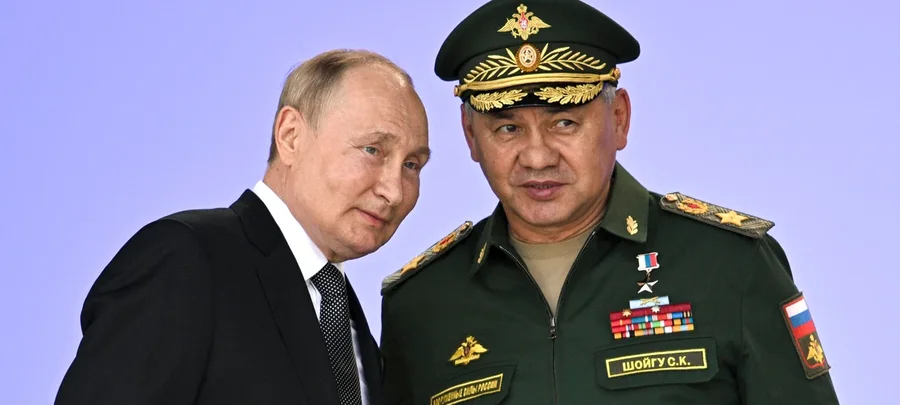
Attack on Europe? Putin's "window" is now opening
Ukraine has stopped the Russian army. To achieve this, Western help has been crucial, but Europe could also become a target for the Kremlin. Has the countdown begun? The German newspaper Frankfurter Allgemeine Zeitung (FAZ) analyzes that the Kremlin may try to intimidate European countries through military pressure and nuclear threats.
In February 2026, former Russian President Dmitry Medvedev warned of nuclear strikes on Ukraine’s allies. In April, Security Council Secretary Sergei Shoigu said that Finland and the Baltic states were allowing the use of their airspace for attacks against Russia and cited Moscow’s right to “self-defense.” In mid-May, President Vladimir Putin declared that Russia’s Kinzhal and Oreshnik missiles have no equivalent in the world and described them as weapons suitable for striking Europe.
There are two reasons for all this.
First, Russia’s war in Ukraine is going badly. The Institute for the Study of War finds that Putin’s army lost more territory than it gained in April, and that Russia is barely replacing its dead. At the same time, the Russian economy shrank in the first two months of 2026. Since then, rising oil prices have brought some relief, but the war is still crushing the economy.
Second, European aid to Ukraine is increasing. Hungary is no longer a blocking force, the EU is providing a 90 billion euro loan, and German Defense Minister Pistorius said in Kiev on Monday that Berlin wants to develop long-range weapons together with Ukraine.
For Russia, this means: Europe should be afraid. And Western military experts say that the most effective means of doing this would be a quick, limited attack on a European NATO member state. Nuclear threats could then deter the alliance from retaliating. This is not just a theory. The “Air War Monitor Ukraine” of the Konrad Adenauer Foundation and the “Kyjiwer Gespräche” association finds that, despite the daily attacks on Ukraine, Russia is currently building up missile reserves.
And now comes news that America is likely to break its promise to deploy Tomahawk cruise missiles in Germany as a deterrent. Berlin is looking for replacements, and a group of experts has calculated that a European replacement weapon could be secured within three to five years.
Perhaps by then it will be too late. The window of opportunity for Putin does not open for three years. It is opening now, before Europe is ready. That is why the European NATO states must become capable of military deterrence as soon as possible, not just in 2029, as Germany plans.
To accelerate the "state of tension"
Ukraine shows how fast things can go. It has radically freed its army from bureaucracy and has achieved a dizzying pace of innovation. In Germany, CDU security politician Kiesewetter says that the Bundestag can declare a “state of emergency” under Article 80a of the Constitution to speed up processes.
This still seems unthinkable, because it would require a two-thirds majority and currently this is not possible without the Left or the AfD. But the fact that something seems unthinkable does not mean that it is impossible. At the beginning of 2025 it also seemed unthinkable that the CDU/CSU would lift the debt brake, until it suddenly did so, because the pressure of circumstances made it inevitable.
Now the pressure for protection is increasing and perhaps very soon even the unimaginable will seem inevitable. /Adapted from Pamphlet /




Lini një Përgjigje