


 Shkruar nga Daniel DePetris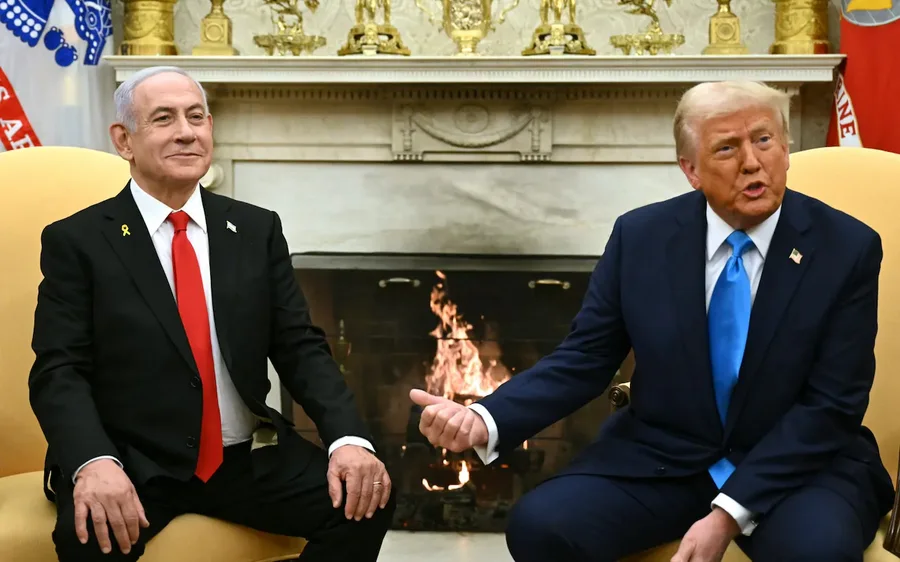
Which path he chooses will be determined by how diplomacy progresses, whether the inevitable complications can be resolved, and which side – Zelensky or Putin – is more responsible for any impasse…
Monday, March 18, was a day of ups and downs for President Donald Trump and his desire to become the world's ultimate peacemaker.
First, the good news. After a long conversation with Russian President Vladimir Putin, the White House announced that Russia had agreed to a partial ceasefire with Ukraine over attacks on energy and infrastructure targets. If implemented, it would be followed by immediate negotiations on a broader cessation of the conflict. The Kremlin said that Putin had already given his military command to abide by the terms.
Trump will boast about this as a victory, even if it falls short of the total 30-day pause he and Ukrainian President Volodymyr Zelensky chose last week. Zelensky has said he would support the proposal, with more details, only to prevent a breakdown in U.S.-Ukraine relations.
However, the bad news outweighed the good. Thousands of miles away, in Gaza, the three-phase ceasefire agreement between Israel and Hamas — the same agreement that Trump was instrumental in finalizing in January — collapsed. At around 2:00 a.m., Israeli bombs began falling on dozens of targets in Gaza, in what was one of the most intense exchanges of the entire 17-month war. Israeli Prime Minister Benjamin Netanyahu’s government gave the order to resume offensive operations after Hamas refused to extend the Phase 1 ceasefire on Israel’s terms.
The Trump administration blamed Hamas for the breakdown. “Hamas could have released the hostages to extend the ceasefire, but instead chose to refuse and fight,” National Security Council spokesman Brian Hughes told news agencies shortly after the bombing resumed. This may sound like music to Benjamin Netanyahu’s ears and will no doubt be taken as affirmative U.S. support for an even more intense Israeli military campaign against Hamas terrorists.
But it was only a matter of time before the Gaza ceasefire crumbled. The agreement was structured in such a way that major political decisions could be postponed until another time. Israel and Hamas signed it because they didn't need to compromise on their core positions from the start.
The concessions in the first phase were quite favorable to both sides. Israel would return 33 hostages; Hamas would receive about 1,700 Palestinian prisoners, additional aid to Gaza, and six weeks of calm. The complicated negotiations to end the war were postponed to Phase 2, which gave the illusion of progress but in reality showed failure. In the end, Hamas would never release all the hostages unless Netanyahu was willing to formally end the war. Netanyahu, on the other hand, had absolutely no intention of ending the war.
Through it all, Trump seemed to lose interest in the whole venture. Although he was quick to claim credit when the Gaza ceasefire was put in place, he seemed to wash his hands of the undertaking once the shooting and bombing stopped and there has been no visible progress on his grand plan to rebuild Gaza under U.S. protection.
His Middle East envoy, Steve Witkoff, was still working his channels, engaging in talks with Egypt and Qatar, the main mediators. But the president seemed to move on to other things, whether it was domestic priorities like accelerating U.S. deportations or Zelensky cooperating with his Ukraine peace initiative.
When Trump spoke about the war in Gaza, he was erratic about it: threatening Hamas with fire one day and advocating direct contact with Hamas the next.
After all, Trump never spent political capital or leveraged his presidential platform to keep the Gaza ceasefire intact. Nor did he pressure Netanyahu. One could come up with a number of explanations for why. Perhaps he didn’t want to deal with Netanyahu or didn’t believe long in achieving peace in a region where the word “peace” is often a misnomer. Either way, the result was the same.
While it is important not to extrapolate too many lessons from one conflict to another, it is not beyond the realm of possibility that Trump’s behavior in Ukraine will mimic his behavior in Gaza. Granted, these two wars are vastly different and have unique causes, effects, and combatants. But based on his level of frustration and how difficult Putin and Zelensky prove to be, Trump could respond either by withdrawing from the war entirely or by doubling down on military support for Ukraine.
Which path he chooses will be determined by how diplomacy progresses, whether the inevitable complications can be resolved, and which side – Zelensky or Putin – is more responsible for any impasse.
Or simply from the President's continued willingness to pay constant attention to the process. /Adapted from The Telegraph Pamphlet/



Lini një Përgjigje