


 Shkruar nga Fulvio Scaglione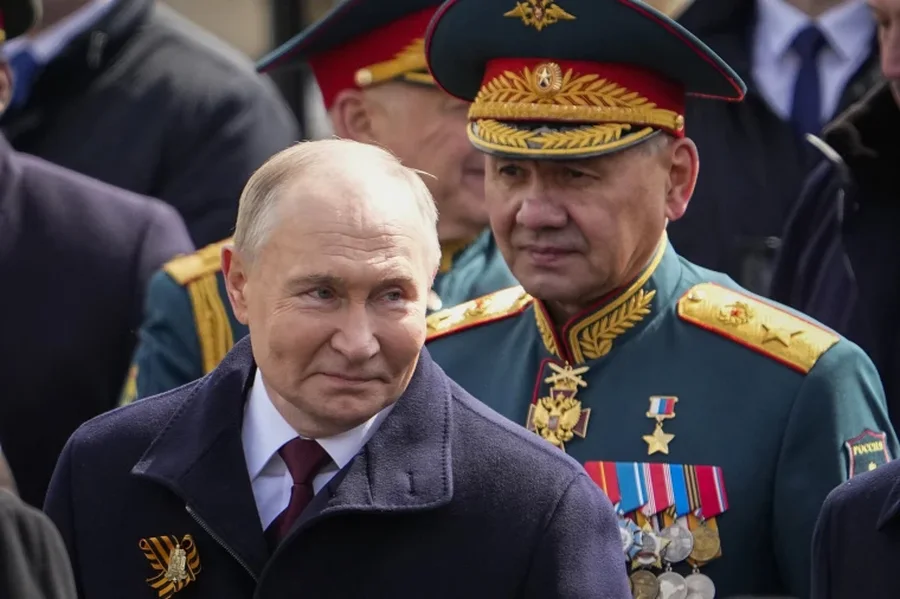
Are these appointments, which shake up the very consolidated balances, a sign of power that allows him to make significant changes to the team that occupies the heart of the Kremlin? Or is there something wrong at the heart of power?
Revolution or just a carousel? In recent weeks, after the fifth election of Vladimir Putin to the office of the president and his swearing in, the Russian government submitted the resignation (according to the Constitution) to the head of state, who thus began to make new appointments.
The first confirmation came for Prime Minister Mikhail Mishustin, an economist and expert in IT systems in office since 2020. After that, the reconfirmation of all other ministers, at least the most important ones, was expected. That something was cracking was clear from an announcement about Andrej Belousov, the first deputy prime minister who had also been prime minister for twenty days in 2020 when Mishustin was with Covid.
Belousov is practically unknown to us, but he is quite well-known in Russia. Maybe not for the common citizen but certainly in the environments that matter. A Muscovite, the son of a prominent Soviet economist, he studied physics, mathematics and economics, graduating in economic cybernetics in 1981. From there he began a brilliant academic career that led him, in the late nineties, to to become an economic adviser to various prime ministers, from Primakov to Stepashin, from Kasjanov to Fradkov. In that capacity he wrote several important reports on the state of the Russian economy in the transition from the planned economy of the Soviet Union to the free market.
The turning point for Belousov came in 2006, when then-Minister of Economic Development German Gref called him to be his deputy. Belousov leaves all other posts and has since devoted himself entirely to government affairs. In 2007, when Gref left the government, Elvira Nabiullina (the current governor of the Central Bank of Russia) became a minister and Belousov continued as deputy. Indeed, it is said that it was Nabiullina, Belousov and First Deputy Prime Minister Shuvalov who formulated the principles of the 2008-2012 economic policy that led Russia out of the global financial crisis of 2008. Belousov in turn became minister of economic development in 2009, when Dmitrij Medvedev is elected president and forms a new government, while Nabiullina becomes the President's assistant for economic policy. The relationship between the two continues in 2013, when Nabullina becomes governor of the Central Bank and Belousov becomes assistant to the President, who is, however, Vladimir Putin. Finally, in 2020, the always discreet and taciturn Belousov becomes First Deputy Prime Minister.
It took little curriculum to explain how surprising it is to find Belousov now, in the middle of the war, at the helm of the Ministry of Defense. A civilian who has never dealt with military affairs leads one of the most powerful armies in the world and administers the largest nuclear arsenal on the planet.
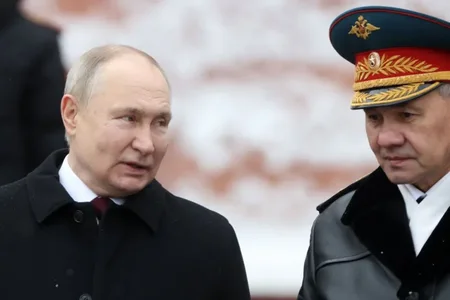
The surprise is compounded when we consider that outgoing Defense Minister Sergei Shoigu is one of Putin's loyalists, who clashed with Yevgeny Prigozhin and even faced his own armed rebellion last summer. Shoigu is not like any character. He has been in politics since the early 1990s and was for many years a highly regarded Minister for Emergencies. He arrived at Defense in 2012 and is the architect of the intensive and rapid modernization that the Russian armed forces have undergone. Some assume that with the change of office he will also pay for the scandal of the recent arrest of Timur Ivanov, one of his deputy ministers in charge of military construction, who ended up in custody on a very serious charge of corruption.
The problem is that Shoigu is neither eliminated nor relegated. In fact, he becomes the secretary of the Security Council, a position occupied until yesterday by Sergei Patrushev, as well as the position of vice-chairman of the decisive Commission for the military-industrial complex headed by the super-hawk Dmitrij Medvedev.
The fate of Patrushev will tell us whether this is a revolution or a rollercoaster. A Petersburger like Putin, a marine engineer who entered KGB schools in 1975, Patrushev spent his entire career as a spy until he became, in 1999, in the final months of Putin's presidency, the spy chief or director of FSB. in 2008 secretary of the Security Council. He is considered not a loyalist, but a super loyalist of Putin and is portrayed as his first adviser, indeed, his dark soul. Is it possible that it was just torpedoed? Or will we find him again in another important role?
The amazing thing is that all this movement comes just as Russian troops are on the offensive in northern Ukraine and are trying to advance along the entire front, which from north to south, from Khar'kiv to Odessa, is a thousand kilometers long . Are these appointments, which shake up the very consolidated balances, a sign of power that allows him to make significant changes to the team that occupies the heart of the Kremlin? Or is there something wrong at the heart of power and the changes serve to prevent bigger problems? The fate of Patrushev will tell us in fact. Meanwhile, it is worth noting that the top team of the security services (Bortnikov in the FSB, Naryshkin in the SVR and Kolokol'zev in the Interior) remained unchanged. And that the holy monster Sergei Lavrov, who has been in office for twenty years, is not touched in the Foreign Ministry. /Adapted "Pamphlet" from "Inside Over"


Lini një Përgjigje