


 Shkruar nga Pamfleti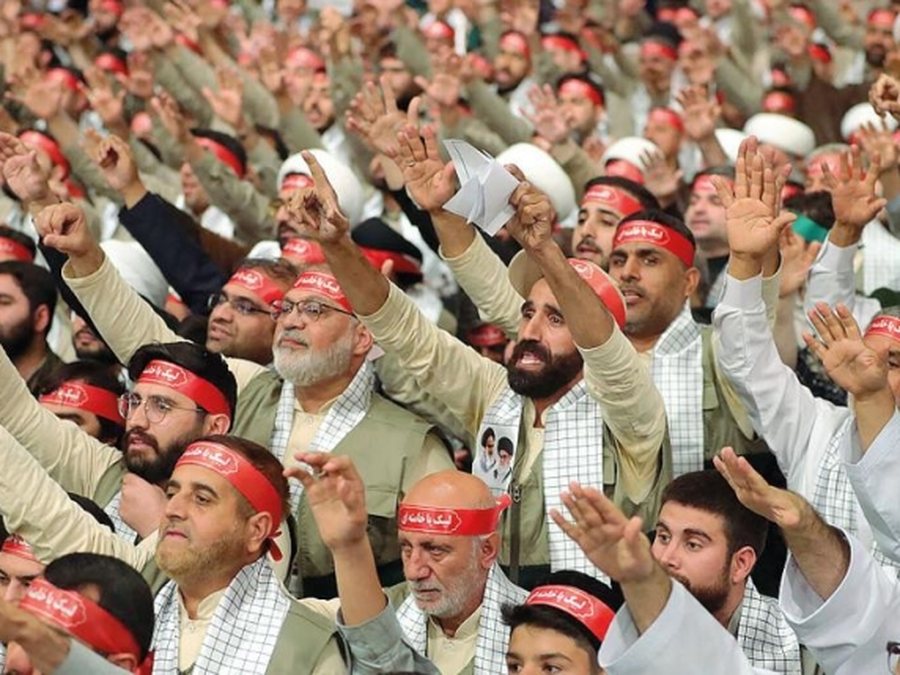
The 'Mubarak' Scenario for Iran: Guards Take the Reins, the West Holds Its Breath...
The envelopes, bearing the logo of the Revolutionary Guard Corps (IRGC), the fundamental pillar of the Islamic Republic, read: “Prepare against them with all your might and with war horses, to strike fear into the enemy of Allah.” This is a reference to verse 60 of Surah Al-Anfal, “The Spoils of War.”
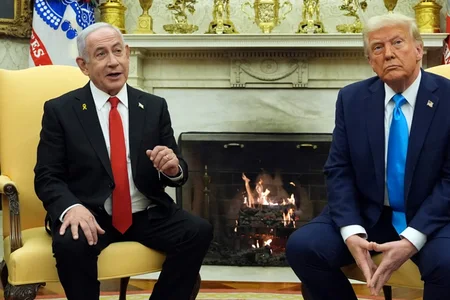
During these seven days of war between Benjamin Netanyahu and Ayatollah Ali Khamenei, among the scenarios thrown on the table for the future of the Middle East, which sometimes resemble more wishes than realities, their name is often mentioned: the Pasdars.
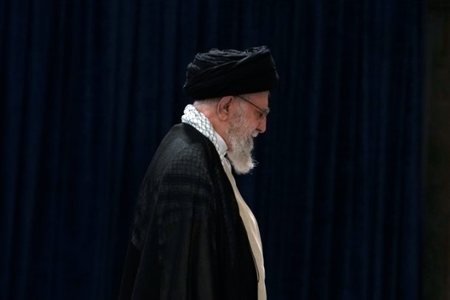
Rumor has it that the Supreme Leader has transferred a significant portion of his powers to the IRGC Command Council. He has done this as a precautionary measure to ensure that the management of the war continues even if he is killed.
There are two hypotheses that see the Revolutionary Guards as protagonists:
The first hypothesis keeps them in power: the Ayatollah is forced to step down or be eliminated, and an IRGC general takes over the country, perhaps by making a deal with the United States in which he promises to end the nuclear and missile programs. An outcome that could satisfy Netanyahu and his friend Trump, who would present it as “mission accomplished.” A solution reminiscent of the fate of Hosni Mubarak’s Egypt. In 2011, during the “Arab Spring,” he was forced to hand over power to the Supreme Council of the Armed Forces, which took over the country. For many Iranians, this is one of the worst scenarios imaginable, because it would preserve the status quo: oppression, lack of rights, gender apartheid.
The second hypothesis is the elimination of the Islamic Republic. This is what Iranian political scientist and IRGC expert Saeid Golkar calls “a real regime change.” “If regime change is among the Israeli and American objectives, then everything that the regime represents must be eliminated. This means removing Khamenei and the top leaders of the IRGC: 25 have been eliminated so far.”
The Revolutionary Guards are made up of around 180,000 members. Two thousand of them, Golkar explains, are the most influential. Among them, two hundred are the real leaders. "These 2,000 must be eliminated, the others can be convinced to join the regular army. An operation that cannot be carried out with missiles from the sky, but requires commandos on the ground. So far we have no signs that lead to this, but with the speed at which circumstances change, anything is possible," continues the political scientist, who does not believe that there will be betrayal by the generals.
The loyalty of these men is vital to the existence of the regime: they are unlikely to abandon it.
They are a compromise between the army, an economic empire and a religious order. Only those from Shiite and conservative circles can join them, with some Sunni exceptions. The Revolutionary Guard Corps was born in April 1979 by order of Khomeini, a few months after the founding of the Islamic Republic. They are no ordinary forces: they were created to protect — almost like personal guards — the new “owners” of the country: the ayatollahs. Ruthless, they are also tasked with supervising the regular army and eliminating anyone loyal to the old dictatorship or opposed to the Revolution: they arrest, torture and hang members of radical leftist groups such as the MEK and the Tudeh Party.
During the war with Iraq (1980-1988), they transformed into a more conventional force. After the war, with the ascension of Khamenei as Supreme Leader, the IRGC expanded and gained more and more power, including the Basij, a volunteer militia for domestic repression, and the Quds Force for operations abroad.
In the 1990s, the IRGC's influence extended to the economy, politics, and even construction. They became a fearsome empire and much hated by the people.
Golkar explains that to keep the Pasdarans under control, Khamenei has built a control system that leaves no room for manoeuvre:
Counterintelligence: every soldier, every officer, is under constant surveillance.
Ideological surveillance.
Privileges: higher salaries and especially access to more lucrative public contracts.
An Iranian insider told Corriere della Sera that Khamenei is unlikely to give in to American demands and the IRGC could back him up. The ayatollah could follow Saddam Hussein's example and change locations frequently. According to this source, if he were to be killed, the regime risks collapsing, because it is an ultra-personalist system: everything revolves around his figure. /Adapted from Corriere Della Sera


Lini një Përgjigje