


 Shkruar nga Rod Thorton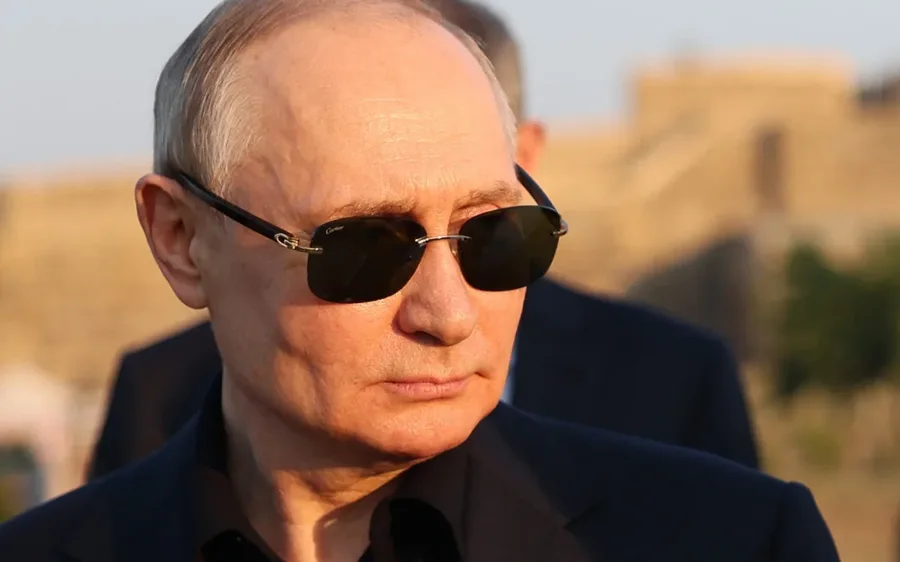
Presidential elections in Russia will be held next month. The victory of the current president Vladimir Putin seems inevitable. Putin has been in power (as president or prime minister) since 1999. If he wins and fully serves out his new 6-year term, he will mark a full 30 years in power, longer than any Russian or Soviet leader who has from the time of Tsar Peter the Great (who died in 1721).
Stable opposition candidates in these elections are conspicuous by their absence. Several symbolic figures, mostly loyal to Putin, have announced that they will formally run. But of those, only the head of the Communist Party, Nikolai Kharitonov, is likely to get a significant number of votes. In the last presidential election in 2018, the communist candidate came second to Putin, with 12 percent of the vote, compared to 77 percent that Putin received.
Opposition candidates?
Some potential candidates who wanted to run against Putin - being especially against the war in Ukraine - have been denied the application for candidacy through dubious justifications of a bureaucratic nature. In this regard, the peace activist Yekaterina Duntsova stands out.
She is a brave candidate who may try to challenge the incumbent in this election. Once leading opposition figures in Putin's Russia who opposed and questioned his authority have been brutally treated.
For example, liberal Boris Nemtsov was assassinated in 2015 very close to the Kremlin's perimeter walls (allegedly by agents linked to Putin's FSB). Meanwhile, other famous critics of Putin such as Alexei Navalny and Mikhail Khodorkovsky have been sent to prison. Navalny remains in prison, while Khodorkovsky is currently in London.
It is therefore probably in the best interest of Duntsova's health that her name does not appear on any ballot. Although there is no doubt that Putin may engage in some electoral manipulation to secure re-election to office with a large majority, he will require the support of a significant mandate.
He wants the election to look like a free and fair process. And there is a need for the polls to be seen as "clean", as a means of cementing his legacy as Russian state leader. Because he does not want history to remember him as a leader who could only remain in power as a dictator.
And it seems that he will be re-elected by a clear majority of the Russian people. As a leader, Putin regularly appears in polls as enjoying broad popular support. It recently had an 80 percent rating. Of course, this should be taken with reservations, because the Russian state-sponsored media has always supported Putin, presenting him in very flattering tones.
Likewise, in recent years, and especially since the war began in February 2022 against Ukraine, any media that was critical of Putin or state politics has been attacked or forced to leave the country. Russia today has a media that is now entirely in Putin's hands.
Meanwhile, Putin wants to win deep, to avoid any challenge to his rule from within his supposed power base. Since coming to power, he has developed an important network of patronage connections that include people in the various "corridors of power" and senior political figures, oligarchs and military leaders.
Basically, that they all rely on him. But if the electorate can decide that Putin does not enjoy their popular support - and that he is a weak leader - then a large number of those people in positions of power - the "siloviki" (the strong) - may feel that the time has come to act. They may aim to overthrow him, to maintain the state stability that serves their interests.
Putin's future
What they won't want is something similar to what happened after the presidential election in Belarus in 2020. President Alexander Lukashenko was nearly toppled by a wave of street protests after what appeared to be a "rigged" election. .
In fact, Putin himself was quite shocked in 2011 when the same wave of protests took place in Russia. Thousands of protesters took to the streets of Moscow and St. Petersburg after rigged elections. Putin was shocked. The stability of the Russian state was at stake. He cannot allow the same thing to happen again.
So, despite all the temptations, he must hold these presidential elections in a way that will be as "free" and "fair" as possible. While it seems to enjoy a high degree of popularity in Russia for now (albeit largely media-generated), this may not last.
The war in Ukraine is taking too long, and will require constant loss of life and money. More specifically, the war will require the commitment of more and more Russian men. A new wave of mobilization - extremely unpopular - seems to be inevitable. The huge costs of war will put pressure on social spending.
Taxes will rise, and so will inflation. The regime of sanctions imposed on Moscow by the West will bring about the destruction of most of the Russian economy. The situation will become more difficult for ordinary Russians, and for this the blame will inevitably fall on Putin. He may win the presidential elections in March, but how long he can stay in power, given the inevitable demands of the coming months, remains unclear and uncertain./ Adapted Pamphlet from "Asia Times"


Lini një Përgjigje