


 Shkruar nga Pamfleti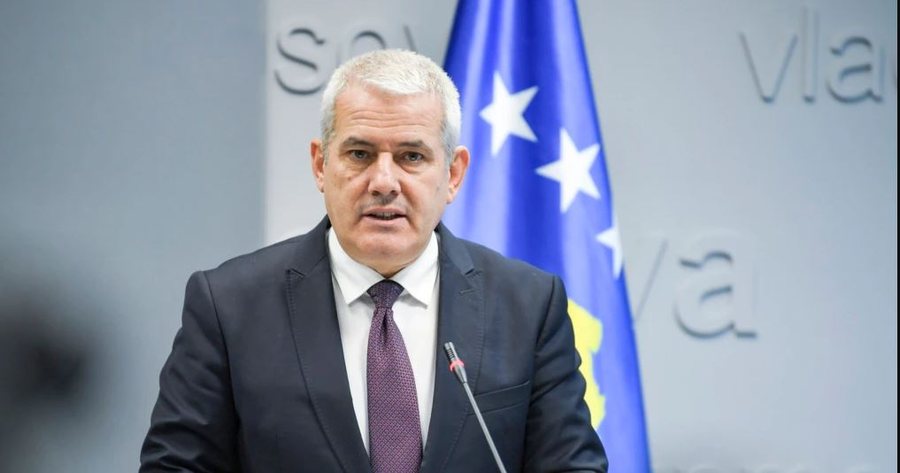
Serbia has refused Interior Minister Xelal Sveçla's request to visit the Presheva Valley. This has prompted the reaction of Sweden and other government officials who warned of the application of reciprocity in this matter as well. People familiar with the relations between the two countries say that this refusal by Serbia confirms the continuation of tensions between the two countries.
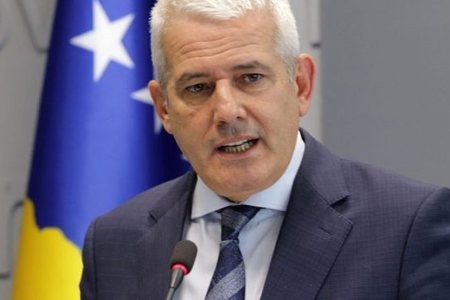
The Government of Kosovo has warned to return to the principle of reciprocity with Serbia after the Serbian authorities refused the visit of the Minister of the Interior, Xhelal Sveçla, to Preševo, Medveđa and Bujanoc.
Sveçla had planned meetings at the headquarters of the Albanian National Council and with the only Albanian deputy in the Serbian Parliament, Shaip Kamberi.
"In compliance with the Brussels agreement and practices so far, through the Ministry of Foreign Affairs and Diaspora we forwarded the agenda and the necessary information of the delegation to the Liaison Office of Serbia, for permission to enter Serbia and to carry out the visit. Late last night, I was informed by our liaison officer in Belgrade that our request for today's visit to the Valley has been rejected by the Serbian authorities, without any explanation. Regarding the issue of visits by state officials, we will act on the principles of reciprocity as a value of equality between our two states", Sveçla wrote on Facebook.
The rejection that was given to Sweden has prompted the reaction of political representatives of the Valley, who blamed Serbia for hatred towards Albanians.
"The visits of the officials of the Republic of Kosovo and Albania to the Presheva Valley are not only necessary, they are necessary and should be seen as common, as it happens in all democratic countries. The refusal of the permission to visit Presevo, Bujanovac and Medveja by the Minister of Internal Affairs of the RKS, Xelal Svečla, by the Government of Serbia is not the first, but it once again brings the evidence that despite the elections, the Government in Belgrade does not change, it remains paranoid and hateful towards everything Albanian!", wrote the Albanian deputy in the Assembly of Serbia, Shaip Kamberi.
Meanwhile, Ragmi Mustafi, adviser to the Deputy Prime Minister Besnik Bislimi, has stated that this rejection of the Serbian authorities not only has practical consequences, but also expresses a lack of will for cooperation and dialogue between Serbia and Kosovo.
The refusal of Minister Sfeçla's visit is unacceptable, it is in the framework of Serbia's tendency to isolate the Albanian community, not only from the visits of high state officials of Kosovo, but also from the influence and cultivation of direct relations with the Valley. It also hints that Serbia is trying to hold the Preševo Valley hostage from regional developments and political and cultural rights, and has not yet understood that only a political solution that provides full rights for the Albanians of the Valley can bring long-term peace. ", Mustafi wrote.
Analyst Arbnor Sadiku says that this rejection confirms the continuity of tensions in Kosovo-Serbia relations. However, he raises doubts about the purpose of the visit by Minister Sveçla.
"It is okay to visit the Valley. In principle, it is agreed by every institution of Kosovo - minister, prime minister or president of the Republic. However, in this tense climate in relations with Serbia, I think that this visit was not necessary and provokes the situation between Kosovo and Serbia. I think that this will also be the international position since I don't know what the agenda was, maybe to use the populism of license plates or for electoral issues since it is seen that maybe this year we will have parliamentary elections in Kosovo", said Sadiku.
"We have a large number of citizens who live in Kosovo - especially in Pristina and Fushë-Kosovo. This can be used for populism by the Vetëvendosje Movement that for the first time we have RKS signs in the Republic of Serbia and other things. Seen in the long term, this visit was unnecessary, but seen from the internal interests of the Vetëvendosje Movement and Minister Sveçla, it was certainly positive, because this would be manifested in the upcoming elections", he emphasized.
Sadiku adds that Serbia used the refusal of the visit to avoid both internal and external pressure.
"Of course, it is known that President Vučić is currently under great pressure between the East and the West. On the one hand, there is pressure from Russia not to impose sanctions on it in 2024, while on the other hand there is pressure from the West for the 'de facto' recognition of Kosovo and the implementation of the agreements made in Brussels and the Annex in Ohrid. Against this, he used it for populism, because there is a lot of pressure from the opposition, which has released a lot against Kosovo", Sadiku stressed. "One cannot expect anything other than a tense climate which has gripped Serbia not only in relation to Kosovo but also in relation to its other neighbors, Montenegro, as well as the internal problems it has with the opposition in Serbia and with the West at the same time".
The agreement on the official visits was reached within the technical dialogue of Brussels in 2014. It was said that the visits should be conducted in a way that promotes the process of normalization of relations between Kosovo and Serbia.
But the agreement has been violated every time there has been tension in the relations between the two countries. For months, Serbian officials have been accusing Sweden of putting pressure on northern Serbs through the Kosovo Police.
In 2021, the Kosovo authorities banned the director of the so-called Office for Kosovo in the Government of Serbia, Petar Petkovic, from entering Kosovo, due to statements against the state of Kosovo.
Serbia retaliated after two days, where it did not allow the visit of four Kosovar ministers to the Presheva Valley - the Minister of Infrastructure, Liburn Aliu, the Minister of Economy, Hekuran Murati, the Minister of Education, Arbërie Nagavci, and the Minister of Culture, Hajrullah Çeku. The decision to stop them was announced by the Serbian authorities just a few hours before departure./ KOHA


Lini një Përgjigje