


 Shkruar nga Pamfleti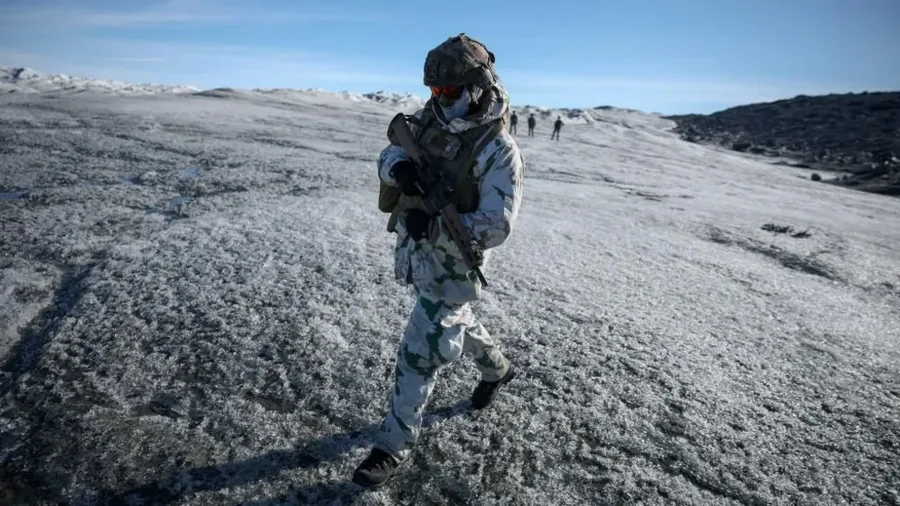
US Vice President JD Vance said Greenland is a key location for protecting the United States and the world against a potential missile attack from Russia or China. He added that Europe and Denmark “have not done enough” to secure the strategic territory.
In an interview with Fox News, Vance said that investments in Greenland's defense have been insufficient and that European authorities have not taken into account former President Donald Trump's arguments on the issue.
The White House announced Wednesday that US authorities are actively discussing the possibility of purchasing Greenland, a semi-autonomous territory of Denmark. The move came a day after suggestions of military action to annex the island, an option that has sparked controversy.
Denmark, a NATO member, has warned that such a move would mark “the end of the alliance.” Both Greenland and Denmark have repeatedly stressed that the island is not for sale.
Greenland, although one of the world's most sparsely populated territories, its position between North America and the Arctic makes it an ideal location for missile warning systems and for monitoring shipping in the region. The US has over 100 soldiers stationed at Pituffik base, on the northwestern tip of the island, a facility operated by the Americans since World War II.
Under existing agreements with Denmark, the US has the right to bring as many troops as it wants to Greenland. Recently, there has also been growing interest in the island's natural resources, including rare minerals, uranium and iron, which are becoming more accessible as the glaciers melt due to climate change. Scientists claim that Greenland may also have significant oil and gas reserves.
“Part of the global missile defense infrastructure depends in part on Greenland,” Vance said. He stressed that, in the event of a nuclear attack by Russia or China, the island plays a key role in defense systems.
“So we have to ask ourselves: 'Have the Europeans, have the Danes done the right thing to secure Greenland and maintain it as a pillar of global security?' The answer is clearly no,” he added.






Lini një Përgjigje