


 Shkruar nga Jason Burke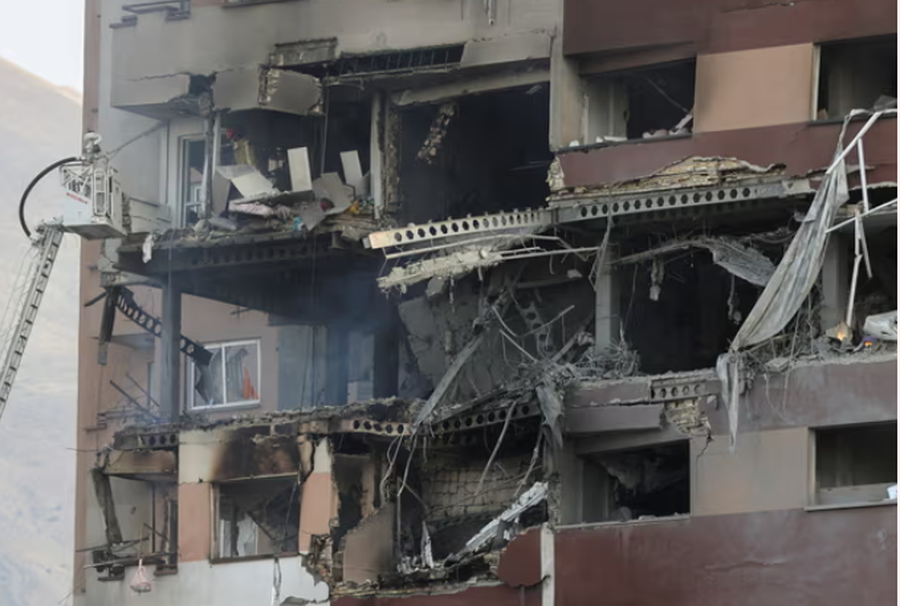
Netanyahu has systematically and successfully weakened his regional enemies, now Tehran is the target…
Israel’s offensive against Iran is the latest in a chain of events triggered by the attack launched by Hamas from Gaza into Israel on October 7, 2023. All of them have steadily weakened Tehran and, at least militarily, strengthened Israel. Without each of them, it is difficult to see how the new offensive he launched directly against Iran on Friday could be possible.
The first was the Israeli offensive in Gaza. This was bloody and costly, especially in terms of Palestinian lives, but within weeks it degraded Hamas enough that the militant Islamic organization no longer posed a significant current threat to Israeli citizens.
Since Hamas was part of the so-called axis of resistance, a coalition of similar organizations across the Middle East assembled by Tehran over the past decade to project power across the region and prevent Israel from striking Iran's nuclear program, this had major regional implications.
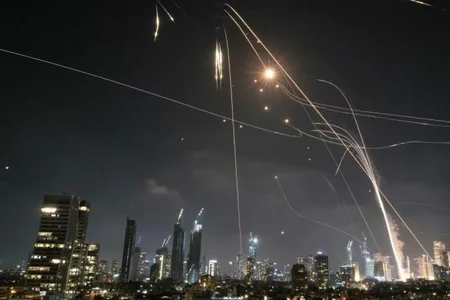
In April of last year, Israel bombed the Iranian embassy compound in Damascus, killing seven people. In response, Iran attacked Israel directly for the first time, launching an ineffective barrage of drones. The conflict between Iran and Israel, long waged through proxies, assassinations, and attacks far from Israeli soil, had now become open.
By the fall, with Hamas weakened, Israel could turn against Hezbollah, the Lebanon-based and Iran-backed group that was by far the most powerful of the members of the resistance axis.
In September, Israel eliminated Hezbollah's entire leadership pyramid, as well as most of its formidable missile stockpile, and invaded its heartland in southern Lebanon without encountering significant resistance. Even Hezbollah loyalists acknowledged that it had suffered a crushing defeat.
Again, Iran launched another ineffective air offensive against Israel, which responded with airstrikes that destroyed most of Iran's air defense system, paving the way for Friday's broader attack.
Equally as consequential, Hezbollah’s sudden weakness left it unable to defend the Assad regime in Syria, another key Iranian ally, when rebels there launched an offensive. Assad’s fall in December ended decades of close relations between Tehran and Damascus. It further weakened the crumbling axis of resistance, exposed Iranian proxies in Syria, and made it easier for Israeli warplanes to reach vulnerable targets in Iran.
With Iranian-backed militias in Syria and Iraq convinced that turning rhetorical threats to attack Israel into action was a weak idea, the Houthis in Yemen remained the only member of the resistance axis still engaged in hostilities with Israel. They harassed ships in the Red Sea, but the ballistic missiles they fired in the hope of hitting Tel Aviv could not cause significant strategic damage.
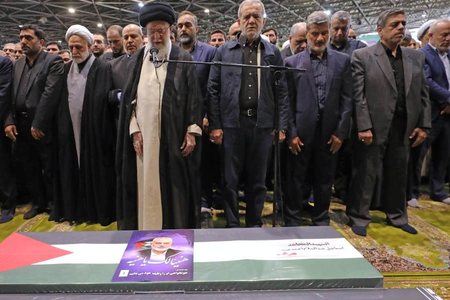
In the early spring of this year, the decision of Ali Khamenei, Iran's supreme leader, to entrust Iran's security to his representatives seemed like a major miscalculation, and Benjamin Netanyahu, Israel's prime minister, eager to exploit what might be a temporary window of opportunity, began preparations for the major offensive he had long hoped to launch.
An April deadline was missed, but not one inadvertently set by President Trump, who allowed just 60 days for talks with Tehran to reach a new deal on Iran's nuclear program, which Israel claims is close to producing a nuclear weapon. That deadline expired last week.
Netanyahu told Iranians on Friday that he hoped Israel's ongoing military operation in Iran would "pave the way for you to achieve your freedom."
Even if Israel is not seeking to turn back time to the years before the 1979 Iranian revolution, when the country was a close ally of Israel and the US as well, the nature of the targets Israeli planners chose could have the effect of at least dismantling the regime that has ruled since that seismic event.
This is partly a consequence of the central role still played in Iran by a generation of men who began their careers after the fall of the Shah or even earlier.
Friday's first casualties included many senior officers who were among the first recruits to the Islamic Revolutionary Guard Corps (IRGC), which was founded in 1980 to protect the new rule of radical clerics and later evolved into the ideological activist heartland of the revolutionary project. Some were also veterans of the Iran-Iraq war, which lasted from 1980 to 1988 and which many historians consider the vessel in which the current regime was forged.
At least one of the nuclear scientists killed in the first wave of attacks was also an IRGC veteran. Ali Shamkhani, a senior Khamenei aide who was targeted, had been a covert Islamist activist in the 1970s before holding a series of increasingly important roles. Khamenei himself came to power as Ayatollah Khomeini’s successor in 1989, but began his career as an Islamist activist in the late 1960s.
It is extremely unlikely that, when the dust finally settles after this war, Iran will revert to a pro-Israeli or pro-US stance. But what seems very likely is that the power of the people who first overthrew the Shah and then led the revolutionary regime for the decades that followed will be severely, perhaps fatally, weakened. /Adapted from The Guardian Pamphlet/





Lini një Përgjigje