


 Shkruar nga Pamfleti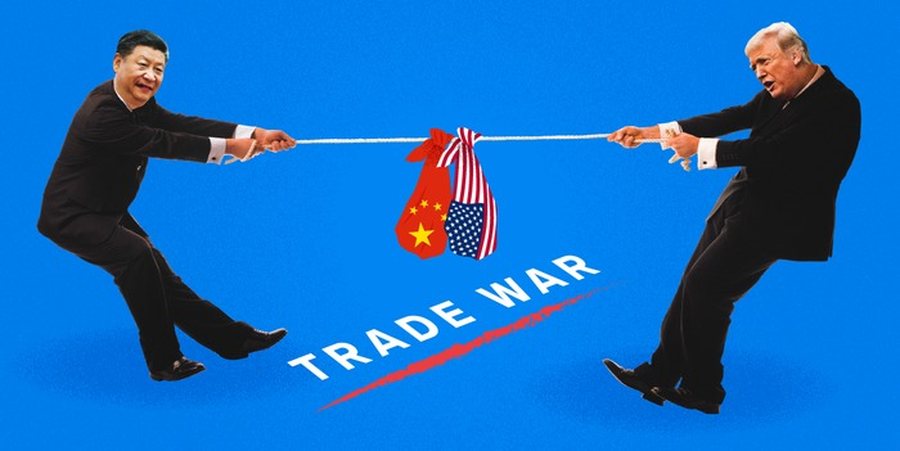
Of course, it will continue to support a series of forums with southern countries centered in Beijing, develop new banks to finance investments without Washington's interference, and continue to weave the web of the New Silk Road. But to place itself at the center of the world, it must take over the UN, for now.
Donald Trump on the back page. It's been months since the American president hasn't been the number one news story in the world. But what does the Chinese leader mean when he says he wants to create a new international order, different from the one dominated so far by the United States, Europe and their allies? He usually backs up his words with actions.
Military power aside, the trophy he aims to conquer in the near future is called the United Nations.
Of course, it will continue to support a series of forums with southern countries centered in Beijing, develop new banks to finance investments without Washington's interference, and continue to weave the web of the New Silk Road. But to place itself at the center of the world, it must take over the UN, for now.
Yes, the United Nations is currently a shadow of its former self, stripped of the ambitions it had when it was founded in 1945 to preserve peace, and paralyzed compared to its early decades, when the Security Council and Secretaries-General were able to intervene and help resolve even very serious crises.
Today, there are fears that the UN is further diminishing, leaving the world without a universally recognized mediation body. Perhaps the greatest fear, however, should concern the efforts of the People's Republic of China to dominate it, to impose its own objectives on an organization that was created to unite the world, not divide it. The Security Council has long been blocked by the veto rights held by its five permanent members: the United States, Russia, China, the United Kingdom, and France.
And since there is no clear way to change this situation created at the end of World War II, Xi aims to conquer other parts of the UN: its operational agencies and the General Assembly, which has no executive power but political influence and where 193 countries, mainly from the Global South - those that Beijing is trying to persuade - vote.
A first test of this strategy will be the annual General Assembly, which will be held at the UN from September 9 to 29. It will be a grand assembly, celebrating the eightieth anniversary of the United Nations. But above all, it will be important because it will address the Israel-Palestine issue. It will be an opportunity for China to outvote Washington and those countries that intend to support Israel, Netanyahu or not: the majority will line up against Jerusalem. It will also be an opportunity to divide Westerners between those who demand immediate recognition of a Palestinian state and those who oppose it. The war in Gaza and the condemnation of Israel will be a crucial opportunity that Beijing does not want to miss to underline the decline of Western hegemony.
In this transition, Xi and his allies will not face opposition from the UN Secretary-General. António Guterres, since the first weeks after the Hamas attack on October 7, 2023, has been a de facto opponent of Israel.
And at the summit held in Tianjin on August 31 and September 1, the Chinese leader invited not only Putin, Modi, Erdogan and others. He also rolled out the red carpet for the heads of ten international organizations, led by Guterres himself. In an interview on Chinese television, Guterres said that the initiatives proposed by China “correspond to the realities facing the world” and that Xi “is a man with a clear strategic vision.”
As for international organizations and UN agencies, China has been seeking influence there for years, while the United States has gradually scorned them. It places its own citizens in leadership positions, sends officials to staff them, and funds them with special grants. Until the 1990s, it was indifferent, but then rose to head the FAO and for a time led the International Civil Aviation Organization, the International Telecommunication Union, and the UN Industrial Development Organization. And it has long had its eye on the important World Intellectual Property Organization. A former UN employee has denounced that, within the structures it controls, Beijing intimidates human rights defenders, pays bribes, and changes relationships it finds undesirable. The big prize that China aims for, in short, is to establish clear hegemony within the UN, transforming it into an anti-Western and pro-China entity, awaiting the time when the Security Council can also be restructured.
Beijing will face a second, even more important, test of achieving its goals in 2026, when it will elect a new UN Secretary-General (Guterres' term expires at the end of next year).
Several unofficial candidates are currently being considered, led by the Director General of the International Atomic Energy Agency, Rafael Grossi, who has confirmed his interest. Other names being discussed include former New Zealand Prime Minister Jacinda Ardern, IMF Managing Director Kristalina Georgieva, and UN General Assembly President Maria Espinosa.
But Xi is expected to take the lead and is keeping his cards secret: the choice of the next director general could be an important step in the long march to relegate Washington to second place, even in the Palace that once belonged to the United States./ Adapted from "Pamphlet", taken from " Corriera della Sera"


Lini një Përgjigje