


 Shkruar nga Mark Galeotti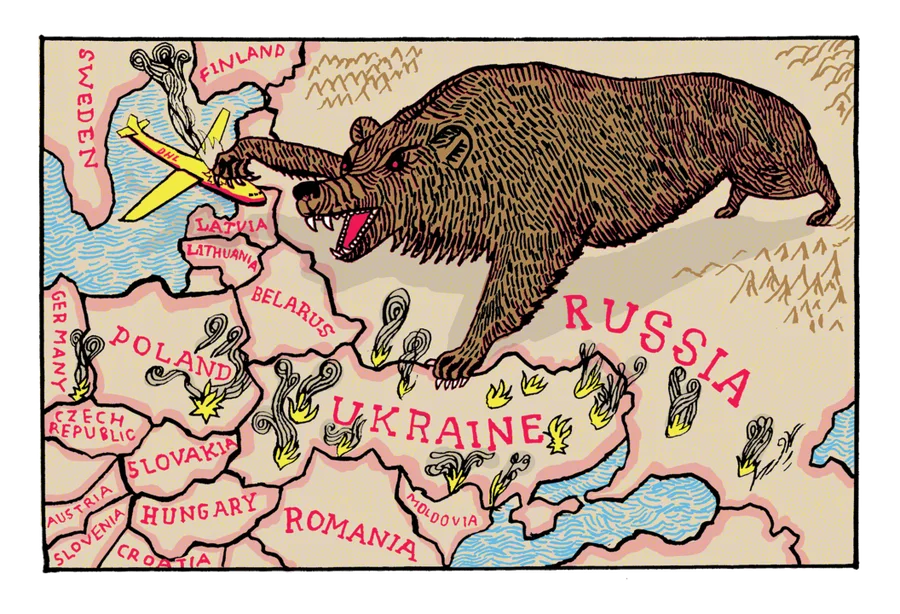
Kiev's secret services have carried out a series of attacks on Russian military targets, officials and vocal warmongers. For example this month, a Russian naval officer was killed when a bomb planted under his car exploded in Crimea.
When a DHL cargo plane crashed on approach to Vilnius airport in Lithuania on Monday, killing one crew member, the accident appeared to be the result of a technical fault.
But since there are strong suspicions that Russia has had a hand in a number of other events, with equipment exploding on DHL flights and in multiple warehouses last summer, many people inevitably assumed that the serious event was staged. again from Moscow.
Last year, the Russians significantly increased their disruptive activities in Europe, from cyber attacks to assassinations, aiming for chaos and a climate of terror and fear. In February this year, a Russian defector was shot dead in Spain in what appears to have been an assassination ordered by Moscow but carried out by organized crime.
And in March, common criminals employed by Russia's military intelligence, the GRU, torched Ukrainian-owned warehouses in Leyton, east London. Moscow has also been blamed for a subsequent series of arson attacks across Europe on everything from Polish shopping centers to a German factory.
In July, US and German authorities announced that they had foiled a Russian plan to assassinate Armin Papperger, the head of arms giant Rheinmetall, an outspoken supporter of Ukraine. Although the circumstances still remain unclear, two underwater telecommunications cables in the Baltic have snapped in recent days mysteriously.
The first data again speak of a sabotage. As British Cabinet Minister Pat McFadden warned at the NATO Cyber Defense Conference in London this week, Russia has expanded its campaign of cyber attacks. Some of these are essentially confidential data collection operations.
But some of them are aimed at sabotage, such as the attacks on the Czech railways this year or the constant false alarms about the placement of bombs, which bring a hypervigilance from the authorities. Especially after the recent controlled explosions in Glasgow, Euston station and near the US embassy, or even a major security alert at Gatwick airport.
But how do the Russians manage to maintain such a pace of attacks? They did this in part by contracting a diverse group of "patriotic hackers" and cybercriminals. And this cooperation is not limited to the online sphere.
As the director general of the British secret service MI5 Ken McCallum warned last month, this year "Russian state actors are turning to third parties to carry out their dirty work, including private intelligence operatives and criminals both from the UK but and other countries".
This is particularly evident in the online world, where Russian blackmail cyber groups are given free rein as long as they aim to target the West. However, it is also clear that criminals are being used more widely, in everything from carrying out surveillance on behalf of Moscow's secret service agencies to covering walls across Europe with divisive and anti-Semitic graffiti, from setting fires to smuggling of microchips that are under US and EU sanctions.
This approach of Moscow should not be surprising. Because since the beginning of the full occupation of Ukraine by Russia, about 750 Russian diplomats have been expelled from all Western countries. With most of the spies working under diplomatic cover, their expulsion dealt a severe blow to Russian espionage networks.
However, it would be naive to think that this would stop the Kremlin from trying to find new ways of doing things. Many recruits are hired anonymously online, so they don't even know they're doing Vladimir Putin's dirty work.
Some of them have conducted surveillance, believing that their clients are convinced that their spouses are cheating on them or that their employees are stealing their business. The real question is: Why has Moscow expanded its campaign this year, and what does it hope to achieve?
Does she honestly believe that burning down a mall or some propaganda graffiti will really make a difference? The answer lies in Putin's perception of the situation. The Russian president appears to believe that an unrelentingly "Russophobic" West is committed to containing or dismembering Russia, and that Ukraine is essentially a weapon aimed at the homeland.
Kiev's secret services have carried out a series of attacks on Russian military targets, officials and vocal warmongers. For example this month, a Russian naval officer was killed when a bomb planted under his car exploded in Crimea.
For Putin - a man who believes that Ukraine is an artificial creation of Lenin after the Bolshevik revolution of 1917 from "what is historically Russian land - these attacks can only happen at our behest, or at least with our approval in the West.
A Russian expert close to the presidential administration told me: " You think you can force Ukrainian terrorists to do your dirty work, and for us Russians to politely pretend that you are not behind them?" It's time for you to learn what it's like to be at war!"
Pastaj shtoi: “E çfarë tjetër janë sanksionet, përveç një luftë ekonomike dhe politike? Ju po përpiqeni të falimentoni ekonominë tonë, dhe pastaj ankoheni nëse hakërroheni prej nesh!?”.
Duket se në mesin e vitit të kaluar, Kremlini vendosi të lejojë agjencitë e tij të inteligjencës që të “vepronin pak më ashpër” siç u shpreh dhe drejtori i MI6, Sër Richard Moore. Pjesërisht, kjo në formë hakmarrje ndaj aleatëve të Ukrainës; por edhe për diçka më strategjike, për të që mund të quhet përdorimi si armë i bezdisjes.
Në Moskë, dominon mendimi se Perëndimi është mësuar të jetë shumë rehat me luftën, se ne u dërgojmë rregullisht ukrainasve një sasi të caktuar parash dhe një pjesë të arsenalit tonë ushtarak që ata të vazhdojnë të luftojnë, por pa i ndjerë vërtet kostot e luftës.
Prandaj fushata e sulmeve kibernetike dhe atyre përmes palëve të treta, synon jo vetëm të çojë përpara synimet e zakonshme të Moskës për thellimin e ndarjeve dhe demoralizimit, por t’u përcjellë evropianëve ndjenjën se mbështetja e vazhdueshme e vendeve të tyre për Ukrainën, po ndikon negativisht në jetën e tyre.
Një sulm i madh kibernetik, si ai që përshkroi McFadden, dhe që nxjerr jashtë loje rrjetin energjitik kombëtar nuk ka gjasa të ndodhë, sepse përfshihet brenda kushteve të garancisë së ndihmës reciproke të nenit 5 të NATO-s. Po ashtu, ai nxit hakmarrjen ndaj Rusisë, dhe do të ishte naive të supozohej se Perëndimi nuk po kërkon mënyrat e tij për të sabotuar infrastrukturën kombëtare jetike të Rusisë.
Por ç’mund të themi për një sulm kibernetik kriminal ndaj sistemit shëndetësor britanik në qershor, NHS, që detyroi shtyrjen e më shumë se 10.000 vizitave shëndetësore? Po për pakot shpërthyese në fluturimet e DHL që krijojnë vonesa për të gjitha dërgesat? Po sulmet kibernetike në sistemet e sinjalizimit dhe biletave në hekurudha, që mund të imponojnë një kalvar për qindra mijëra pasagjerë dhe humbje të mëdha për kompanitë?
Asnjëra prej tyre nuk i afrohet kushteve për një hakmarrje të drejtpërdrejtë, megjithatë ato kanë një ndikim, veçanërisht nëse i frikësohemi aq shumë hijes së Putinit, saqë çdo shqetësim dhe aksident ia atribuojmë makinacioneve të tij. Kjo strategji, na ndihmon të kuptojmë arsyen pse deri më tani amerikanët i kanë shmangur sulmet më të këqija.
Në pragun e zgjedhjeve presidenciale, Moska nuk kishte dëshirë të ishte në qendër të vëmendjes, ndërsa tani nuk dëshiron të rrezikojë ta detyrojë Trumpin të ketë një qasje më të ashpër. Ndërsa Evropa nuk ka një imunitet të tillë. Atëherë, si duhet të kundërpërgjigjet ajo?
Këtë muaj, raporti im “Gangsterët në luftë:Përdorimi i krimit të organizuar nga Rusia” u botua nga Nism Globale kundër Krimit të Organizuar Transnacional dhe unë nisa raundin e zakonshëm të takimeve informuese. Pas njërit prej tyre, në selinë e NATO-s, m’u afruan përfaqësues të 2 vendeve.
One from Southern Europe, while the other from the Baltic States. The first was concerned: "What can we do against such a campaign? We can hardly react in the same way". The reaction of his more seasoned counterpart from the Baltic was emphatic: "We know the Russians. They will keep up the pressure, as long as they think it's working. Therefore, we must not allow it to work, strengthen the resistance, not give up". So keep calm and move on./ Adapted "Pamphlet" from "The Spectator"
Note: Mark Galeotti runs the Mayak Intelligence consulting company and is a professor at the School of Slavic and East European Studies at the University of California.


Lini një Përgjigje