


 Shkruar nga Pamfleti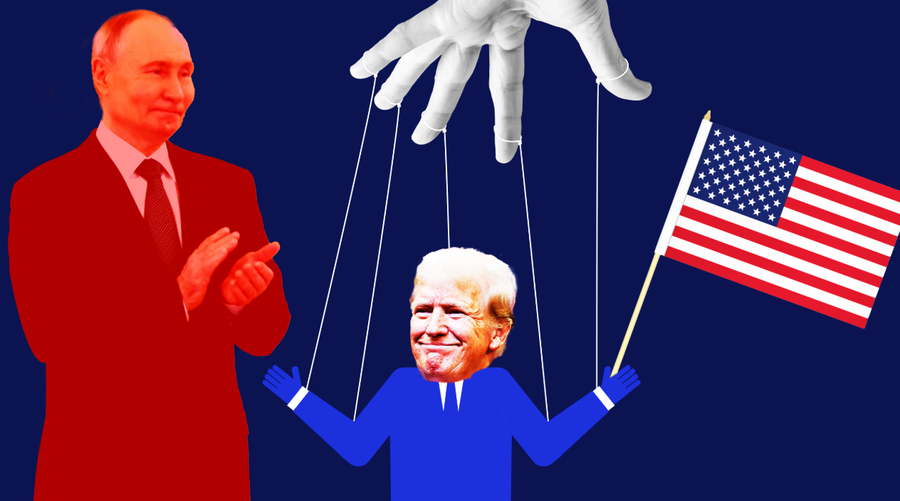
The president's desperation to end the war in Ukraine could lead to another Munich moment with Russia.
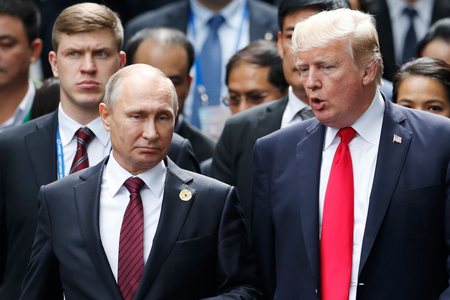
President Donald Trump's obsession with winning the Nobel Peace Prize has led him to make a series of hasty decisions in an attempt to end the war in Ukraine. The most recent example is scheduling an impromptu summit with Russian dictator Vladimir Putin in Alaska, a practical lesson in how not to do diplomacy.
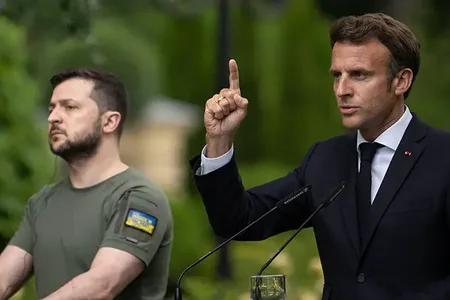
Trump came to office promising to end the war in Ukraine within 24 hours, perhaps thinking Putin would stop the Russian invasion as a personal favor. He initially tried to harshly attack Ukrainian President Volodymyr Zelensky, publicly berating the leader during a notorious Oval Office meeting in February. But after Zelensky agreed to a ceasefire, Trump began to realize that Putin was the problem. By June, the US president had begun to express frustration with his Russian counterpart.
Trump’s new anger led to more erratic behavior. Threatening to impose massive secondary sanctions on countries that do business with Russia, he initially set a deadline of early September, then pushed it back to last Friday. He announced his intention to impose an additional 25 percent tariff on India, a key U.S. strategic partner in Asia, as punishment for buying and refining Russian oil. But no such threat was made to China, America’s main rival in Asia, which buys more Russian oil than India.
Ultimately, there was no broad push for sanctions on Friday. Instead, Trump announced a highly anticipated meeting next week with Putin in Alaska. Eschewing his more realistic recent assessments of Putin’s treachery, Trump returned to claiming that “I believe President Putin wants to see peace.”
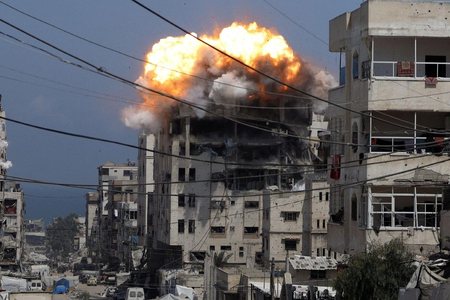
Despite Putin’s continued air and ground attacks on Ukraine, Trump is rewarding him with a presidential summit, and on American soil, no less. The turnaround appears to have been a product of U.S. special envoy Steve Witkoff’s meeting with Putin on Wednesday, where Putin reportedly proposed that Kiev give up all of the Luhansk and Donetsk provinces in eastern Ukraine in exchange for a ceasefire. With the battle lines frozen in place, the Wall Street Journal reports, a final end to the war is presumably to be negotiated later. In the real world, the chances of that happening are slim. The most likely scenario would be for Russia to violate the ceasefire, as it has repeatedly done in Ukraine in recent years.
Trump has referred to the possibility of “a land swap” between Russia and Ukraine, but it is not clear what land, if any, Putin would be willing to hand over to Ukraine. (Is he willing to give up occupied territory in the Kherson and Zaporizhzhia provinces? Doubtful.) Nor is there any indication that Russia would accept any security guarantees that Ukraine might receive from the United States or Europe in exchange for giving up some of its territory.
Putin’s latest move appears to be transparently designed to avoid further sanctions. As the Institute for the Study of War notes, Russia has been trying, and failing, to occupy all of Donbas since 2014. While Russian forces have taken most of Luhansk, they are halted in Donetsk, where Ukraine has a strong belt of strongholds anchored by the cities of Kramatorsk, Sloviansk, Druzhkivka, Oleksiyevo-Druzhkivka, and Kostiantynivka. Putin is simply trying to achieve at the negotiating table what his troops have been unable to achieve on the ground.
If Trump were to accept Putin’s terms, it would be a repeat of the 1938 Munich Agreement, in which British Prime Minister Neville Chamberlain handed over the Sudetenland, a heavily fortified and defended region of what was then Czechoslovakia, to Adolf Hitler without consulting the Czechs. In return, Chamberlain received nothing but empty promises of “peace for our time.” “You were given the choice between war and disgrace,” Winston Churchill said at the time. “You chose disgrace and you shall have war.”
Churchill was right: The agreement allowed Nazi Germany to swallow up all of Czechoslovakia and set the stage for World War II. The risk of “another Munich” is somewhat reduced in the case of Ukraine, because Ukrainians, unlike the Czechs, are unlikely to agree to such a dishonest and destructive bargain.
Ukrainians are increasingly war-weary and divided over whether to accept some temporary territorial concessions to Russia as the price of peace. But a recent poll by the Kiev International Institute of Sociology found that 78 percent of Ukrainians oppose the transfer of Ukrainian-controlled land to the Russian occupier.
By rushing to meet with Putin in Alaska, territory that, significantly, was sold by Russia to the United States, Trump risks once again allowing himself to be manipulated by the cunning Russian dictator.
There is a better way. If Trump really wants to win the Nobel Peace Prize, he should proceed with announcing a raft of sanctions on Russia, work to return frozen Russian assets to Kiev, and significantly increase arms transfers to Ukraine. Such moves would have caught Putin’s attention and potentially created opportunities for much more fruitful negotiations. Instead, Trump is rapidly squandering the leverage he gained with his sanctions threats and allowing Putin to continue his unprovoked invasion. / Adapted from “Pamphlet” by “The Washington Post”


Lini një Përgjigje