


 Shkruar nga Pamfleti
The president's strategy book in the face of defeat would be especially dangerous in the context of war.
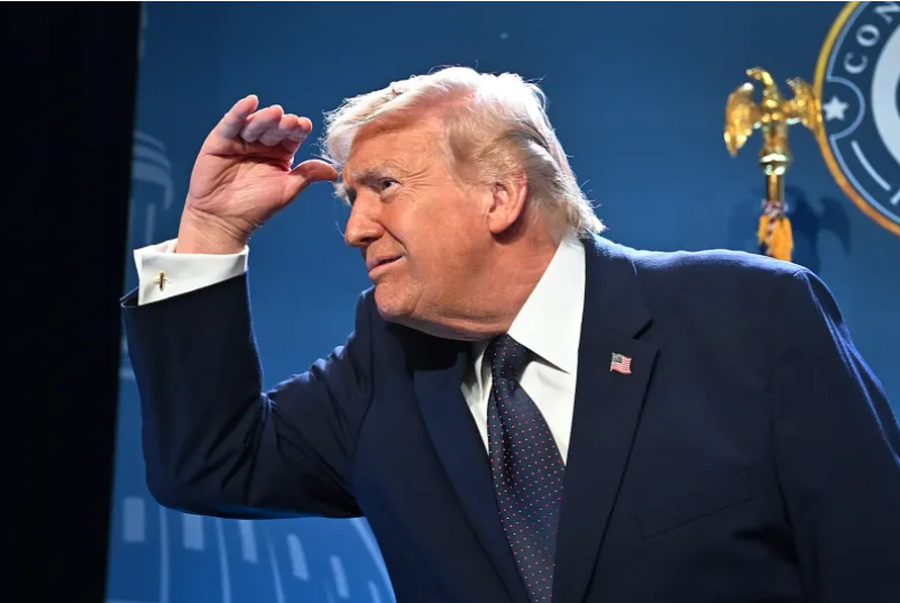
United States President Donald Trump is not easily conceding defeat. As the chances of achieving a clear victory in the war against Iran look increasingly limited, the world risks being faced with an unstable president facing a foreign policy dilemma that is completely beyond his control.
However, it remains possible that Trump will achieve an outcome that geopolitical analysts would view as advancing U.S. interests and that would justify the human, economic, and political costs of war. But as he faces an increasingly difficult situation, there is a need to anticipate his response to the possibility of failure and to prepare for the scenario where his response could make the conflict even more dangerous.
The challenges of war with Iran are mounting by the day. The U.S. military, in cooperation with the Israel Defense Forces, has achieved considerable success in destroying Iran’s air defenses, naval capabilities, and ballistic missiles. However, the country’s political system and its sources of economic influence have proven far more resilient. There is also the issue of Iran’s remaining nuclear materials and nuclear capabilities, and the risk that Tehran will emerge from the conflict convinced that only nuclear weapons can guarantee its security. Hopes for an easy Venezuela-style transition to a more manageable leader or for a broad popular revolution have faded.
Trump’s past approaches to failure may provide a glimpse into what might happen in the Middle East. Failure is no stranger to him, having suffered major setbacks in business, the courts and politics. As a figure who has survived difficult situations, he has developed a recurring pattern of responding when under pressure. This pattern includes pressuring subordinates, shifting blame, concealing facts and persisting with unsuccessful strategies.
This approach was most clearly seen after his defeat in the 2020 election. During that period, he waged a broad and multifaceted campaign to distort the results while simultaneously seeking to evade accountability. Initially, he refused to accept his election officials’ statements that the process was fair. He then exerted constant pressure on subordinates and other officials, including Georgia Secretary of State Brad Raffensperger, whom he asked to “find” 11,780 votes to overturn the result. He also called on then-Vice President Mike Pence not to certify the result and urged Justice Department officials to declare the election rigged.
When official Chris Krebs declared the election secure, Trump fired him. In parallel, he supported figures like Rudy Giuliani and Sidney Powell to promote false claims in the media and in the courts, for which they were later prosecuted. Trump and his allies filed 62 lawsuits, all of which they lost.
During this period, he spread the blame in many directions, blaming voting machines, election officials, mail-in voting, the media, Democrats, Republicans who did not support him, judges, and even foreign actors.
He also tried to force the media to confirm his claims. After Fox News and the Associated Press declared Arizona for Joe Biden, he publicly demanded that the decision be reversed and sharply criticized the rejection. He also attacked social media for limiting misinformation and criticized media outlets for interrupting broadcasts of his statements.
The most dangerous element of this reaction was the instigation of the events of January 6, 2021, at the Capitol. Although he denied direct organization, his actions gave legitimacy to the situation. Later pardons for the violent participants showed that he was willing to put institutions and human lives at risk for his political goals.
These patterns of behavior are not new. In the 1990s, during financial crises and bankruptcies, he pressured his teams and aggressively influenced the media narrative. In the Trump University case, he attacked the judge and continued to deny responsibility even after paying $25 million in damages. In 2016, he forced the White House press secretary to make false statements about attending the inauguration. In the legal case with E. Jean Carroll, he pursued a strategy of public attacks and persistent appeals.
If Trump follows the same pattern in the event of a failure in Iran, the consequences could be serious and extend beyond his personal reputation, affecting military morale, alliances, and the US's global standing.
Reports indicate that he has ignored warnings from the chairman of the Joint Chiefs of Staff, General Dan Caine, about the risks to American troops due to a lack of ammunition and support from allies. Given his history of firing officials who disagree with him, the pressure on the military could lead to inaccurate reporting, distorted risk assessments, and operational decisions that endanger lives and strategic objectives.
His approach to crises could make the situation worse, especially if legal standards and the protection of civilians are ignored. Persisting in failed military strategies could endanger not only the lives of soldiers but also the reputation of the US military.
The current administration no longer includes experienced and independent figures like John Kelly or James Mattis. Current advisers are embroiled in clashes over how to interpret the war.
There are also clear signs of information control and distortion. The administration has made inaccurate claims of responsibility for some attacks and has put pressure on the media. Restrictions on journalists and the spread of disinformation make the situation more unclear.
Disinformation affects not only the public, but also markets and relations with allies. Lack of trust in information increases economic uncertainty and makes congressional oversight more difficult.
If it fails, Trump could increase pressure on oversight institutions, punish whistleblowers, and attack critics. He could blame the military, allies, political opponents, or international powers.
In a more extreme scenario, he could take dangerous actions, such as using ground troops or unconventional military means, increasing the risk of a wider conflict.
There is also the possibility that he will shift focus to other issues, to regain political position.
However, it remains possible to pursue a more moderate approach, accepting an incomplete outcome and avoiding escalation. In this context, the role of officials, advisors and institutions remains crucial to prevent decisions that could worsen the crisis.
Unlike in 2020, Trump still has several years in office, which increases the pressure on those who might challenge his decisions. But failing to challenge wrong decisions could have serious consequences for the long-term security and stability of the United States and beyond. / Adapted from Foreign Policy




Po si shpjegon Pamfleti qe Trumpi e fitoi Arizonen kesaj rradhe qe nuk pati vote me poste, e fitoi kesaj rradhe qe nuk ishte ne pushtet por e humbi ne 2020 kur ishte president po u moren me poste milliona vota? Trump fito kesaj rradhe te gjitha shtetet qe ishin te lekundura por qe nuk lejuan voten me poste kesaj rradhe.
Bravo