


 Shkruar nga Pamfleti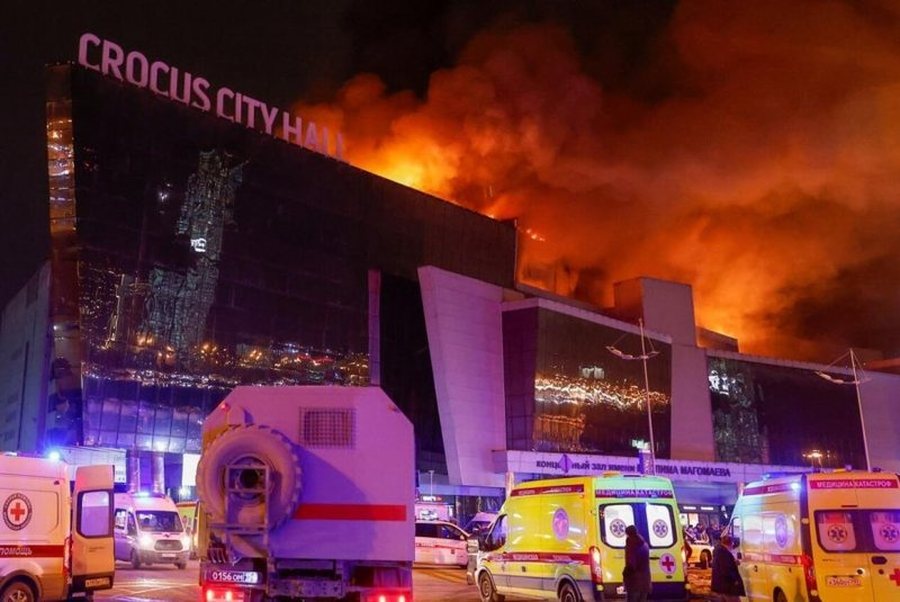
Echoes of gunfire and grenade explosions led to exchanges of accusations between Russian and Ukrainian officials.
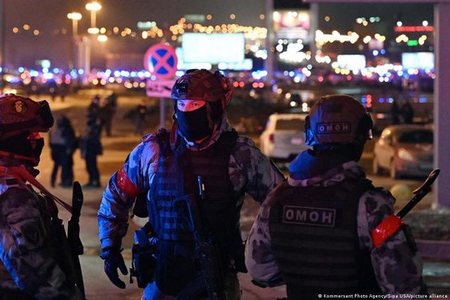
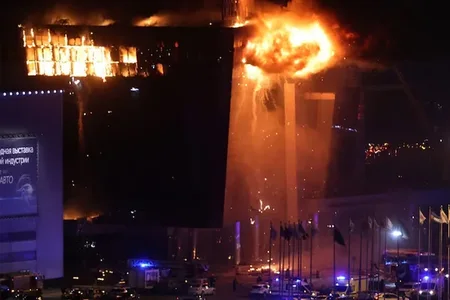
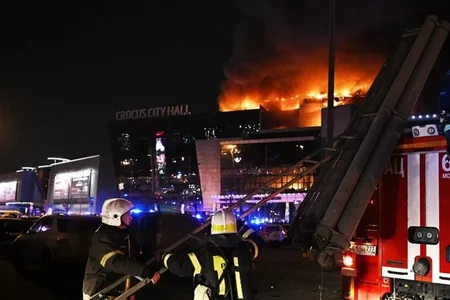
They blamed each other for the massacre at a Moscow concert hall that left more than 130 dead.
In an attempt to form a narrative behind the attack, both sides were insistent on establishing their position as dominant.
Former Russian President Dmitry Medvedev took to his Telegram channel to warn "that there would be hell to pay if Ukraine had a hand in the attack."
"If it is proven that these are terrorists of the Kiev regime, all of them must be found and destroyed mercilessly as terrorists," wrote Medvedev.
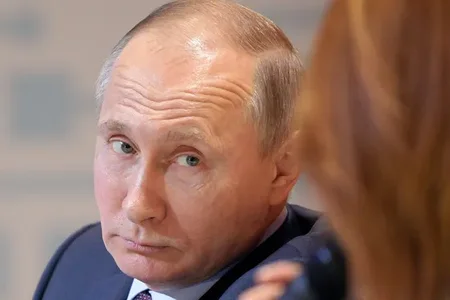
Kiev responded with accusations against Moscow and Russian President Vladimir Putin.
Ukraine's military intelligence agency HUR accused "Putin's special services" of adding to Friday's shooting of concertgoers.
Echoes of previous attacks
This was a thinly disguised reference to a series of explosions in 1999 in four apartment blocks in the Russian cities of Buynaksk, Moscow and Volgodonsk, which killed more than 300 people and injured a thousand more.
The explosions sparked the Second Chechen War, which boosted the popularity of then-prime minister Vladimir Putin, helping him to be elected by Boris Yeltsin to succeed him as Russia's president.
For years, serious questions have remained whether the bombings were so-called false flag operations carried out by the Russian security services themselves to justify the Chechen war.
But the exchange of accusations after the attack by Moscow and Kiev were interrupted by the Islamic State terrorist group, which claimed responsibility for the massacre.
Indeed, the attack in Moscow is reminiscent of the 2015 Islamic State attack on the Bataclan theater in Paris, a killing spree that left 90 dead.
Friday's shooting rampage also bore similarities to the 2002 Nord Ost theater siege, when a group of Chechen men and women occupied a packed theater in eastern Moscow and demanded an end to the Second Chechen War.
A rescue by Russian special forces, using a deadly sleeping gas, left more hostages dead than were killed by Islamist gunmen.
Many members of the Chechen Islamic separatist group behind the theater attack would later move on and sign up with the Islamic State terror group, also known as ISIS, in Syria.
Chechens began arriving in Syria starting in 2011.
They made up the second-largest contingent of Islamic State foreign fighters, and their numbers were also disproportionately high in al-Qaeda's Syria faction.
Russian security services estimated that 1,700 to 3,000 Chechens, joined by other militants from the North Caucasus, went to Syria to fight.
Syria's moderate rebels always suspected that Russian intelligence agencies were happy to encourage them to go, making it easy for them to get there by giving them passports, both to get rid of them and to disrupt the rebel groups fighting them. Russia's ally, Syrian President Bashar al-Assad.
speculation
The rebels argued that Damascus and Moscow played a complex double game, using the jihadists to act as a fifth column, planning for them to effectively sabotage the revolution against Assad and paint him as extremist.
In May 2015, the ease with which Islamic State was able to capture the ancient city of Palmyra led some military observers to speculate that Assad and Russia deliberately abandoned the site — with its unique ruins and irreplaceable ancient artifacts and treasures. – to gain Western sympathy.
Despite Islamic State claiming responsibility for Friday's massacre in Moscow, the Kremlin is likely to use the concert hall killings for propaganda purposes.
Putin's government will likely continue to suggest that Ukraine was somehow involved, even though the attack was "an act of terrorism, full stop," argued Sam Greene, an analyst at the Center for European Policy Analysis, in a post on X .
"Failing to prevent it, the Kremlin will likely look for a way to use it, which could mean blaming Ukraine," Greene wrote.
He warned that "the fact that the Kremlin will use the attack for political purposes does not mean that it was a false flag."
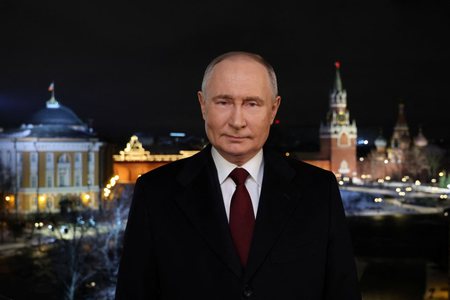
As soon as Greene published his post, Russian leader Vladimir Putin himself claimed in a broadcast that the attackers had fled the scene and were "traveling towards Ukraine".
Ukrainian Foreign Minister Dmytro Kuleba called such Russian accusations "a provocation planned by the Kremlin to further fuel anti-Ukrainian hysteria in Russian society" with the aim of "discrediting Ukraine in the eyes of the international community"./ Taken from Politico . eu



Lini një Përgjigje