


 Shkruar nga Massimo Gaggi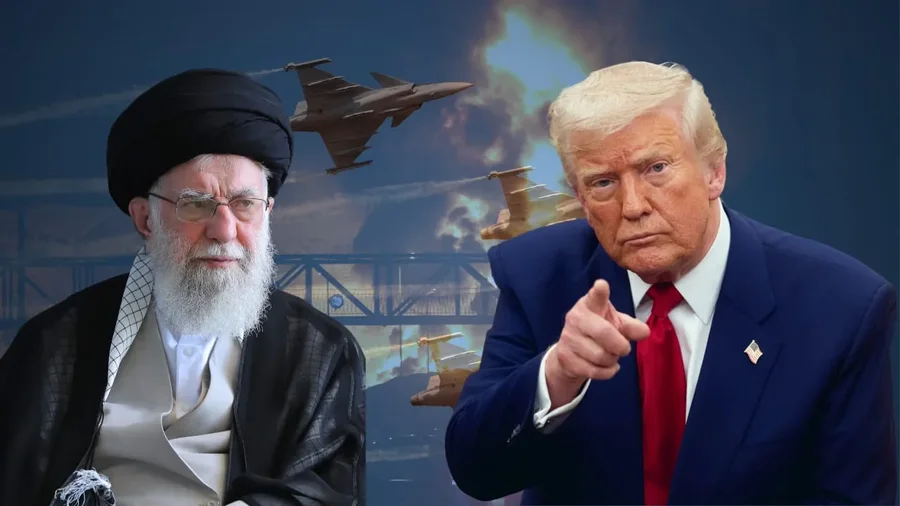
The logic of a theocracy fighting an ideological war that must be waged at all costs is not that of Western diplomacy...
From the "maximum passive pressure" of the attempt at economic suffocation with sanctions and embargoes, to the attack on the military and revolutionary leadership with the assassination of General Soleimani during Donald Trump's first term. And now, in his second term, on Iran, the president is again vacillating between trying to reach a compromise acceptable to him with the regime and threatening a military intervention "of variable intensity". Trump had even envisaged a kind of "Venezuelan scenario", despite being aware that Iran is much stronger than the South American country and enjoys very strong Chinese and Russian support: Supreme Leader Ali Khamenei, who, faced with threats of total destruction, accepts exile rather than be overthrown by force, and a new Shiite leadership that is initiating some reforms, although without achieving regime change.
But the logic of a theocracy fighting an ideological war that must be fought at all costs is not that of Western diplomacy. Ali Khamenei is determined to resist to the end, and the new round of negotiations has not yielded results, although Omani mediators speak of some glimmers of hope thanks to "creative ideas": Tehran is remaining firm on ballistic missiles, while being more flexible on nuclear issues, but without accepting a total renunciation of uranium enrichment.
Aware of Trump's deal-making logic, Iran is offering access to its oil and rare minerals, inviting American companies to invest on its soil to gradually restore a climate of trust. This is an impractical path even for Trump, who would have to lift sanctions: unthinkable at the moment.
Thus, a president who has amassed the largest naval and air force in the region since the invasion of Iraq 23 years ago continues to choose the right path: on the one hand, he wants to go down in history as the president who overthrew the Ayatollahs' regime, something his predecessors failed to do. On the other, his generals are warning him: this time, there would be many casualties among the military at American bases, against which Iran would launch hundreds of missiles, and the United States would have to seriously exhaust its arsenal. Missile reserves would fall below safe limits.
Eight months before the tough Republican midterm elections, his political advisers are stressing the obvious: the public would not respond positively to another war. Especially MAGAs, already disillusioned by the Epstein case: they believed his promise to stay out of conflict, but now see him increasingly like George Bush, constantly mocked by Trump for the disastrous wars he dragged America into.
Since the Abraham Accords of 2020, Trump has always believed that the Middle East would be his most important foreign policy legacy. But the Saudis and other Sunni governments, the cornerstones of these agreements, do not want to be drawn into a regional war: they fear that a desperate Iran will no longer hesitate to strike at all its neighbors.
In his State of the Union address, Trump urged Iran to abandon the development of new ballistic missiles capable of hitting Europe and also threatened the United States, in addition to calling for a final ban on potentially military-grade nuclear weapons. Iran is unwilling to go beyond a three-year moratorium on nuclear weapons and is firmly committed to developing its missile arsenal, which, moreover, is being fed by the Chinese, who have every interest in keeping the US military busy. Perhaps they could grant a moratorium on testing new weapons.
In this way, no progress is being made. As in the case of Russia with Ukraine, seemingly conciliatory gestures are possible, but the interest remains in weakening Washington and the entire West.
It is difficult to predict how Trump will react. An unstable leader who raised the hopes of young Iranians sent to slaughter, he promised revenge by denouncing the massacre of 30,000 civilians, while now the issue has disappeared from his agenda. A president who in June insulted and threatened with serious consequences those who claimed that the bombing of nuclear plants had achieved only partial results. Today, forgetting his words, "Iran's nuclear facilities are completely and totally destroyed," he again pushes Tehran, accusing it of having resumed uranium enrichment, as his trusted negotiator, Steve Witkoff, calmly denounced.
And Europe? So far, it has been a spectator. It certainly has less say in Iran than in Ukraine and Gaza: fronts in which it has a role, even if Trump has often sidelined it. Iran and the redefinition of the balance of power in the Persian Gulf and the entire Middle East, however, are too important a geostrategic and energy game, especially for Europe, to accept being reduced to a mere spectator.
The space to influence Trump, to influence the complex relationship between him and Netanyahu, is limited. And, as Gov. and former press secretary Sarah Huckabee Sanders said of the Supreme Court's tariff decision, "the best way to pressure Trump to do something is to tell him he can't do it." But simply standing by could be even more dangerous./ Adapted from "Pamphlet" by " Corriere della Sera "


Lini një Përgjigje