


 Shkruar nga Pamfleti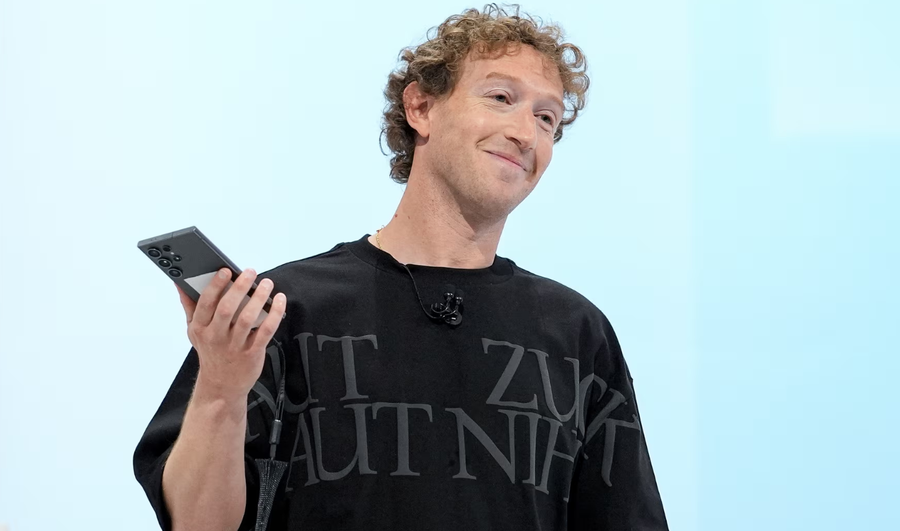
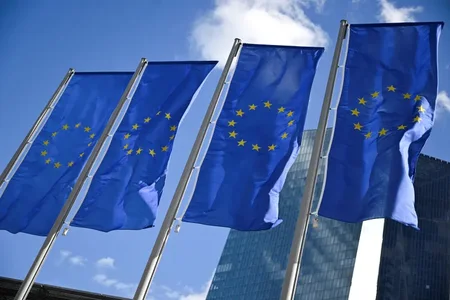
Von der Leyen and Virkkunen must do three things urgently to protect democracy. First, radically accelerate action under the Digital Services Act against algorithms that distort political debate.
Elon Musk's recent attempts at direct political intervention illustrate the grave danger facing Europe.
He has suggested the overthrow of the UK government, asking whether “America should free the people of Britain from their tyrannical government”. Three days later, he hosted Germany’s far-right candidate for chancellor in the upcoming federal election in a live discussion on the social media platform X, which he owns. It is likely that his manipulation of X’s algorithm helped the two gain access to the profiles of millions of people. Last week it also emerged that Musk’s SpaceX could start providing a large part of Italy’s defence network.
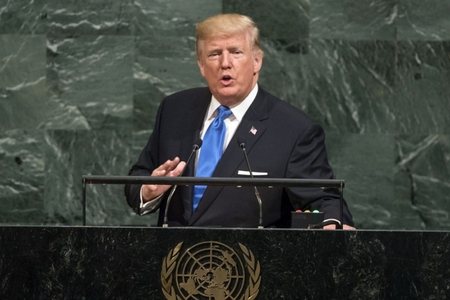
Europe's leaders should see this behavior as a sign of things to come. We unthinkingly allowed control of the media and digital infrastructure to be concentrated in the hands of a few American tech oligarchs. Now American big tech is Donald Trump's tool.
Jeff Bezos has neutralized the Washington Post, Mark Zuckerberg has given up moderating Meta content, and Google will probably be next. Every American tech oligarch (Bezos, Zuckerberg, Sundar Pichai, Sam Altman, Tim Cook, and Microsoft’s Satya Nadella) gave Trump $1 million in donations last week.
Trump has Europe in his sights, and big tech is now under his wing. Zuckerberg told Joe Rogan’s podcast on Friday that he believes the Trump administration will defend big American tech against the EU. Vance’s threat in November that the US would “kill” NATO financially if the EU implemented its law against X is instructive.
This means that Europe is under heavy attack from both the west and the east. In the past four months, Russia has almost succeeded in rigging elections in EU member state Romania and EU candidate Moldova using TikTok and Meta. Now, it looks like Musk may also buy TikTok’s US arm.
This is a crisis. Liberal democracy is at risk unless Ursula von der Leyen and the EU’s security chief, Henna Virkkunen, take swift and smart action. American and Chinese tech oligarchs control the algorithms that shape how Europeans see the world every day through our social feeds. Their systems amplify anger and turn our communities against each other. They also push self-harm and suicide into children’s diets.
What should Europe do? The EU must break up the big tech manipulation machine. Zuckerberg’s announcement last week to get rid of fact-checkers Meta was a red line. Meta has known for years that no amount of content moderation can solve the problem created by its algorithm. Its leaked internal research is clear: “We will never remove everything harmful from a medium used by so many people, but we can at least do the best we can to stop the amplification of harmful content by giving it unnatural distribution.”
A secret Facebook study reported in 2016 that “64% of all extremist group affiliations are due to our recommendation tools… our recommendation systems exacerbate the problem.” However, Zuckerberg barely mentioned the algorithms last week, other than saying that Meta would now boost political content even more.
Von der Leyen and Virkkunen must do three things urgently to protect democracy. First, radically accelerate action under the Digital Services Act against algorithms that distort political debate.
Second, put serious political pressure on Ireland to enforce the EU’s data protection law, the General Data Protection Regulation (GDPR), against big tech. This is crucial because big tech’s algorithms rely on particularly intimate personal data about our tastes and triggers to decide what content to feed us. This in turn makes us move with fire so that more ads can be sold for our attention. The GDPR prohibits the processing of intimate data that could reveal things like our political views, beliefs and sexual desires, unless we have been specifically asked to turn on the system, warned of the consequences and then asked separately to confirm that this is indeed what we want to do. Tech platforms do not do this.
Implementing these rules would disable big tech’s algorithms in one fell swoop, restoring X and other platforms to their pre-2014, pre-algorithmic golden age. People, instead of big tech’s algorithms, would once again decide what they say, see, and share with their friends.
But a quirk of European law means that the Data Protection Commission (DPC) in Ireland is in a unique position to lead GDPR investigations and action against big tech data misuse across Europe. The GDPR is the lead authority for YouTube and Google, Meta, TikTok, Microsoft and Apple because they have their European headquarters in Ireland.
This has paralyzed the implementation of EU guidelines against big tech, data fraud, which have remained largely unchallenged by Ireland’s DPC. The limited enforcement it does provide is generally done under duress from other EU supervisory authorities. Oddly enough, when Europe’s other national data authorities voted collectively that the DPC should investigate how Meta uses people’s most intimate data, it responded not by investigating Meta, but by suing them. The European Court of Justice has yet to rule on the matter.
Surprisingly, Ireland has suffered little pressure from Brussels to take its foot off the brake. Instead, the implementation and misapplication of GDPR has terrorized Europe's small businesses and spammed everyone with consent windows.
Third, national authorities across Europe should be prepared to take action against, and perhaps even exclude, big tech algorithms from their markets (perhaps through the Audiovisual Media Services Directive (AVMSD), a largely ignored EU law governing audiovisual content) if they resist regulation. Alternatively, countries could resort to less targeted responses, such as EU candidate Albania’s current efforts to ban TikTok for a year.
In the long term, Brussels must remove remaining regulatory barriers between EU countries that prevent the upstream growth of European technology across borders. Europe also needs a digital infrastructure that does not rely on foreign powers.
Our remarkably rapid move away from Russian energy proves that Europe can act decisively. Von der Leyen must move quickly and boldly again. Europe’s democracy is at great risk. This is not a war that can be avoided. / Adapted Pamphlet from The Gurdian /






Lini një Përgjigje