


 Shkruar nga Pamfleti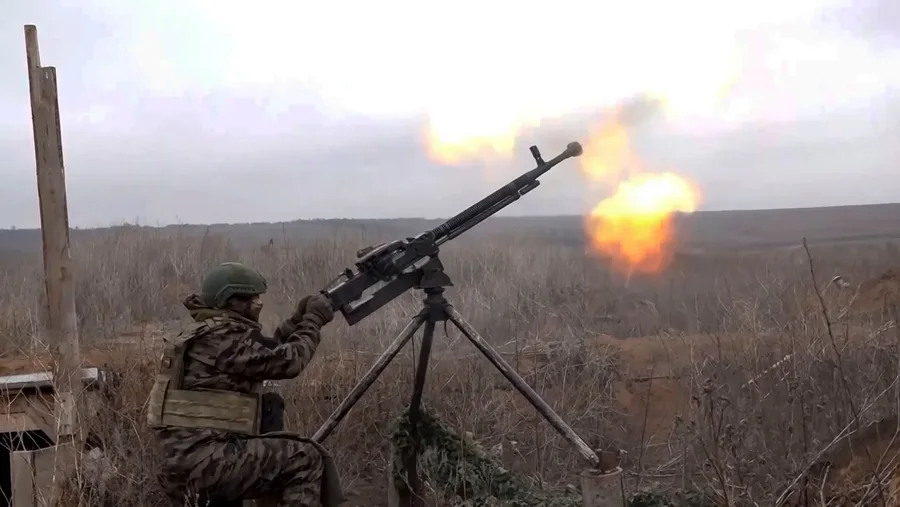
The ball is now in Moscow's court, as the US and Europe are ready to present a comprehensive proposal for a 30-day ceasefire in Ukraine, which, however, if rejected, will lead to the joint imposition of new sanctions on Russia, a French diplomatic source said, according to Reuters.
The source said that the proposal has not yet received the "green light" and will be studied over the weekend at the meeting of leaders of the "alliance of the willing" to be held in Kiev on Saturday, in which, among others, Kyriakos Mitsotakis will also participate via video conference.
It is recalled that US President Donald Trump on Thursday called for an unconditional 30-day ceasefire between Russia and Ukraine, warning that Washington and its partners will impose further sanctions if the ceasefire is not respected.
"We have not fully finalized the plan, but we hope we are at a moment of convergence," said the diplomatic source, speaking on condition of anonymity.
"What could happen in the coming hours and days is that there could be an announcement of a ceasefire, either for 30 days or in part, which is still being discussed," the same source added, according to Reuters.
Moscow faces new sanctions
At the same time, the source said that discussions are still underway regarding declaring a unilateral ceasefire or whether Russia will be given a short period of time to react, and if it refuses, then new US and European sanctions will be imposed on Moscow. The two sides are coordinating on the sanctions packages.
Moreover, the source stressed that political and technical talks between Europe and the US have intensified since last week. After all, Trump and Macron spoke on Thursday to discuss the ceasefire proposal.
Also, French Foreign Minister Jean-Noel Barrot, who was in Washington last week to meet with US Secretary of State Marco Rubio, will follow President Emmanuel Macron to Kiev on Saturday.
"In discussions with the Americans, we sensed an irritation with the Russian position, the lack of reactivity and seriousness in its responses to what was previously proposed," the source said. "The decision has practically been made."
Meanwhile, as the BBC Russian service reports, Germany's new Chancellor, Friedrich Merz, said at a press conference in Brussels that an agreement is likely to be reached within the next two days.
According to him, given the three-day ceasefire announced by Russia, there is a "high probability" that it will be extended for 30 days, after which "negotiations on a peace agreement could begin."
Merz expressed hope that the conditions would be accepted by the Russian side. "The ball is completely in Moscow's court," the German chancellor said.
For its part, Ukraine has expressed its willingness to accept the US proposal. Russia has unilaterally declared a three-day ceasefire from May 8 to 10, coinciding with the 80th anniversary of the end of World War II.
"Yes" from Kiev to any format of negotiations
Meanwhile, Ukrainian President Volodymyr Zelensky said that Kiev is ready to participate in "any form of negotiations" with Moscow to end the war.
Following his phone call with US President Donald Trump on Thursday, Zelensky said in a tweet that they discussed "the need to continue efforts to achieve peace."
After briefing Donald Trump on the situation on the battlefronts, Zelensky assured him that "Ukraine is ready for a 30-day ceasefire, even starting today."
As Zelensky said, Ukraine is ready to participate in any format of negotiations, "but for this to happen, Russia must show that it is serious" about its stated intention to end the war, "starting with a complete and unconditional ceasefire."
Trump insists on threats
Russia, like Ukraine, "must be held accountable" and "if the ceasefire is not respected, the US and its partners will impose sanctions," Donald Trump warned again via Truth Social.
It is noted that Britain and Northern European countries also support President Trump's proposal for an unconditional ceasefire for 30 days in Ukraine, Norwegian Prime Minister Jonas Gaard Støre said earlier, on the occasion of a meeting of the 10 member countries of the JEF (Joint Expeditionary Force).
"This is a coordinated approach, which has been adopted by the US, the Europeans and Ukraine," the Norwegian prime minister stressed.
The Joint Expeditionary Force (JEF) is led by Britain and includes the Nordic and Baltic states, as well as the Netherlands. /Adapted from Pamphlet/




Lini një Përgjigje