


 Shkruar nga Pamfleti
Trump's Peace Council ceremony had no European allies present in the room, who have been alarmed by the US invitation to Putin.
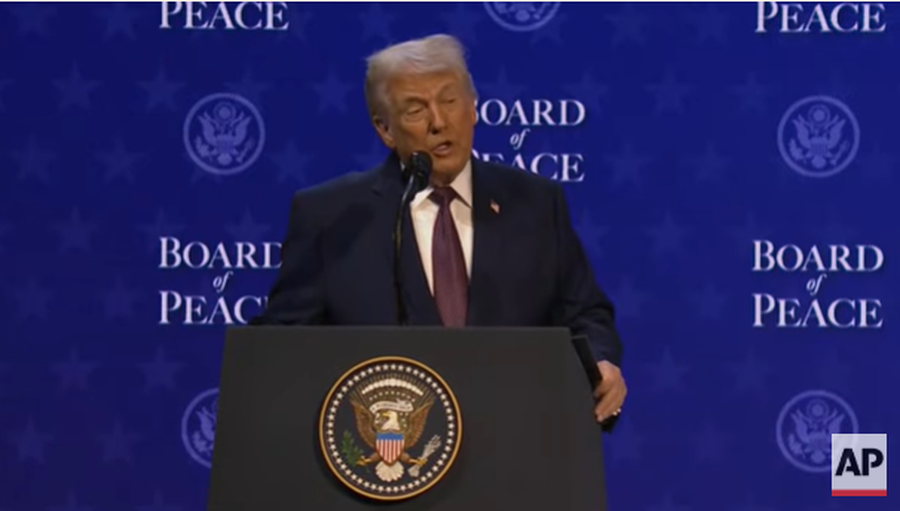
Donald Trump today introduced the 'Peace Board' at the Davos Forum, or otherwise known as the US president's private UN, where entry will cost $1 billion.
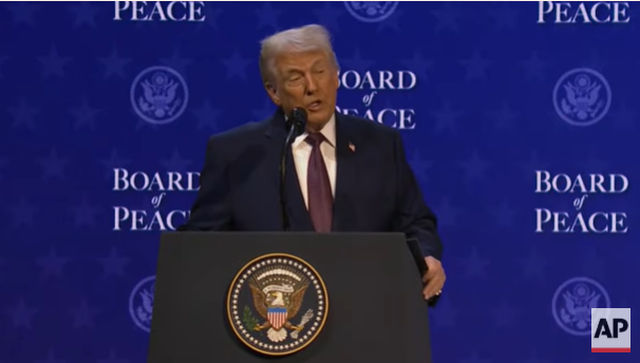
Trump began his speech at the signing ceremony by calling it a "very exciting day" and, amid concerns that he might try to turn the council into a new global body that would take over the role long held by the UN, said that "we will be working with many other bodies, including the United Nations."
Who's attending?
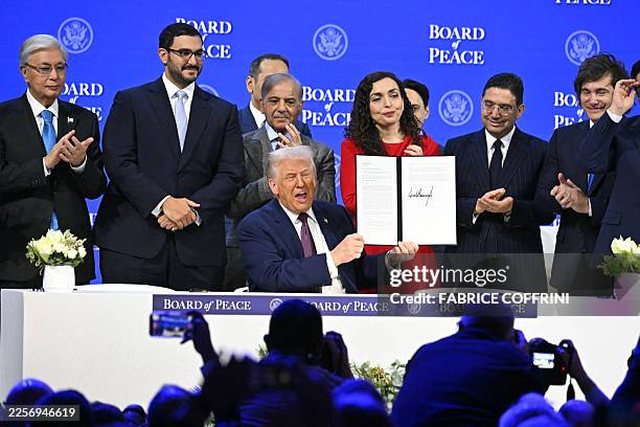
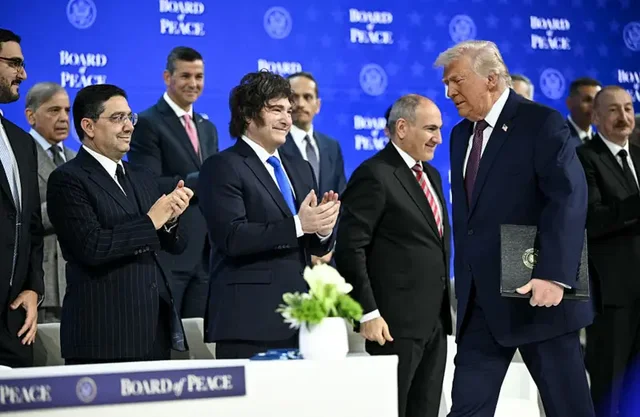
The stage in Davos was packed with leaders who accepted Donald Trump's invitation to join the Peace Council.
Among them are the presidents of Azerbaijan, Argentina, Kazakhstan, Indonesia and Kosovo, as well as Hungarian Prime Minister Viktor Orbán, who is also the only one from the European Union, The Guardian reports.
The white chair is obviously reserved for Donald Trump, who has been declared the council's eternal leader.
Peace Board Ceremony, European Allies Missing
President Donald Trump's signing ceremony for his new Peace Board featured representatives from fewer than 20 countries and none of the traditional Western European allies.
The nations represented on stage at Davos leaned heavily towards the Middle East and South America, with leaders from Saudi Arabia, Qatar, the United Arab Emirates, Argentina and Paraguay among those attending.
"We are truly honored by your presence today," Trump said, referring to them as " in most cases very popular leaders, in some cases not so popular."
The total number of participants is fewer than the roughly 35 that a senior administration official projected for reporters earlier this week. And it did not include any Western European nations, some of whom have raised concerns about the idea of a dedicated peace board that could include adversaries like Russia currently at war with one of their allies.
What is the "Peace Board" and why does it raise suspicions?
According to Reuters, Trump has sent invitations to around 60 countries, aiming for a scheme that "starts in Gaza" and "expands" to other fronts, while the same report says that permanent membership is envisaged for those who pay $1 billion and that Trump will be president for life.
The existence of a "ticket" to a permanent position (and indeed at a size that functions as a power filter rather than an equal contribution) is the first main source of European distrust: it turns the scheme into a closed club, favoring the "ready" and those who are financially powerful, instead of a process of legitimization through international treaties.
The second source of distrust is the political architecture. A Reuters report on Italy states that Rome considers that participation in an organization “led solely by the US president” would conflict with the Italian constitutional principle that requires equal participation in international organizations. Italy’s argument sums up European anxiety: the “Council” does not resemble a multilateral institution, but a mechanism of American hegemony, where access, duration and renewal of the mandate (according to what has been revealed about the draft charter) are directly linked to the central will of the US president.
The third problem is institutional overlap. In a CNN TV clip/transcript, the “Peace Board” already appears as a Trump-Macron tension zone, with Trump escalating his rhetoric and placing trade threats in a context that would “normally” belong to the realm of diplomacy and collective security. This combination of “hard power” (tariffs) with “peace architecture” (the board) is the main danger signal for Brussels: it turns peacemaking into a tool


Lini një Përgjigje