


 Shkruar nga Pamfleti
Khamenei's body documentation has reportedly been shown to Prime Minister Benjamin Netanyahu and President Donald Trump...
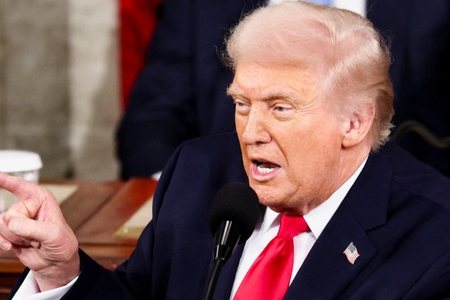
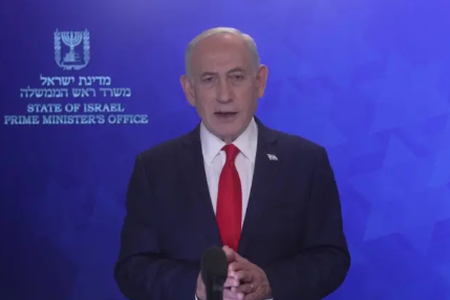
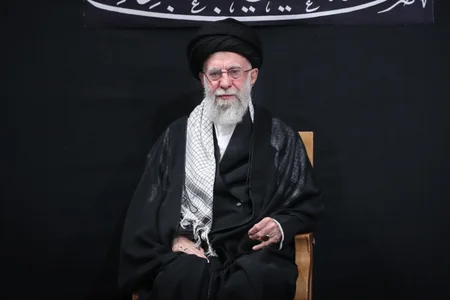
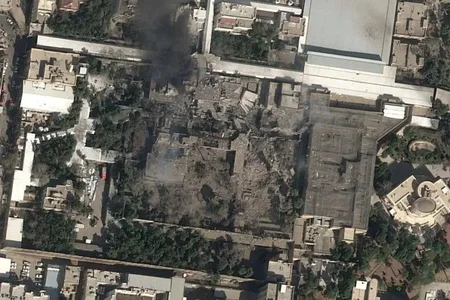
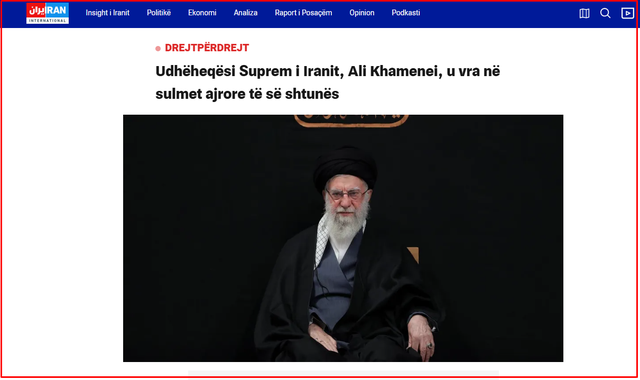
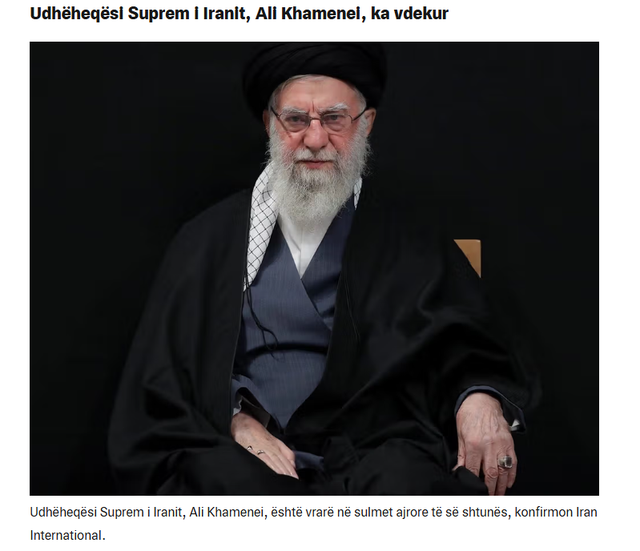
Iran's Supreme Leader Ayatollah Ali Khamenei was killed in an Israeli airstrike on Tehran on Sunday. Senior Israeli officials said late on Sunday that his body was found under the rubble of the Israeli airstrike. Khamenei's body was reportedly shown to Prime Minister Benjamin Netanyahu and President Donald Trump, Reuters and Iran International reported.
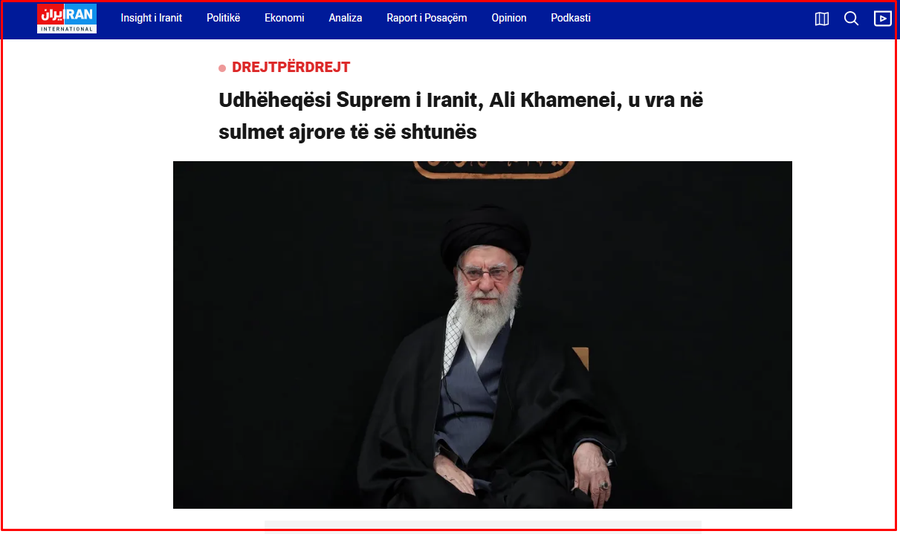
Since this afternoon, there have been indications that Khamenei may have been killed in the Israeli attack on the bunker where the supreme leader was being held. Despite Israeli claims, senior Iranian officials have denied the death of the supreme leader.
Earlier on Saturday, Iranian officials promised to release a recording of Khamenei immediately after Israeli strikes targeted his compound in Tehran. It is worth noting that Iran has yet to acknowledge Khamenei's death, and neither the US nor Israel have issued official statements yet.
Who was Ayatollah Ali Khamenei?
Ayatollah Ali Khamenei, full name Seyyed Ali Hosseini Khamenei, was born on April 19, 1939, in the city of Mashhad, in northeastern Iran, into a religious family of Azerbaijani origin. His father was a prominent local cleric, and he grew up in modest circumstances, beginning his religious studies at an early age. From early childhood he entered Shiite seminaries, attending classes in Mashhad, then in Najaf, Iraq, and especially in Qom, where he became a direct disciple of Ayatollah Ruhollah Khomeini, the leading figure in the opposition to Shah Mohammad Reza Pahlavi.
In the 1960s and 1970s, Khamenei became deeply involved in the Islamic revolutionary movement, being arrested and imprisoned several times by the Shah's regime for anti-monarchy activities. He became one of Khomeini's closest associates, organizing protests and sermons against the West and the Shah. When the Islamic Revolution broke out in 1979, Khamenei played a key role: he was appointed a member of the Revolutionary Council, deputy defense minister for revolutionary affairs, and an early supervisor of the Islamic Revolutionary Guard Corps (IRGC).
He also led Friday prayers in Tehran, a position of great influence. After the revolution, in 1981, after the assassination of President Mohammad-Ali Rajai in an assassination attempt, Khamenei was elected President of Iran with an overwhelming majority of the vote. He served as president from October 1981 to 1989, leading the country through the long Iran–Iraq War (1980–1988), surviving a serious assassination attempt in June 1981 that left his right wing paralyzed, and strengthening ties with the IRGC as a key force in the regime. When Ayatollah Khomeini died on June 3, 1989, the Assembly of Experts elected Khamenei as interim Supreme Leader on June 4, 1989.
The constitution was quickly amended to remove the requirement that the supreme leader hold the highest religious rank (marja'), and he was confirmed as the permanent leader. Thus began his reign as Supreme Leader, which lasted over 36 years, making him the longest-serving leader in the Middle East and the longest-serving Iranian leader since Shah Mohammad Reza Pahlavi. As Supreme Leader, Khamenei wielded near-absolute power: he appointed key officials such as the heads of the judiciary, the military, and the IRGC, approved or blocked laws, directed foreign policy, and supported Iran's nuclear program for civilian purposes.
He expanded Iran's influence in the region through the "Axis of Resistance", supporting Hezbollah, Hamas, the Houthis in Yemen, Shiite militias in Iraq and Syria, and faced heavy international sanctions, massive domestic protests (such as those of 2009, 2019, 2022 after the death of Mahsa Amini) and ongoing conflicts with the US and Israel.
His rule was characterized by a severe crackdown on the opposition, centralization of power in the IRGC, promotion of the resistance economy, and harsh anti-American and anti-Israeli rhetoric. He survived health problems such as prostate surgery in 2014 and other setbacks, but remained in power until the end.


Lini një Përgjigje