


 Shkruar nga Rigels Lenja
Since Rama came to power in 2013, more than 400,000 Albanians have left their country, mostly in search of better economic opportunities. Media freedom has weakened, while corruption, nepotism and clientelism are still present.
Albania considers Vučić a close friend, while at the same time creating military partnerships with Kosovo and Croatia. He declares Turkey a strategic partner, while maintaining very close relations with Israel, Ankara's great rival in the region. He is considered a good friend of Melon, Macron, Von der Leyen, etc., and this has brought Albania to the table with the major actors. However, dozens of reforms necessary to build a society of the rule of law and democracy have either not been implemented or have been partially implemented, hindering the country's further integration into the EU.
On May 11, Albanian Prime Minister Edi Rama secured his fourth consecutive term in office. By the end of the new term in 2029, he will be the second-longest-serving leader in the post, after communist Prime Minister Mehmet Shehu (in office from 1953-1981).
The parliamentary elections of May 11 brought a landslide victory for the Socialist Party. It received about 50,000 more votes (or 4 percent) compared to the 2021 elections. It now has 83 of the 140 seats in parliament, and is only one vote short of the majority required for constitutional changes.
Rama's landslide victory can be attributed to many factors: campaign style; an electoral law that favors the governing majority, combined with undemocratic practices such as the use of state resources; an uninspiring and old opposition candidate like Sali Berisha; a fragmented opposition front of new parties; but also the failure of the EU and the US to protect democratic standards.
The OSCE observation mission listed a wide range of undemocratic election practices by the ruling party, including the use of state resources, illegal fundraising, widespread voter intimidation, unbalanced media coverage, and pressure on public administration employees.
In the latter, the “patronage” system set up by Rama (a form of clientelism) was very important. A number of media reports and reputable NGOs have expressed concerns about democratic backwardness in Albania, abuse of power, elite capture, state capture, money laundering and a decline in media freedom. However, one aspect that stands out is the complete lack of criticism from the EU and the US.
-The "magic" of relationships
Since the start of Russia's full-scale war in Ukraine, both the EU, its influential members, and the US (starting with the Biden administration), have publicly and privately downplayed criticism of the undemocratic practices used by allies like Albania.
Most EU members see Rama as a worthy partner. The country has successfully hosted 3 political events: the EU-Western Balkans Summit in 2022, the Berlin Process Summit in 2023, and the European Political Community Summit this year.
These activities have put Rama at the center of some of Europe's most crucial issues. Italy benefited from signing an agreement to create reception centers for illegal immigrants caught at sea. Three British prime ministers - Johnson, Sunak and Starmer - followed the same approach, asking Rama for a similar pact.
In addition, Rama has managed to improve regional relations with Serbia, which many Western observers consider a breakthrough, even though Serbia had unresolved issues with Kosovo, but not with Albania.
Part of Rama's international profile is his condemnation of Russia's war on Ukraine, support for all EU sanctions against Russia, and the supply of weapons to Ukraine, in stark contrast to the path followed by Serbia or EU countries like Hungary and Slovakia.
Rama has maintained close relations with Israel, welcoming Israeli President Herzog during an official visit last year, a move that was likely not well received in Ankara (Turkey is Tirana's strategic partner), but was appreciated in many Western capitals.
Rama has drafted a regional integration plan that supports regional initiatives such as the “Open Balkans,” “Mini-Schengen,” and an open dialogue with Serbia. While these seem promising for regional cooperation, in reality nothing has been achieved.
Instead, they have been used to mask corruption, nepotism, restrictions on media freedom, and elements of state capture. In addition, Rama has a good relationship with the Trump administration. Trump’s son-in-law, Jared Kushner, has won a 99-year, tax-free contract for tourism investments on the island of Sazan, a project worth billions of dollars.
While the US- and EU-funded reform of the judicial system in 2022 led to the arrest of a number of Rama's ministers, including Saimir Tahiri, the former Interior Minister who was convicted of abuse of office, Rama himself has rarely been publicly criticized for the involvement of members of his government in corruption or organized crime scandals.
-Friend of all (except Russia)
The EU sees Rama as a prime minister fully committed to Western interests in the region, who guarantees stability in a turbulent region, who supports the bloc in times of crisis, and who, at least on paper, supports Western liberal reforms.
But since Rama came to power in 2013, more than 400,000 Albanians have left their country, mostly in search of better economic opportunities. Media freedom has weakened, while corruption, nepotism and clientelism are still present.
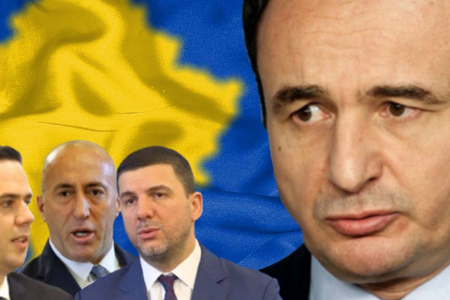
Edi Rama frequently and publicly criticizes his Kosovo Albanian counterpart, Prime Minister Albin Kurti, for crossing red lines. Something that Serbian President Aleksandar Vučić is unwilling or unable to do in the face of the separatist actions of Bosnia and Herzegovina's Serb leader, Milorad Dodik.
Although Albania has designated Turkey as a strategic partner, it has no objection to welcoming the Israeli president with full honors, abstaining from the UN resolution for a humanitarian ceasefire in the Gaza war, and is even reported to be selling weapons to Israel.
It has positioned itself as a leader in support of Ukraine, and is doing more than one would expect from a country of its size. Meanwhile, Belgrade has been far from publicly condemning Russia’s war against Ukraine. Albania has managed to forge a constructive partnership with Serbia, and Rama considers Vučić a close friend, while at the same time establishing a military partnership with Pristina and Zagreb.
While openly clashing with Kurti, Rama managed to invite leaders of Albanian parties from North Macedonia to Tirana to encourage them to pursue a constructive political agenda, especially with the Social Democratic League of former Prime Minister Zaev (another close friend of Rama).
On a personal level, Rama is considered not only as the prime minister of a partner country, but also as a good friend of Melon, Macron, Von der Leyen, Herzog, Zelensky, Vučić, and Erdogan.
All these actions in international relations have managed to bring Albania to the negotiating table with major actors. However, dozens of reforms necessary to build a rule of law and democratic society have either not been implemented or have been partially implemented, hindering the country's further integration into the EU./ “The Balkans in Europe Policy Advisory Group”


Lini një Përgjigje