


 Shkruar nga Ben Andoni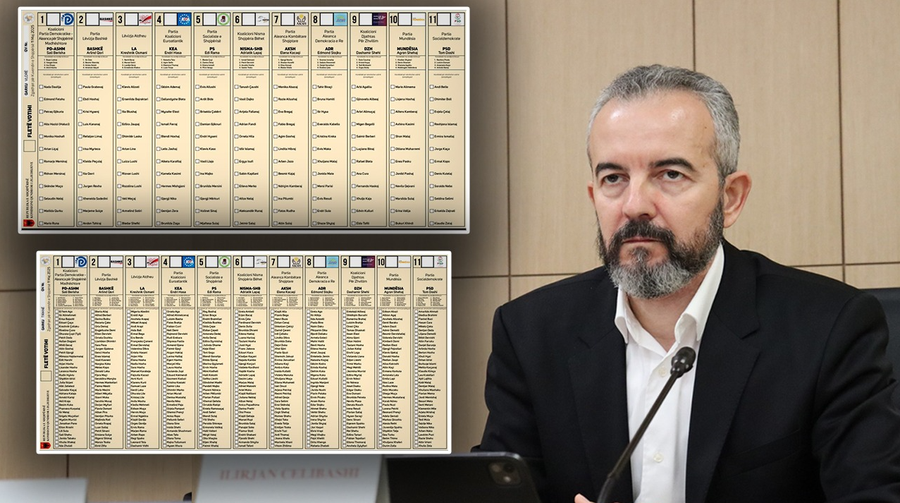
Albania needs to have a legislative institution with much more limited participation to represent the sublimity and effect of an institution with almost a century-old history, but which is already suffering from the constitutional changes made by Rama+Berisha, the two longest-serving people in the top echelons of Albanian politics.
The gigantic ballot paper of the Tirana District, valuable more for collectors, in these elections will contain a multitude of names that truly gives meaning to gargantuan things. The insatiability of politics and of a group of people, who do not share power, is a consequence of an electoral code that no longer fits the country's demographics but rather the real contribution of so many people, almost unknown, who sign their names in the historical book of Albanian legislators.
Whatever one may argue about democracy in our country, in reality our electoral system is centered on the political will and not on the voter's trust (read: will) in the candidates. The moment the voter casts his vote, it is already the president who manages the will and essence of the deputy, supported by the ordinary voter. He/she who deviates knows the country well.
In our argument: Albania needs to have a legislative institution with much more limited participation to represent the sublimity and effect of an institution, with almost a century of history, but which is already suffering from the constitutional changes made by Rama+Berisha, the two longest-serving people in the high power of Albanian politics. We emphasized this because today the deputies of the two wings are simply extensions of the decision of the respective presidents and with decisions that are known long ago. As for its sublimity, the parliament has remained simply in theory because in practice, with the behavior of these legislatures, it is more the subject of humor and jokes, where Rama&Berisha are unbearable protagonists (From the power of appointing lists, their attribute).
In the communist Parliament before 1990, there were a full 250 deputies representing the entire social stratification of the country, from workers and simple peasants to the most prominent intellectuals of the time. They met infrequently, and this gave legitimacy to a time when the socialist regime had relativized the meaning of parliament. This was so true that at the turn of the 1990s, even young politicians did not understand why parliament was needed! This, in fact, became practically true later, when most of them simply stood on cardboard like mannequins. This continued in the new pluralist parliament and, seeing its efficiency, the deputies themselves did a good job by reducing the number of deputies to 140 in the 1992 legislature. In terms of how much they represent, specialists have found that this measure is still inflated and is very excessive compared to a large number of countries, in terms of population-deputy representation of their parliaments.
Further still: When you consider that the last census officially showed the resident population in September 2023 at around 2.4 million inhabitants and where the opposition claims that it is less than 2 million inhabitants and considering that around 490 thousand Albanians have left over the past 12 years, then you understand that one of the biggest reforms should have been and remains parliamentary reform. So, not only the demographic element, which constitutes the first and main factor of our argument, and even quite justified, but also the quality of our parliament, then it makes it immediate to shorten this usually parasitic measure and to ease the gargantuan ballot into an ordinary ballot… for some people, whom we can at least recognize.






Lini një Përgjigje