


 Shkruar nga Preç Zogaj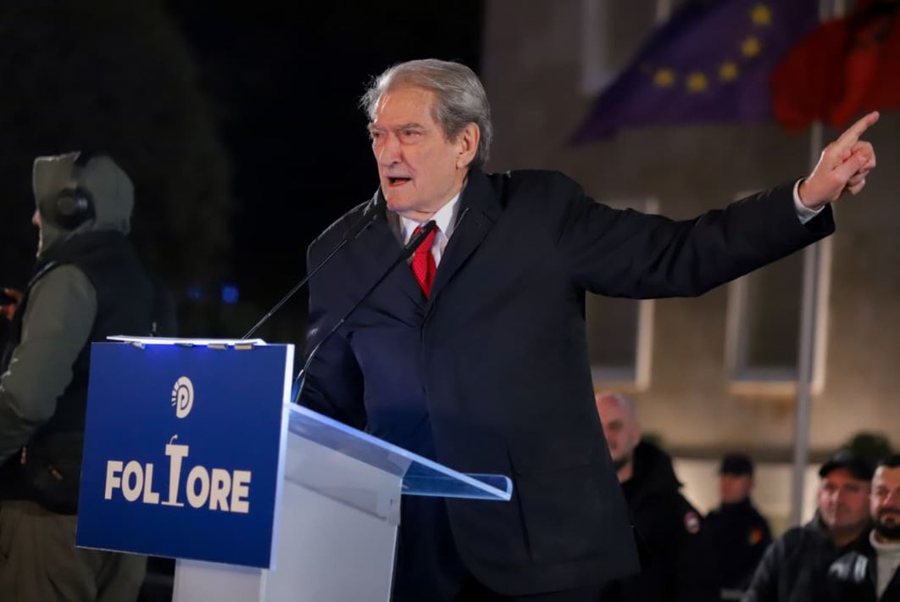
The government's fall depends on nationwide protests with massive cross-party and citizen participation, ones that reduce the government's airspace. Such protests do not appear on the horizon at the moment.
The collapse of Edi Rama's government in his fourth term is not a pipe dream as it was in 2017 when the then-Democratic Party (DP) found itself in a deadlock, combining the demand for Rama's removal with the sabotage of the establishment of ad hoc parliamentary committees from which the implementation of the Justice Reform would start.
Or as it was in 2019-2021 when the PD-LSI "went out on the mountain" in the sense that they burned their mandates and boycotted local elections, losing support from democratic countries.
Or as it was in the years 2021-2025 when Sali Berisha, due to his ego and problems with the US and Albanian justice, consciously divided the Democratic Party at the very moment when, under Basha's leadership, it had finally become a competitive alternative with an almost certain prospect of winning the next elections.
In this odyssey with a background of occult-personal interests, the "ultimatums" for Edi Rama's departure have dissolved like water into sand.
But precisely in his fourth term, when he has more MPs than in previous terms, Rama is walking in a minefield with the "bombs" of corruption of officials and close associates. They are "bombs" that explode against his will, opening holes around him, making him look like a tree whose roots are loosening or rotting.
Consequently, his survival as Prime Minister has ended like never before in the siege of investigated scandals or in the investigation; in the siege of trailblazing unknowns, what else is there, how far can SPAK's investigations go? Add to this the fading, not to mention the sunset of his image among American and European allies surprised by the heavy-handed shooting of the corruption carousel in the "Rama" governments precisely at the time when SPAK and the new Justice had started and was continuing their work. An "enigma" that irritates partners like the duplicity of official Tirana.
Having said that, the overthrow of the government depends on nationwide protests with massive cross-party and citizen participation, on those that reduce the government's air. Such protests do not appear on the horizon at the moment. Even when they are called, they are miniatures of the great ones that the thirty-five-year transition has known. Although today there is an anti-government majority in the country according to polls conducted for ABC television by the well-known pollster Eduard Zaloshnja. This majority would come out massively in protests to overthrow a government that has brought people to their knees, but it will soon be clear what comes next.
According to the same polls, the anti-DP and anti-opposition popular majority is significantly larger than the anti-government majority. The DP has also decreased in comparison to the result it received in the political elections of May last year. It seems like a paradox: the majority falls, the main opposition does not rise. On the contrary, it falls more. The paradox is superficial, external. Internally it is logical.
The DP in the May 2025 elections competed with a false image operation as if the US sanctions on Sali Berisha had been lifted de facto. His followers had believed him blindly when he had told them that the non grata declaration had come from Soros. They wanted to believe that they were blindly following his emissaries who made the removal a fact with President Trump's hat in the background. How could they not feel sorry or ashamed for the trusting people, while they knew full well that they were being lied to! Or did they think that lying was sweet? Anyway, this is another topic.
It will soon be a year since the inauguration of President Trump and his administration. Berisha has made available to lobbyists and contracted American spin doctors six to eight million dollars for his clarification and release from sanctions. During this time, followers have realized that the sanctions did not fall "de facto" on the campaign. They have not fallen to this day, neither de facto nor de jure. No American official has engaged with the chairman of the Democratic Party during the year.
In this context, the eventual fall of the government does not depend on an old, unreformed, wrinkled opposition, self-blocked in the personal troubles of its leader. It does not fall because of it, but it is no longer guaranteed by it.
The "Rama" government will not be able to hold on if criminal investigations directly implicate the prime minister, or if the prime minister becomes a barricade to justice with the votes of his majority. After that, a few sentences from Washington and Brussels would be enough to remove him. There is no doubt that these few sentences would be said while ensuring that Albania does not descend into chaos and that the next government is Euro-Atlantic, in support of the new justice system.



Lini një Përgjigje