


 Shkruar nga Prof. Mimoza Manxhari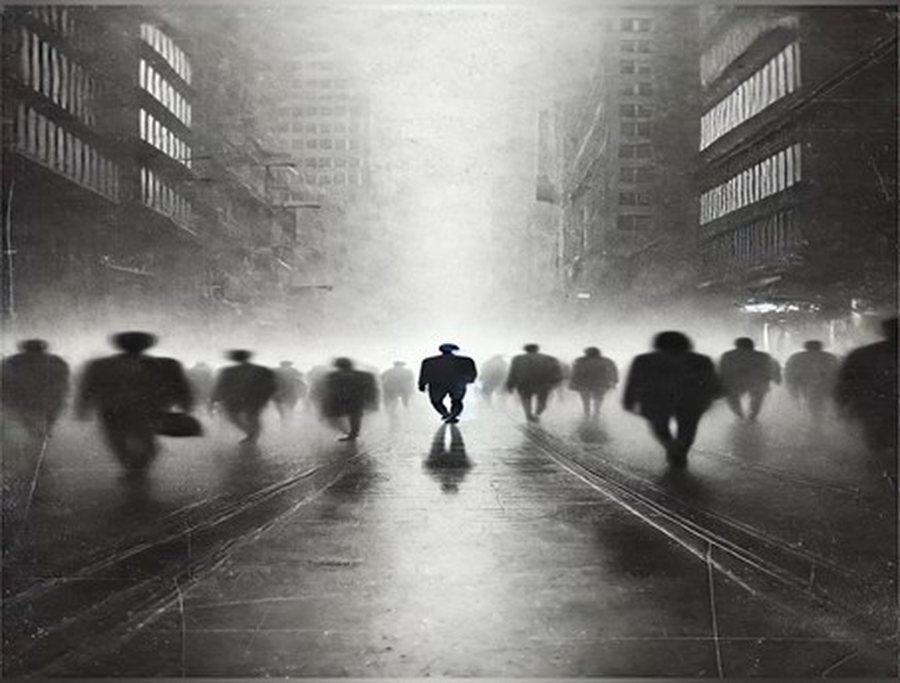
Today, we "fight" for image and hype; real sacrifice, the ordeal of danger, heroic acts have disappeared. Everything has become cottony, light, empty.
Today we live in an era where image is gaining ground over value. This is no longer just a cultural trend, but a profound social crisis.
Society, historically built to protect the individual, is increasingly moving away from this fundamental function.
It is not the vulgarity of the speech and the low vocabulary that is most disturbing, but the eerie calm with which it is accepted.
It is not the appearance that is confusing, but the fact that it is drowning out the essence and being proclaimed as a value.
What is happening is not invisible. I see it personally every day.
In the auditorium.
To the students.
To the younger generations who come with less and less self-confidence and more and more eager for the approval of others.
We see people seeking recognition, not for who they are, but for the reaction they can provoke.
We see a hunger for attention, which has replaced the need for meaning.
We see how personal worth is being measured less and less by responsibility and more and more by appearance, by appearances and spectacle.
This is not just a woman's issue, nor just a man's.
It is a matter of man shaped by a society that has confused existence with appearance, that has turned being into a mask.
Historically, men were valued and gained authority through courage and sacrifice: for the protection of life, family, and territory.
Today, more and more often, recognition and appreciation are sought not for contribution or responsibility, but for appearance.
Once upon a time, recognition and reputation came from attitude and victory that didn't require spectacle.
Today, we "fight" for image and hype; real sacrifice, the ordeal of danger, heroic acts have disappeared. Everything has become cottony, light, empty.
By the same logic, many women are learning to measure their worth from the gaze of others, not from an inner awareness of their own boundaries and dignity.
In both cases, the loss is the same: dignity is replaced by approval.
When a person feels good just because they attract someone's attention, they begin to lose moral autonomy and inner strength.
Value that depends on the outside is not value. It is dependence, disguised slavery.
And in such cases, we are not talking about individual failure.
We are faced with errors in our own social education, a lack of social reflection.
It is here that the fundamental question arises that concerns me both as a professor and as a citizen:
- What happened to the society that was created to protect the individual?
The social contract was not a romantic act; it was an act of survival.
Society was built to give the individual security, dignity, and protective boundaries against violence, arbitrariness, and blind force.
But today,
what was supposed to be a shield is turning into invisible pressure that tramples on dignity;
What was supposed to be a protective structure is turning into a mechanism of exploitation and manipulation.
This is precisely the real metamorphosis of our era. Not just a literary figure, but an institutional, normative, and linguistic reality.
Society, instead of forming free and responsible individuals, is producing people dependent on approval, afraid of exclusion, and willing to diminish themselves to fit in.
The degradation we see in the vocabulary used, in relationships, and in the way appreciation and fame are sought is not accidental.
It is a symptom of a society that is consuming itself, eroding from within, destroying the human essence.
The problem is not the body, nor beauty, nor desire.
The problem is when these become the only measures of human recognition and appreciation.
A healthy society does not measure people by their noise or appearance, but by the responsibility they take and the boundaries they respect.
If this society continues to call the reduction of man emancipation, then it has lost not only its direction, but also its reason for existence.
Because society,
was not created to force us to adapt by losing ourselves, but
to protect us so that we can exist with dignity, integrity and freedom.
When institutions, norms, and language produce fear, dependence, and self-abandonment,
we have gone from SOCIAL CONTRACT TO SOCIAL BETRAYAL.
And the most dangerous betrayal is not that which is imposed by force, but that which is silently normalized and becomes a habit.
At this point, speaking up is not a provocation.
It is a human responsibility, a moral duty and a civic act.







Lini një Përgjigje