


 Shkruar nga Ilir Çumani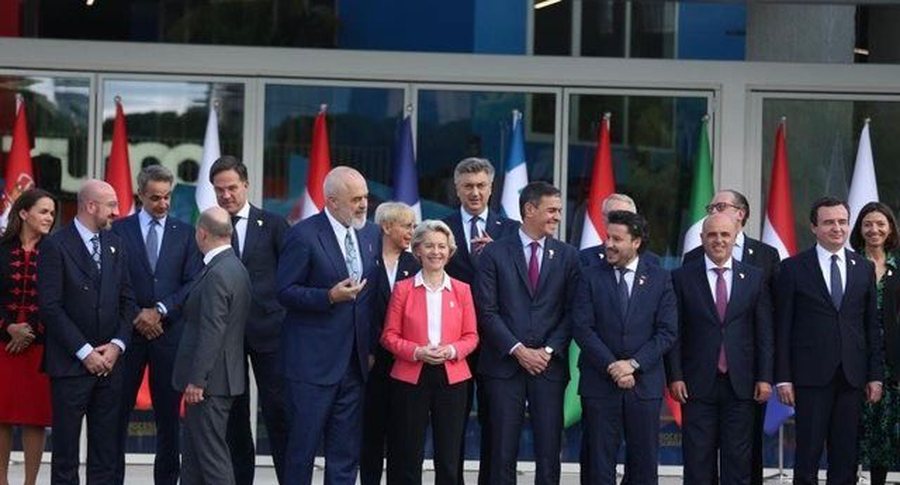
Internationals see a partner that guarantees order, control, and continuity, while Albanian society experiences a power that cannot be challenged through normal democratic means.
Prime Minister Edi Rama's relationship with internationals and Albanian society are not simply two different channels of communication, but two parallel realities that rarely meet.
It is no longer difficult to distinguish de jure how, on the one hand, the image of stability is carefully constructed through propaganda and, de facto, that of reforms in a country like Albania that is "moving forward".
On the other hand, we see how the majority experiences the daily life of a system that has lost the ability to represent the free will of citizens.
Our political history has proven that the overthrow of symbols does not necessarily mean the overthrow of the mechanisms that have kept those symbols alive. Albania in the early 1990s proved this in the most brutal way, when the regime formally fell, but its structures survived through controlled elections, fear and the lack of a real alternative. Democracy did not come as an internal product of the system, but as a result of external international pressure and civic revolt and persistence.
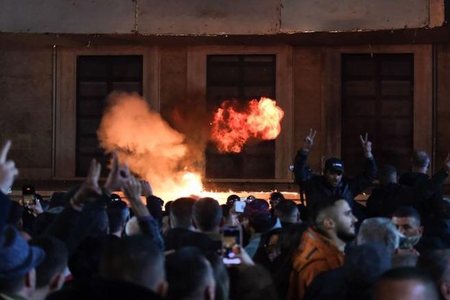
Today, after 35 years, the similarities are disturbing. The government functions on a network of dependencies, linked to nepotistic favors for those close to the government and to punishments and revenge for its opponents, turning the electoral process into a formality that has no connection with the will of the sovereign. The administration is not neutral, business is not free and the citizen is neither calm nor protected. When these three pillars are deformed simultaneously, the electoral result no longer reflects free will, but legitimizes the weight of the system over the individual. Government corruption at the highest state levels and organized crime have reached frightening and unimaginable proportions.
In this context, the support the government finds abroad does not stem from a functional and organic democracy, but from the false perception of stability.
Internationals see a partner that guarantees order, control, and continuity, while Albanian society experiences a power that cannot be challenged through normal democratic means.
This approach creates a dangerous gap, because it unfairly gives primacy to international legitimacy, replacing popular legitimacy.
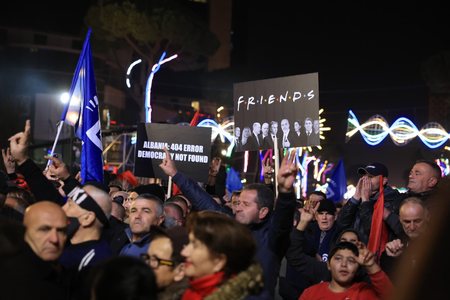
The problem is not simply who wins elections, but why. When rotation becomes practically impossible, democracy becomes a ritual that produces institutional gridlock.
And when a system manages to reproduce itself despite moral and institutional wear and tear, then we are dealing not only with the dictates of a political force that dishonestly uses all the repressive means provided by power, but also with the weakness of the state itself.
Albania does not need to go back in time to understand the danger; it only needs to see how history risks repeating itself in more sophisticated forms.
And the greatest concern is not related to the longevity of this governing model, but to the social price and heavy cost of a sham democracy, which, to the eyes of the international factor, appears functional, while in essence the democratic mechanisms are paralyzed, leaving no room for a real and healthy democracy.


Lini një Përgjigje