


 Shkruar nga Marco Mondini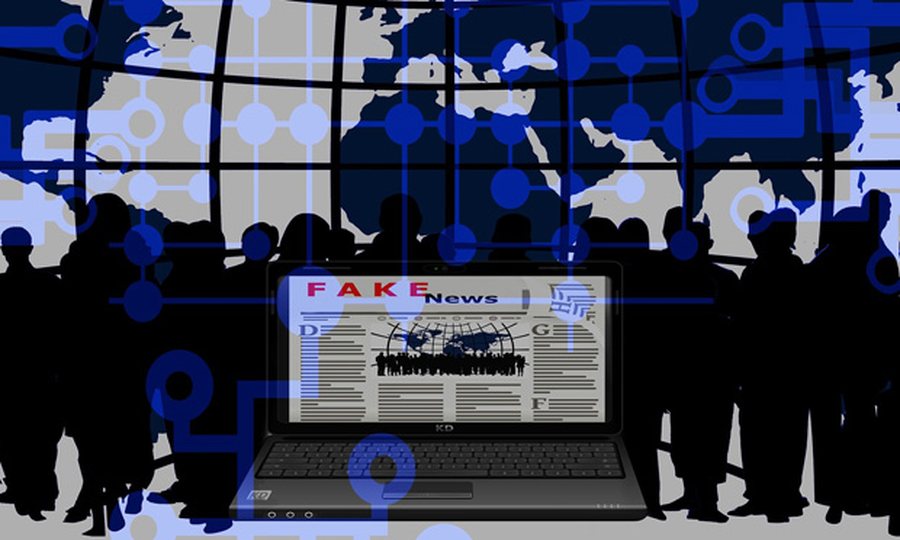
"The monopoly on truth has been broken, as has the monopoly on lies."
It was 2019 when Dmytro Kuleba wrote these lines, the epilogue to the first edition of his book The Fight for Reality. Open war, the one waged with tanks, artillery, and tens of thousands of dead, was still far away. And he was not yet the Foreign Minister who, in February 2022, would face the Russian invasion by carrying the voice of a Ukraine that had no intention of surrendering or abandoning its own government to the world.
At the time, he was just a young diplomat. But he had experienced the crisis of 2014, Putin’s decision to destabilize Kiev after the flight of pro-Russian President Yanukovych, the Russian annexation of Crimea and the secession of Donetsk and Lugansk, poorly disguised by a farcical referendum. And he had understood that his country had lost the battle on the communication and image fronts, before losing the military one. Accounts of alleged massacres of Russian-speaking communities or narratives about the Ukrainian leadership being linked to neo-Nazi movements had penetrated international public opinion, creating the impression, falsely, that Putin was right. Of course, this was done by ignoring reality. To give an example: the Ukrainian far-right Svoboda party, with only 2% of the vote in the 2019 presidential election, had more or less the same political weight as the Illinois neo-Nazis in the movie Blues Brothers.
But the real facts did not seem to have an impact on avid online news consumers or viewers of Western television debates, defenseless against a wave of disinformation that was able to transform aggression against a sovereign state into an act presented as “legitimate defense” or “generous liberation,” while the president of the attacked country was presented as an arrogant follower of Hitler.
This is what Kuleba wrote about: to offer some clear rules for recognizing fake news and navigating a world full of mystifications. Who knows if he had imagined how difficult the battle against “post-truth” would be. Because years passed, his books were reprinted, translated, but the ability of European citizens and viewers to react critically to propaganda did not seem to improve, despite reports from think tanks that had been warning for years about the danger of mass manipulation.
In 2017, the Swedish Institute for International Affairs warned of the Kremlin's systematic use of fake news, accustomed to distributing fabricated documents online to undermine NATO's credibility, sow discord, and influence the policies of other countries.
In 2022, the EU DisinfoLab organization uncovered Operation Doppelganger, a plan to clone pages of newspapers like Bild or the Guardian, to question the effectiveness of sanctions against Russia and discredit the Ukrainian leadership.
In the past three years, fact-checking company NewsGuard has identified over five hundred disinformation sites active in the UK, France, Germany and Italy, linked to (or funded by) the Russian government, specializing, among other things, in denying the grave crimes of the three-year occupation, such as the Bucha massacre, hundreds of Ukrainian civilians killed by Russian troops before they withdrew, a crime that the Kremlin continues to deny despite irrefutable evidence.
However, despite all these alarms, Europe in the age of artificial intelligence seems an increasingly fertile ground for the distortion of the truth. With a public ready to believe any absurdity, if repeated loudly. Even Medvedev's slogans about a "global conspiracy aimed at suffocating a Russia surrounded by Nazis and fanatical Russophobes". Italian President Sergio Mattarella should also speak about this.
But the problem, to use Kuleba's words, lies here: no amount of control will be enough to win the "war for reality" if readers and viewers themselves are not the ones who fight first, refusing to be passive victims of every lie. If they do not learn to be critical consumers of information, soldiers on the front lines of a merciless war, where the right to determine who is to blame and who is right is at stake./ Adapted from "Pamphlet" by "LaRepubblica"



Lini një Përgjigje