


 Shkruar nga Auron Tare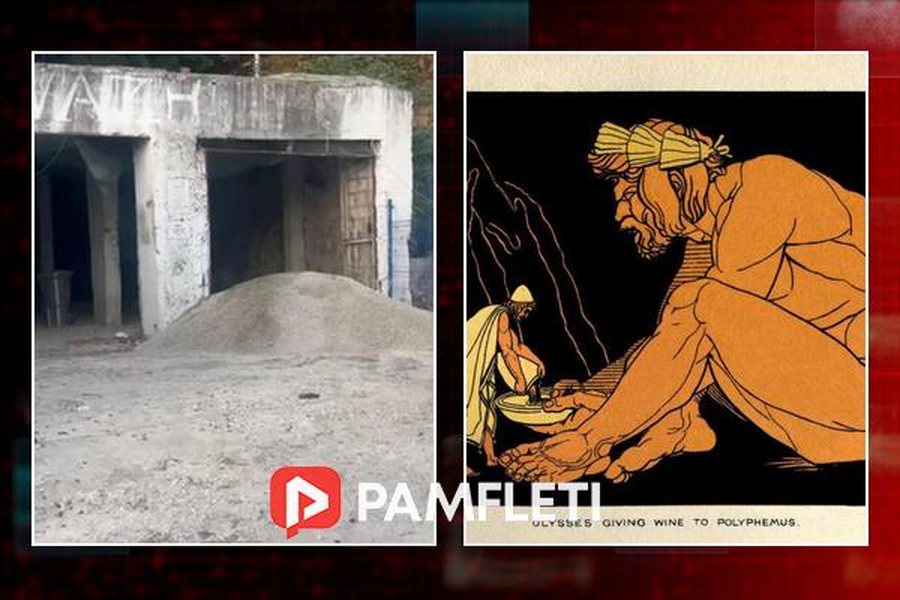
Today, the cave of Spila, forgotten and turned into a parking lot where dusty cars are washed, is surrounded by chains. A total indifference, a failure of every cultural institution and every tourism ministry that wastes itself on annual provincial parties, throwing up money that has no value.
If someone has read Homer and followed the journey of his heroes across the Mediterranean, they would not be surprised that the sacred sites of the Iliad are located in territories inherited since antiquity, by those who claim to be ancient in these lands: the Albanians.
Dodona, the famous oracle where the heroes of the Great War learned of their fate, in ancient Epirus, today Ioannina.
Necromancy, the famous temple where Odysseus went to meet the spirits of his parents in ancient Thesprotia, present-day Chameria.
Acheron, the river where the souls of the dead crossed with the help of Charon, in ancient Thesprotia.
Butrint, where the fleeing Trojans, brought as slaves by the son of swift-footed Achilles, fair-haired Neoptolemus, built a New Troy. Where Andromache with wine cup in hand and princely Helen welcomed Aeneas, the founder of Rome.
Ancient Onkesmus, present-day Saranda, where Ankistis, the father of Aeneas, closed his eyes and was buried in a magnificent temple.
The Temple of Poseidon, where sailors made sacrifices and threw bowls of wine into the sea to appease old Poseidon, today's Ksamil.
The Chimera, from which fire and destructive power emanated.
And of course, the cave of Spila, where Polyphemus, the one-eyed cyclops who lived in the cave and took care of his sheep.
Well, imagine: the first poet of humanity describes in his monumental work ancient temples and places to which world art has dedicated thousands of works, epic poems, books and studies. All of this inherited in the former and present territories of Albanians, in ancient Epirus.
But just take a look at the list above and see how modern Greeks today preserve Homer's sites: Dodona, Necromancy, Acheron. With respect, with love, with seriousness. Not just ancient sacred sites, but treasures of cultural tourism.
Meanwhile, look at the Homeric landscapes in our Albania: Butrint given to foreigners, Onkesmus abandoned, shattered and filled with concrete, where no sign indicates that this city is part of the Homeric epic. The Temple of Poseidon, today's Ksamil - an urban wretch. Likewise, and this blindness could not escape even the Cave of Polyphemus, the mythical Cyclops who was blinded by the cunning Odysseus.
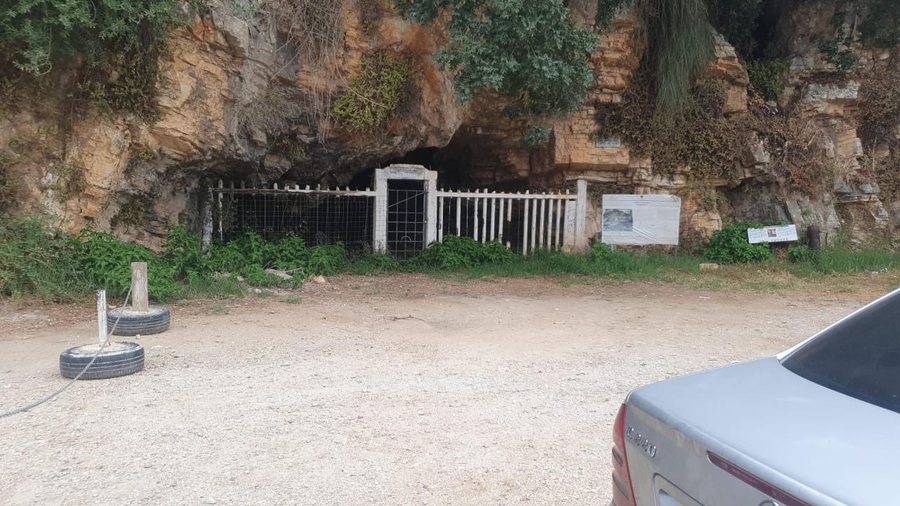
The Cave of Polyphemus in Spila, where the Homeric epic still preserves its traces, in another country would be a priceless treasure of culture, heritage and cultural tourism. Today the cave of Spila, forgotten and turned into a parking lot where dusty cars are washed, is surrounded by chains. A total indifference, a failure of every cultural institution and every ministry of tourism that wastes itself in annual provincial parties, throwing up money that has no value.
Therefore, for these sad images of this Homeric temple, for all those who could, but did not want to save this universal heritage, for all those who claim to protect culture, but in fact do not love it, let the Curse of Polyphemus remain upon them.
The Curse of Polyphemus
Oh, blue-haired Poseidon, holder of the earth, hear me,
if you are truly my father, and I am your son,
make Odysseus, the destroyer of Troy and son of Laertes,
never to end up at his home in Ithaca.
And if it is destined to return one day,
let him return late, miserable, exhausted,
without friends, on a foreign ship,
and on the threshold of the house where only suffering and pain await.
(Song IX, verses 530-535, translated by Spiro Çomora)








Lini një Përgjigje