


 Shkruar nga Ervis Iljazaj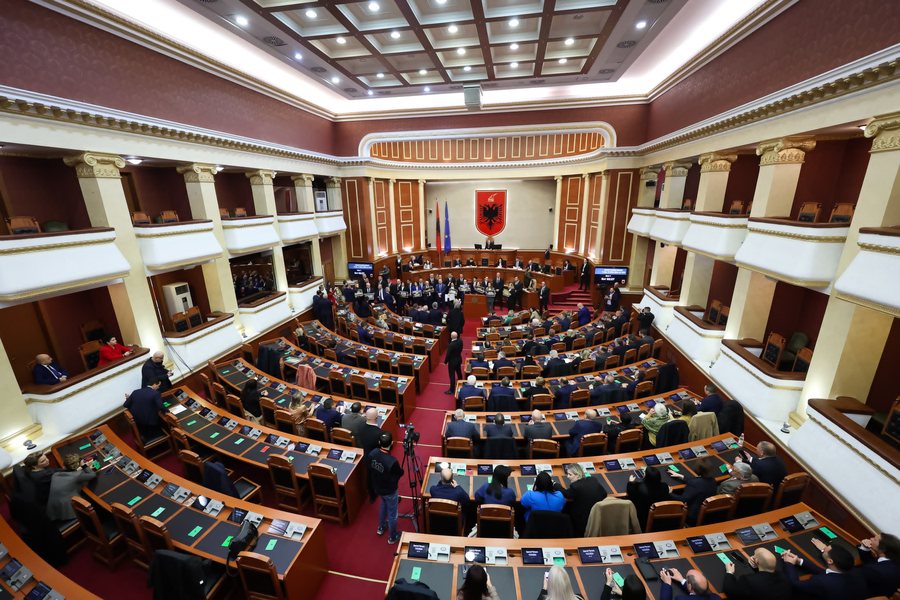
Today, there are other forms that represent people. But the problem is that they are social organizations that are often vocal, but that do not have a political project in the sense of exercising power.
The Constitution of Albania, in its Article 1, defines that ''Albania is a parliamentary republic''. So, our Constitution, the social contract of Albanians, opens with this definition, showing us the role that parliament has in the Albanian political-constitutional order. Just as many Constitutions of developed democratic countries define. What does it mean that Albania is a parliamentary republic?
A concept that is often used in the media, in universities or in politics but that for the sake of truth is rarely examined and analyzed. How does the form of government that we have chosen and our constituents have designed place the institution of parliament in Albanian democracy?
When categorizing forms of government, parliamentary republics are defined as those forms of government where at the foundation of the state, that is, at the center of the system, there is only one power, that of the Parliament, which is directly elected by the people, which not only has the legislative power, that of approving laws, but also has the duty to express and vote for a government and, above all, to control it.
As it were, at the center of our democracy, in the system of institutional constellation, the parliament is the gravitational force of the state organization. To emphasize the role of the parliament in parliamentary democracies, the European Union, with the entry into force of the Lisbon Treaty, even though there is a limitation of the sovereignty of the member states, exalts the role of the parliament in representative democracies as a key dimension in the decision-making of the union.
And precisely because of the great importance that parliament has in representative democracies, reflections on its state are always current. Reflections that are based on the role that this institution has in guaranteeing democracy and placing it at the center of the organization of political power.
In the current situation today, in the substantive sense, can it be said that the Albanian parliament has this role, that is, is this institution at the center of Albanian democracy, as defined by our Constitution? Or have we simply created a myth? A myth in fact that comes from the last century where after the Second World War, most European countries built a political-constitutional order where the parliament was at the center. Or that system that is known by the term parliamentarianism. Or otherwise, as Hegel defined the parliament, "As a gateway between the state and civil society".
To answer this question and analyze the current state of the Albanian parliament, the focus of the analysis should be three issues:
The first – the representative capacity of the Albanian parliament in our era.
The second – the power of the government and its relationship with the parliament.
And the third – the role of the opposition within the parliament.
When talking about the representative capacity of the parliament in the Albanian public opinion, attention goes directly to the electoral system, open lists, closed lists and other discussions like these. Of course, the electoral system has an important role in political representation. But it has more of an impact on the party system and the form of government. All the more so since in my opinion, political representation in the parliament in Albania is realized through party representation and not through the institutional parliamentary one.
Therefore, when I talk about the ability of parliament to represent, I have in mind another issue that goes beyond the electoral system, although I do not want to enter into this debate, because it is a debate that would never end. The problem of political representation has to do with two other very important issues in this regard. For example, desertification, the emptying of places of political organization and social organization. Political parties in the organizational and representative sense have been weakened. This has also come as a result of social developments and information technology tools, which have totally changed the concept of organization, political activism and representation. And this cultural change directly affects the ability of the Albanian parliament to properly represent our society.
There is another element of political parties which is the loss of exclusivity of representation.
Today, there are other forms that represent people. But the problem is that they are social organizations that are often vocal, but that do not have a political project in the sense of exercising power.
Another problem in terms of political representation is active citizenship. The loss of trust in politics for various reasons, which is a widespread perception in public opinion. But, I think there are other reasons. For example, the frequent ideological inconsistency of the main parties, which reduces political affiliation in its cultural sense.
And precisely for these reasons, we risk returning to a democracy of apathy, which is sometimes certainly the fault of Albanian politics, but also of cultural and social transformation beyond it.
Kundër demokracisë së apatisë patjetër që është e mundur një kundër demokraci aktive. Si për shembull hapjen e procedurave tradicionale parlamentare me procedura deliberative ku të përfshihen më shumë grupet e interesit që preken nga vendimarrjet. Apo me procedura të ashtuqujtata pjesëmarrëse ku pas vendimeve bëhen vleresimi i politikave publike. Ose forcimi i instucionit të iniciativës lëgjislative popullore. Me pak fjalë, nevoja për një demokraci të verifikuar. Këtu nuk bëhet fjalë për të prishur mandatin e lirë paralementar, por nevoja për një demokraci të vashdueshme ku nuk mjafton vetëm momenti elektoral njëherë në katër vite për të ushtruar sovranitetin popullor.
Në këtë kuptim parlamenti në qëndër te demokracisë shqiptare nuk është një gjë e dhënë në mënyrë automatike, një gjë e dhënë njëhëer e përgjithmonë vetëm se kështu thotë kushtetuta jonë, por një gjë që duhet fituar herë pas herë në një panoramë policentrike, ku shfaqen shpeh herë tendecna se mund të bëjmë edhe pa të.
Çështje tjetër e rëndësishme për parlamentarizimin shqiptar është pushteti në rritje i qeverisë dhe i pushteti ekzekutiv. Reziku qëndron të mungesa e dallimit midis pushtetit ekzekutiv dhe atij legjislativ . Ky në fakt nuk është një fenomen vetëm shqiptar, por këtu te ne është më i theksuar. Ka disa arsye se përse pushteti ekzekutiv ka fituar terren në raport me lelgjislativin. Nuk dua këtu të them se në këtë legjsilaturë ky është në një fenomen në rritje apo në të kaluarën ka qenë më ndryshe. Thejsht ky është një fenomen që kërcënon centralitetin e parlamentit në demokracinë shqiptare.
E para, është komepleksiteti i çështjeve dhe i shoqërisë. Çështje me komplekse për tu zgjidhur kanë nevojë për një qendër kontrolli dhe specialitete të caktuara që vetëm aparati qeverisës I ka. Po ashtu presionet ndërkombëtare rriten ndaj qeverisë. Por gjithashtu qeveria ka në dorë hartimin e buxhetit. Dhe kush ka paratë, ka dhe komeptencat, e në këtë kuptim mbledh rreth saj përfaqësimin e interesave të ndryshme shoqërore dhe ekonomike.
E dyta masmedia. Debati publik, për të cilin parlamenti duhet të jetë promotor kryesor i çështjeve që shqetësojnë qytetarët ka kaluar në media, ku padyshim qeveria me informacionet që ka dhe lidhjet që vendos, kërkon që ta monitorojë ose ta diktojë ajo.
Aftësia organizative e qeverisë. Duhet thënë se pushteti ekzekutiv ka një aftësi organizative më të madhe se parlamenti dhe kjo është e natyrshme për shkak të aparatit të madh administrativ që ndonjëherë parlamenti për natyrën e tij nuk mund ta ketë.
Gjendjet e jashtëzakonshme gjithashtu janë një problem në këtë drejtim. Ku qeveritë shqiptare shpesh herë marrin fuqi më të mëdha se i përkasin dhe nuk ka një diskutim nësë këto fuqi janë kushtetutese ose jo.
Të gjitha këto elementë reflektohen në aktivitetin legjislativ, ku pothuasje 90 përqind e propozimeve ligjore vijnë nga qeveria, dhe ku pothuajse të gjitha aprovohen në paralment.
All these phenomena have, therefore, led to the identification of the executive and legislative powers, further strengthening the majority principle, weakening the position of the parliamentary opposition.
What can be done under these conditions?
One could begin by strengthening committees. In fact, committee work is now such an important part of legislative operations, and so crucial to executive scrutiny, that it needs to be emphasized even more.
Albanian parliamentary committees must adapt to changing circumstances by trying to improve their effectiveness by modernizing procedures, and by providing members with more facilities and better resources (offices, secretaries, researchers, information).
Most importantly, they must increasingly focus on oversight ('Legislative oversight') of executive and administrative action.
Close scrutiny of the government cannot be done in large meetings such as parliamentary sessions. Therefore, it is better carried out by small committees.
Many legislatures are trying to assert their power, or regain lost powers, by developing an effective system of committees for executive and administrative actions and by reviewing legislation.
The increase in the power of parliamentary control over the government is an indispensable element of parliamentarism. In fact, this is the main function that remains for parliament. Rene Capitant, a French lawyer and politician, when asked what parliamentarism is, said: ''The governance of responsible ministers. So, the government governs, the parliament controls.''
In my opinion, in order to preserve the political alternative, the role of the parliament in safeguarding and strengthening it and democratic competition, the Albanian parliament needs to draft what is called the Statute of the Opposition with some additional rights for the opposition in the parliamentary procedure, which is an Anglo-Saxon experience, but which has also been developed in the French and German parliaments. For example, in the British House of Commons there is extra funding for the parliamentary activity of the opposition or other instruments. There has actually been an opposition statute in Westminster since 1862.
These are, in my opinion, the challenges facing the Albanian parliament and parliamentary democracy, which must be addressed as soon as possible. On the contrary, looking at the trends, not only in Albania, but also beyond us, I fear that the famous saying of Carl Schmidt, who considered the parliament as ''an empty apparatus kept afloat by inertia'', will come true.



Lini një Përgjigje