


 Shkruar nga Gjergj Erebara
Two decades ago, the country was much poorer but much more optimistic. At that time, the Albanian economy per capita was 18% of the EU average. And yet, simple economic calculations suggested that in three decades, thanks to geographical and demographic conditions, Albania could reach the EU average level. Two decades later, the EBRD's calculations show that it will take another 70 years. What went wrong?
In 2000, when we were all 24 years younger, Albania had a miserable economy. The data of the International Monetary Fund show that the domestic production per capita of Albania at that time was only 18% of the average of the European Union. In a word, if a European earned 10 euros, an Albanian earned 1.8 euros.
However, at the time there was hope for optimism. Albania was a country with a young and energetic population. Geographically located in the middle of an ocean of prosperity and politically, being close to the EU and a candidate for EU membership, logic would have it that all the ingredients for strong and healthy economic growth were there.
Being poor, as Albania was at that time, carries something called "the advantage of backwardness". While a rich country can hope to grow its economy by 2 or 3 percent a year, a poor country can grow without much trouble by 6 or 7 percent a year. And if you grow at 7 percent a year, the country's economy doubles every ten years. In short, the 1.8 euro of the Albanian in 2000 would have become 3.6 in 2010, 7.2 in 2020 and 14.4 in 2030. While the 10 euro of the European, given that it would grow by 2% per year, in 2030 would have been about 18 euros.
The problem lies in an indicator called long-term average growth. In the case of Albania, from 2000 to 2024, the long-term economic growth was not 7 percent per year, it was not 6, it was not even 5 percent per year. IMF data show that growth averaged 4.2%.
This is still significant growth, if it were to be healthy and sustainable. At a growth rate of 4.2%, an economy doubles every 18 years. The problem is that the average growth of 4.2% belongs to the period 2000-2010. After this period, growth has slowed down. In the decade 2000-2010, growth averaged 6 percent, while in the period from 2010 to 2024, average growth was 2.9 percent. The IMF forecast for the following years speaks of an economic growth of less than 4 percent. At such a slow pace, reaching the EU average becomes arithmetically more distant. And in addition to being more distant, it also becomes more uncertain.
In addition to the much slower growth than it could have been, Albania throughout these last years seems to have lost the human power, which is a prerequisite for economic growth. As emigration eats away at young people and leaves behind middle-aged men and women and retirees, the opportunity to grow the economy diminishes.
And yet, the place remains the same. Albania is one of the poorest countries in one of the richest continents of the globe. Albania has the possibilities, at least theoretically, to experience strong, stable and long-term economic growth.
The simplest answer to why economic growth is slow has to do with the misallocation of resources. Logically, the market is self-regulating and the available economic resources are automatically allocated where there is more leverage. The IMF uses the term "potential economic growth" for this situation.
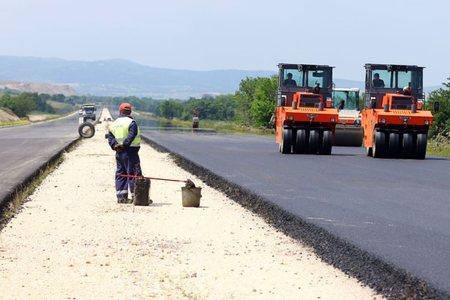
Economic resources are divided into categories: Labor, land, capital and management. Political obstacles are what cause these economic resources not to be used where there is more efficiency and benefit, but to be wasted. The point is, the money that should be invested in infrastructure, instead of improving living conditions and the speed of circulation in the economy, is stolen and used to build villas for thieves. Or, instead of paying workers who produce added value, the money is collected in taxes and used to keep bloated administrations running, whose low productivity stifles economic growth. Or even further, the money that should be used for the consumption of goods or services produced by profitable companies, ends up in the pockets of the owners of monopolies, legal or de facto, which have no efficiency and consequently, hinder economic growth.
Look, for example, at the insurance market. A legal monopoly keeps prices fixed and the market structure non-competitive. In a normal year, Albanians pay 220 million euros in premiums to receive 70 million euros in compensation, so the operating cost of insurance companies is 70% and the cost of the service provided is only 30%. Or banks, which, instead of working in the real economy, vegetate with high commissions ensured by horizontal restrictions on competition. And if you look more closely at other segments of the economy, you'll notice signs of restricted competition almost everywhere. In the construction market, the construction cost continues to be less than 300 euros, while the prices have gone four or five times higher. Or in the public procurement market, or in the telecommunications market or in that of agricultural inputs.
The solution to all these problems is related to the political system. If corruption is not fought, but instead becomes a key factor in political success, economic growth will be slow and the achievement of European prosperity will remain a dream. And if corruption is a key factor for political success, there is no way to have efficient investments, functional public administration or markets with open competition. And in these conditions, the 70 years calculated by the EBRD will hardly be enough to reach the EU average, because corruption erodes the existing economy, to the point that growth, even the small one of 2 or 3 percent per year, becomes impossible. / BIRN




Lini një Përgjigje