


 Shkruar nga Pamfleti
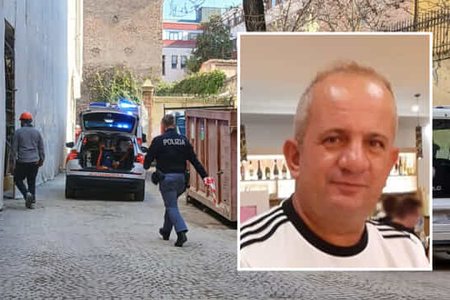
Maglent Dybeli, the financier of the criminal group that was caught with 98 packages of cocaine. Rómulo Mengoni, Juan Vásquez, Shirley Ibáñez and Efraen Mendoza are suspected of collecting the drugs to send them to Europe.
Maglent Dybeli is the Albanian identified as the financier of a drug trafficking mafia. The Balkan criminal networks are based in Peru and are considered among the main cocaine traffickers towards Europe. This was confirmed by the Office for Illicit Drug Trafficking Crimes in Callao, which managed to secure 18 months of detention for suspected members of a criminal gang that had accumulated cocaine for export.
Rómulo Mengoni, Juan Vásquez, Shirley Ibáñez and Efraen Mendoza are part of a criminal group led by Albanian citizen Maglent Dybeli, local media write.
Also arrested in a second apartment were Ibáñez and Mendoza, who were involved in the alleged scheme to transport illegal substances. The latter had spent three months in Colombia coordinating and ensuring that the drugs were exported from the main port.
The first two, according to the Prosecutor's Office, were stopped by the anti-drug police in an apartment in Callao, where they found 98 brick-shaped packages of cocaine hydrochloride, which had been transported from Comas.
During the operation, it was determined that Maglent Dybeli was the financier of the gang and was using a false identity with Italian citizenship. The Police and the Prosecution continue investigations into the involvement of other foreign and Peruvian citizens in this case.
The Assistant Provincial Prosecutor, Pako Grajeda, managed to prove with strong elements the connection between the suspects and the criminal offenses, ensuring the imposition of pre-trial detention while the investigations continue.
According to Dirandro, the Albanian mafia arrived in the region in the late 1990s and early 2000s, following the fall of communism in Albania and the wars in the Balkans, according to a report by the Global Initiative against Transnational Organized Crime (GI-TOC).
Currently, it has contacts with cocaine growers, collectors and traffickers in Peru, producers in Colombia, groups that store the drugs until they reach the ports of Ecuador, and powerful Mexican cartels.
The Albanian mafia is just one of the Balkan groups operating in Latin America to supply cocaine to Europe.
"There is data on Bosnian, Montenegrin, Kosovar and Serbian clans," states a Dirandro officer.
These groups have influence in Latin American ports from which drugs depart for Europe, such as Esmeraldas and Guayaquil in Ecuador, Buenaventura in Colombia, and Callao and Paita in Peru.
The anti-drug expert emphasizes a feature of the Albanian mafia: its structure is mainly family-based.
"Someone enters the Albanian mafia as a son, nephew, cousin or family member of a member. Being made up of people with blood ties, it is more difficult to denounce or provide information against the clan," he says.
This characteristic, which the Albanian mafia shares with the Italian 'Ndrangheta, is the reason why these structures are difficult to dismantle, unlike other European criminal organizations.
"The Albanian mafia, or at least the groups that have operated from Ecuador and Peru, have operated with well-organized structures, which have allowed the camouflage of drug trafficking in transport and storage companies, but also in maritime export companies," the officer explains. / Përshtati Pamfleti




Lini një Përgjigje