


 Shkruar nga Pamfleti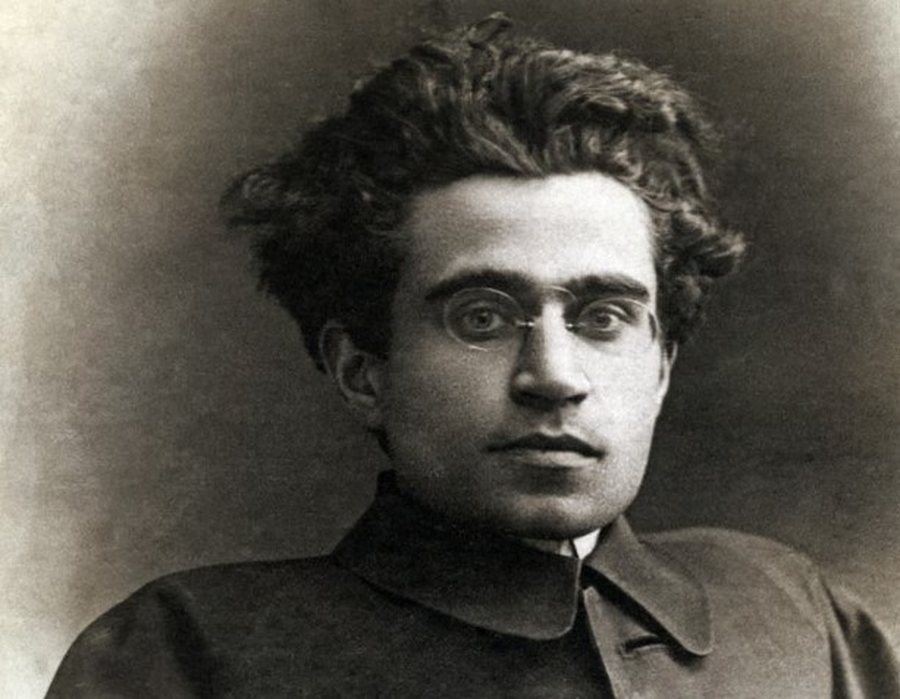
"The Guardian" notes that the expression "now is the time of monsters" is wrongly attributed to the Arbëresh thinker...
It is not surprising that Antonio Gramsci is often cited by figures of various political persuasions. He is considered the most important Western communist thinker of the 20th century and the theorist who attempted to devise a strategy for seizing power and managing the transition to socialism in conditions different from those of Russia, after the failure of attempts to spread the revolution in Europe under the influence of the Bolshevik success.
The international left studies his work extensively, while figures on the right have also expressed appreciation for some of his ideas. However, Gramsci is occasionally quoted incorrectly. Journalist Philip Oltermann, in an analysis for the British daily The Guardian , notes that the phrase “now is the time of monsters” is often attributed to him, a phrase that is not found in his works, at least not in this form.
According to The Guardian, the phrase has been used recently by the conservative prime minister of Belgium, Bart De Wever, the left-wing British MP Zarah Sultana, the governor of the Central Bank of Ireland, Gabriel Makhlouf, and the Dutch historian Rutger Bregman. All of them refer to a political situation where, in their opinion, power and money seem to dominate without opposition.
The original excerpt, from “Prison Notebooks” that Gramsci wrote during his long years of imprisonment under the fascist regime, reads: “ The crisis consists precisely in the fact that the old is dying and the new cannot be born: in this meantime the most diverse morbid phenomena appear .” The author was referring to the turbulent period that opened in Europe after the First World War, when on the one hand the ruling elites had lost legitimacy, while on the other hand the popular classes could not find a way out for their aspirations. In this context, “morbid phenomena” could take authoritarian forms, as happened in Italy with the rise to power of Benito Mussolini.
Gramsci did not use the word "monsters", also because of the indirect language he was forced to use in prison, but many analysts consider it understandable that his quote would return to current debates on the dangers of authoritarian tendencies, even though it concerns reflections formulated almost a century ago.
His notes began with the observation of a “crisis of authority,” that is, the fact that the ruling classes no longer enjoyed the trust of the governed. According to the analysis published by “The Guardian,” some features of contemporary populism bear similarities to this description: a pronounced distancing of citizens from the establishment and open opposition to it. These reflections continue to attract attention for their analytical clarity and for the coded language that allows for different interpretations.
Antonio Gramsci, of Albanian origin, was arrested on November 8, 1926, and remained in prison until the end of 1933. Due to his serious health condition, the authorities transferred him first to a clinic in Formia and then to Rome, where he died on April 27, 1937, at the age of 46. During his imprisonment, he analyzed the defeat of the labor movement in the face of Mussolini and sought the causes in Italy's political and cultural tradition, while at the same time formulating concepts with international influence.
Among the most well-known remains the notion of “hegemony,” according to which in the West power is not taken by force, as in the case of Lenin in Russia, but through the construction of cultural influence in civil society, gaining ground in the institutions and structures where the bourgeoisie exercises its immaterial dominance. This approach has attracted attention even outside the traditional left; the French right-wing ideologue Alain de Benoist has expressed appreciation for the metapolitical dimension of this strategy, emphasizing that the ideological battle also takes place on the cultural plane.






Komunizmi deshtoi si sistem shoqeror. Te meresh me analizat e historive te mendimit te lidereve komunist eshte humbje kohe.