


 Shkruar nga Michael Rubin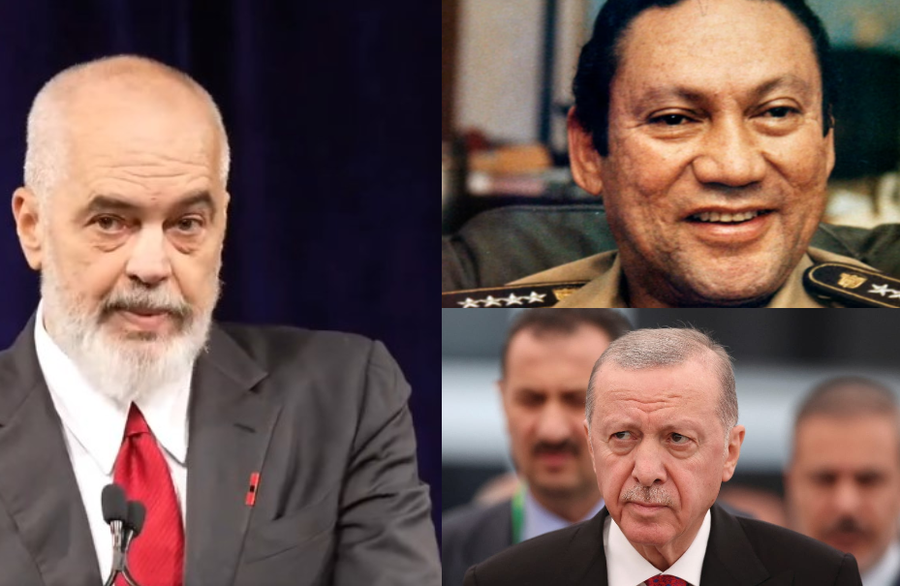
Rama also followed the Turkish president's example of using politicized auditors to imprison the opposition and confiscate their property. The key difference here is that Qatar funded Erdogan's efforts and the US Agency for International Development funded Albania's auditors, ignoring their cooperation with Rama...
A little over 5 months ago, Edi Rama, the leader of the Socialist Party of Albania, won his fourth consecutive election to remain prime minister, a post he has held since 2013. While the Albanian Riviera became an unwelcome destination for the tourist crowd, Rama became the toast of society.
Speaking at the Future Investment Initiative Forum in May 2025, President Donald Trump’s son-in-law, Jared Kushner, talked about how he met Rama on the Rothschilds’ yacht in 2021, while they were sailing the Adriatic Sea. In June 2025, Rama offered a toast at Alexander Soros’ wedding to Huma Abedin in the Hamptons. And while diplomats like the then-U.S. ambassador to Albania, Yuri Kim, sailed on Rama’s ship and, according to Albanian officials, accepted his gifts while rationalizing the imprisonment of his political rivals, Rama has transformed Albania in a way that reverses its democratic trajectory and will make it a regional burden for decades to come.
Perhaps the best way to understand Rama today is as a cross between the late Panamanian dictator Manuel Noriega and Turkish President Recep Tayyip Erdogan.
Noriega was an early US ally, rising through the ranks of the Panamanian Army before becoming the country's military leader in 1983. Initially, the US government and the CIA embraced Noriega as a Cold War ally. However, by 1989, he had become a disgrace due to his corruption, the open exposure of his criminality and abuse of democracy, and the irrefutable evidence of his ties to South American drug cartels. On December 20, 1989, then-President George H.W. Bush ordered the invasion of Panama to arrest Noriega. While the United Nations condemned the invasion, a CBS-New York Times poll of Panamanians showed overwhelming support for him.
A number of Albanian politicians I interviewed in the United States, Greece, and Switzerland, including former members of Rama’s Socialist Party and former Prime Minister Sali Berisha’s Democratic Party, spoke of the “marijuana” of Albania’s economy. Albania has long been an illegal grower of marijuana, but in July 2023, Rama forced a bill through parliament to legalize it. In theory, Albanian marijuana is medicinal; in reality, it fuels organized crime and money laundering. Illegal cultivation remains, but Rama’s government uses legalization to explain a decline in seizures. Under Rama, Albania remains a major partner and hub for Latin American cartels and their cocaine trade in Europe.
There are also uneasy similarities between Rama and Erdogan. Both men have been US ambassadors who have leveraged their positions into lucrative contracts after retirement. As with Erdogan, such contracts disproportionately benefit Rama, his ousted employees or his friends. Real estate development is particularly lucrative, and Rama, like Erdogan, has used his power to imprison and replace elected mayors who challenge him.
One Albanian told me that Erdogan even advised Rama that winning a third election through rigging would put him in power for life. Rama also followed the Turkish president’s example of using politicized auditors to imprison the opposition and seize their property. The key difference here is that Qatar funded Erdogan’s efforts and the United States Agency for International Development funded Albania’s auditors, ignoring their cooperation with Rama.
USAID may be gone, but the blind support for Rama's repression continues, fueled by lobbyists and laziness.
There is no excuse for the Trump administration’s blindness; on February 16, 2024, a U.S. District Court sentenced Chris McGonigal, a former FBI agent who oversaw national security operations in New York, to two years in prison for accepting a $225,000 bribe from a Rama intermediary. Just as Erdogan uses false dossiers as a tool for transnational oppression, Rama does the same.
The latest victim is former Deputy Prime Minister Arben Ahmetaj, who faces false charges for denying involvement in Rama's corruption network, but whom Switzerland may deport to Albania based on fake US-funded audits and Kim's moral compromise.
Strongmen may be fashionable, but any bet on Rama will be as self-defeating as President Ronald Reagan’s bet on Noriega or former President Barack Obama’s embrace of Erdogan. Whether it’s to advance drug cartels or terrorism, both Noriega and Erdogan harm U.S. interests. Rama represents the worst of the two.
Americans will ultimately pay the price. / Adapted from Washington Examiner /


Lini një Përgjigje