


 Shkruar nga Pamfleti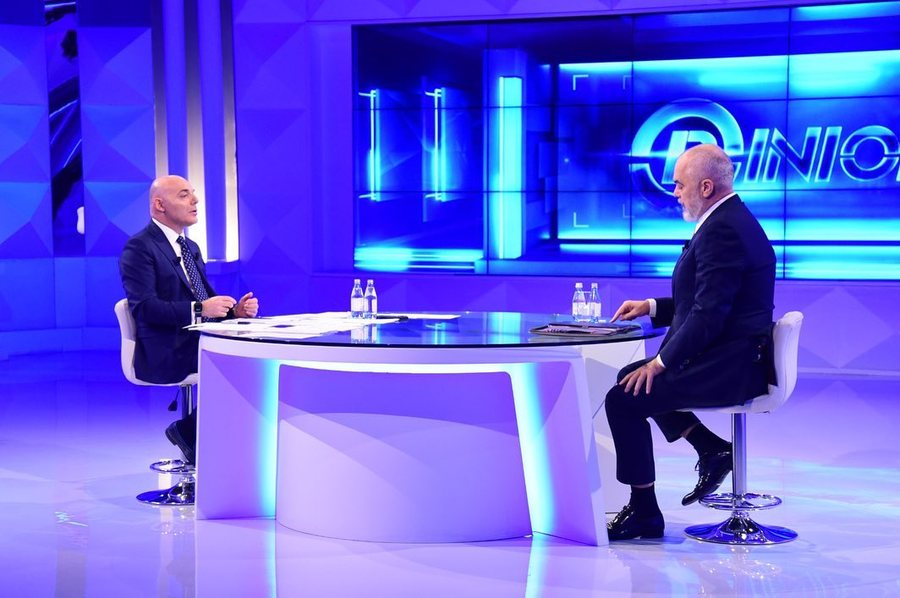
Election campaign coverage data, analyzed by BIRN, shows that the Socialist Party received more airtime on private national television and avoided debates with its main political rivals - feeding the public a diet of 'live' broadcasts and pre-prepared material.
At first glance, the audiovisual media coverage during the electoral campaign that was abandoned seems balanced. Data from the Audiovisual Media Authority show that during news editions on the country's 18 main television stations, the Alliance for a Greater Albania led by the Democratic Party received 51% of television time, while the Socialist Party of Prime Minister Edi Rama only 42.9%.
However, a closer analysis of AMA’s monitoring shows that on the three private national television stations – TV Klan, Top Channel and Vizion Plus, which control more than two-thirds of the television audience, the Socialist Party received 52% of the space in news editions, compared to 44.5% for the Alliance for a Greater Albania. Meanwhile, all other electoral candidates received less than 4%.
According to OSCE-ODIHR observers, “the restricted media environment and the failure to comply in good faith with legal provisions denied voters independent, diverse and solid information regarding the electoral race.”
“The concentration of media ownership, which undermines the plurality of news sources, together with self-censorship among journalists and the dominance of media coverage by the two largest parties, limited the ability of voters to make an informed choice,” the observers add in their preliminary report on the May 11 elections.
In a statement after the elections, local media freedom organizations also emphasized that political parties and candidates for parliament failed to respect the principles of transparency and democratic debate, while emphasizing that numerous violations of these principles were recorded during the campaign.
The Socialist Party won the May 11 elections convincingly, securing 83 MPs out of 140 parliamentary seats, but the OSCE-ODIHR-led international observer mission said the race was uneven, due to the ruling party's misuse of state resources and the lack of independent media.
Unbalanced campaign coverage
According to the Electoral Code, television stations are required to provide balanced, pluralistic and impartial coverage during the election campaign, respecting the standards of professional journalism and avoiding the use of hate speech.
The Code also stipulates that broadcasters must allocate equal airtime to the two largest parliamentary parties, and these parties must not receive more than twice the airtime of smaller political parties represented in the Assembly.
To control compliance with the Electoral Code, the legislator has mandated the Audiovisual Media Authority, AMA, to monitor the time reserved for each electoral subject during the campaign and to report the data to the Central Election Commission.
AMA data analyzed by BIRN show that the main media outlets in the country did not respect the provisions of the Electoral Code during the campaign.
The findings confirm that media access remained limited and unequal, with the two main electoral entities – the Socialist Party and the Alliance for a Greater Albania coalition – consistently dominating television screens.
Their visibility in the media was strengthened in all monitored formats, from live broadcasts to news editions and political shows, while smaller parties and other actors had difficulty securing free television time.
Unlike the private commercial media, the public broadcasters – RTSH1 and RTSH 24, were slightly more balanced during the campaign. The Alliance for a Greater Albania received 40.8% of the time in the news editions, the Socialist Party 42% and all other entities together 17.3% – marking the only media segment where small parties achieved double-digit percentage representation.
“The 2025 election period highlighted an unbalanced media landscape, with unevenly distributed coverage that largely favored the two largest parties,” a group of 14 civil society organizations, including BIRN, said in a post-election statement.
“Despite clear recommendations calling for transparency in election coverage, political parties continued the entrenched practice of distributing ready-made video and press materials to the media throughout the campaign,” they stressed.
Media duopoly
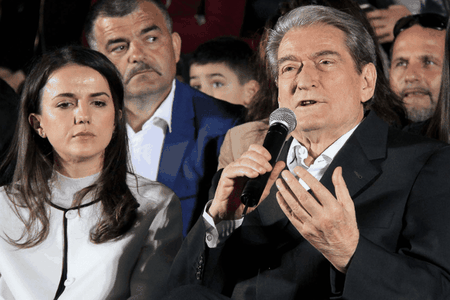
BIRN's monitoring results for the parliamentary election campaign reveal a deeply personalized media landscape in television news content, where the narrative and dynamics of the campaign are built almost entirely around two dominant political figures, Sali Berisha and Edi Rama.
Across the 18 monitored television stations, Sali Berisha received the highest percentage of screen time among the individuals covered, with 39.3% of the total. He was followed by Edi Rama with 38.4%. All other candidates and political representatives together were only featured in 22.3% of the total.
The polarization was even more pronounced in the coverage provided by the three main private national broadcasters - Top Channel, TV Klan and Vizion Plus, where Edi Rama dominated the news editions with 49.1% of the broadcasts, Sali Berisha received 38.1%, while all other actors together only 12.7%.
Transmetuesit publikë RTSH 1 dhe RTSH 24 ofruan një përfaqësim disi më të balancuar: Rama dhe Berisha morën përkatësisht 38.1% dhe 32.8% të mbulimit, ndërsa aktorët e tjerë zinin 29.1% – përqindja më e lartë e hapësirës së dhënë zërave alternativë në të gjitha kategoritë e mediave.
Monitorimi i transmetimeve ‘live’ në 12 televizione informative e përforcon dhe më tej kontrollin e hapërsirës mediatike nga Rama dhe Berisha. Nga mbi 43,260 minuta transmetim të drejtpërdrejtë të analizuar, Edi Rama u shfaq për më shumë se 15,700 minuta – ekuivalenti i mbi 260 orëve ‘live’, duke zënë 36.3% të totalit. Sali Berisha e ndoqi me 13,400 minuta ose 31.0% të totalit.
Rama dhe Berisha zunë dy të tretat e të gjithë minutazhit të drejtpërdrejtë të dedikuar aktorëve politikë në zgjedhje, duke reflektuar natyrën thellësisht të polarizuar të fushatës në media.
“Pavarësia, shumëllojshmëria dhe integriteti i lajmeve në dispozicion të zgjedhësve cenohen nga fakti që shumica e mediave varen nga financime jotransparente të interesave politike dhe interesave të biznesit, duke u mbështetur shpesh tek kontratat qeveritare,” shprehen vëzhguesit ndërkombëtar të OSBE-ODIHR.
“Përqendrimi i pronësisë së medias e cenon edhe më shumë pluralizmin e burimeve informative, në kundërshtim me standardet ndërkombëtare,” shtuan ata.
Mungesa e kulturës së debatit politik
Monitorimi i emisioneve politike të debatit gjatë 30 ditëve të fushatës shfaq një hapësirë më pluraliste për diskursin elektoral, krahasuar me edicionet informative dhe transmetimet “live”. Megjithatë, analiza e minutazhit në 18 televizionet kombëtare me shikueshmërinë më të lartë, nxjerr në pah përsëri dominimin e vazhdueshëm të subjekteve kryesore elektorale dhe liderëve të partive politike të mëdha.
Gjatë periudhës së monitoruar, Aleanca për Shqipërinë Madhështore ishte subjekti më i pranishëm në emisionet politike, me mbi 16,500 minuta, ose 49% të minutazhit total. Partia Socialiste u rendit e dyta me mbi 9,090 minuta, që përfaqëson 27% të minutazhit të përgjithshëm.
Sali Berisha kryesoi duke u shfaqur në mbi 2,940 minuta transmetime – afërsisht 49 orë, ose 8.7% e kohës totale të dedikuar për aktorët politikë individualë në emisionet politike. Edi Rama e ndoqi me 1,832 minuta – pak më shumë se 30 orë, ose 5.4%.
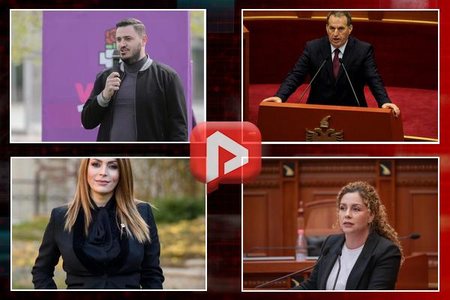
Përtej dy liderëve kryesorë, një gamë më e gjerë figurash politike u ftua gjatë emisioneve politike, përfshirë kryetari i Partisë Koalcioni Euro-Atlantik, Lulzim Basha dhe kandidatja për deputete e PD-së, Jorida Tabaku, të cilët morën secili pak më pak se 13 orë kohë fjale, duke zënë përkatësisht 2.3% dhe 2.2% të minutazhit total. Figura të tilla si Belind Këlliçi, Agron Shehaj, Dashamir Shehi, Endri Shabani dhe Adriatik Lapaj siguruan secili mes 7 dhe 10 orë transmetim, me përqindje që varionin nga 1.3% deri në 1.7%.
Despite the potential for political debate, the format of political shows often lacked direct confrontation between the main figures competing in the elections. Although this television space seemed pluralistic at first glance, it was rarely structured to offer balanced confrontation or critical approaches between competing electoral platforms.
“Although some debate programs were broadcast regularly, they did not feature well-known candidates or party leaders from different parties,” the OSCE-ODIHR report states. “The vast majority of media outlets are perceived as supportive of the ruling SP,” the report added.
Political advertising and violations of the Electoral Code
Unlike previous elections, political advertising did not play a central role during the electoral campaign in audiovisual media. Data from monitored television stations show that parties and candidates broadcast 1,713 minutes or 28 hours of political advertising during the campaign.
Within this volume, the Alliance for a Greater Albania took up the majority of paid advertising time, with 910 minutes (53.1% of total advertising). The Socialist Party followed with 756 minutes (44.1%), while unidentified political ads – spots broadcast without accurate labeling or attribution to a registered electoral entity, accounted for 44.8 minutes, or 2.6% of the total. All other entities combined were featured in only 1.6 minutes of paid advertising, reflecting an almost complete absence of small parties in this format.
The broadcast of unidentified or inaccurately labeled advertisements, although limited, raises concerns about compliance with transparency standards of political parties and the media during the campaign.
Beyond the lack of transparency of political advertising, one of the main violations of the Electoral Code in the media space is related to the lack of balancing of television time during news editions, a problem that extends to all national broadcasters.
Some television stations did not respect the allowed ceiling for political advertising, giving disproportionate time to specific political entities. In addition, 14 television stations broadcast political advertising beyond the allowed hours, in violation of the regulatory framework.
The monitoring also identified polls that were broadcast without complete data on the sampling, methodology and the entity that commissioned them. Meanwhile, some television stations broadcast political advertisements during news editions, a practice that is strictly prohibited by the Electoral Code. / BIRN


Lini një Përgjigje