


 Shkruar nga Frank Stier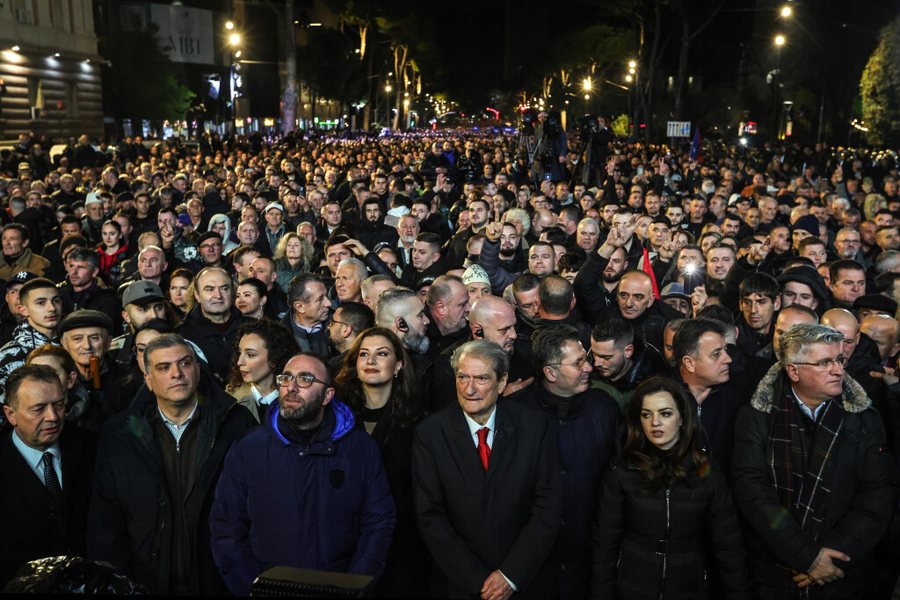
Most countries in the Western Balkans and the EU member states of Southeastern Europe continue to fall in the corruption index rankings. What does this mean for the accession prospects of the 6 Western Balkan states and why are protests growing…
In Transparency International's (TI) most well-known global corruption index, countries in the Balkans and Southeast Europe regularly perform worse.
Last year, most of them fell further in the rankings, with a few exceptions. Bosnia and Herzegovina improved by one place compared to the previous year.
Croatia, Montenegro and North Macedonia maintained the same results in the 2025 Index, while Albania, Bulgaria, Kosovo, Moldova, Romania, Slovenia, Serbia and Hungary have deteriorated.
Every spring, the non-governmental organization TI publishes its Corruption Perceptions Index. However, it is almost impossible for an NGO to provide irrefutable evidence of corruption. The TI ranking is a corruption perception index that ranks 182 countries according to the degree of perceived corruption in politics and administration.
The ranking is determined by surveying experts and businesspeople on their perception of corruption in their country's public institutions.
Along with Hungary, Bulgaria, which joined the eurozone a few weeks ago, ranks last among EU countries. Currently facing its eighth parliamentary elections in five years, Bulgaria has fallen eight places to 84th position compared to last year.
Its northern neighbor, Romania, in 70th place, and Croatia, in 63rd place, score better, while Slovenia is the best in its class among Southeast EU countries, in 41st place.
In 2007, when Bulgaria and Romania joined the EU, there were doubts about whether they were ready for this step.
In particular, widespread corruption and lack of respect for the rule of law caused concern.
The same question arises again regarding the EU membership candidates Albania, Bosnia and Herzegovina, Kosovo, Montenegro, North Macedonia and Serbia from the Southeastern European region.
TI gives only two of these candidates a better corruption rating than Bulgaria.
While North Macedonia also ranks 84th, Kosovo ranks 76th and Montenegro 65th. Albania, a candidate at the forefront of the EU accession process along with Montenegro, ranks 91st in the TI Corruption Perceptions Index, seven places behind Bulgaria, followed by Bosnia and Herzegovina in 109th and Serbia in 116th.
Recently, Serbs and especially Albanians have made it very clear how corrupt they perceive their countries' public institutions to be. Since early November 2024, the anti-corruption movement in Serbia, which is largely led by students, has held demonstrations and protests almost every day.
She holds corruption and state mismanagement directly responsible for the deaths of 16 people in the collapse of a train station canopy in Novi Sad. Meanwhile, they have forced the autocratic regime of President Aleksandar Vučić to agree to hold early parliamentary elections, although the date has not yet been set.
Serbia's Culture Minister, Nikola Selaković, is currently on trial. He is accused of forging documents to revoke the existing heritage protection status of the Yugoslav People's Army headquarters, which was bombed by NATO warplanes in 1999, in order to enable Trump's son-in-law, Jared Kushner, to build a high-rise project with a hotel, luxury apartments, offices and shops in its place.
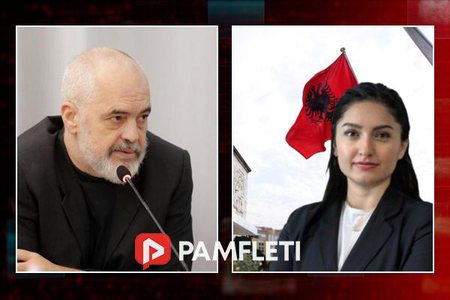
In Albania's capital, Tirana, there have been repeated, sometimes violent, protests for weeks against the government of Prime Minister Edi Rama, which is perceived as corrupt. Since the fall of 2025, the Special Prosecutor's Office for Corruption and Organized Crime (SPAK) has been investigating Deputy Prime Minister Belinda Balluku on suspicion of rigging tenders for government construction contracts.
After the Special Court for Corruption and Organized Crime (SCOC) suspended Balluku from her posts, Prime Minister Rama reinstated her to her ministerial position.
In response, protesters are demanding not only that Edi Rama's government resign, but also that Balluku's parliamentary immunity be lifted so that she can be held criminally accountable. /Adapted from Pamphlet /


Në Shqipëri nuk mund të falë populli thjeshtë pensionostë mësues ose intelektualë të vërtetë protestat bëhen nga patri të politike ndryshme me drejtues të korruptuar si puna Sali Berishës e Adriatik Llapaj ata që futet të dalin nuk dalin dot
Ky njeriu qe e ka thurrur kete "analize" mos eshte valle hidraulik, me bordero, per nga zanati? Te verteten - edhe ne varr nuk e lene rehat!?