


 Shkruar nga Pamfleti
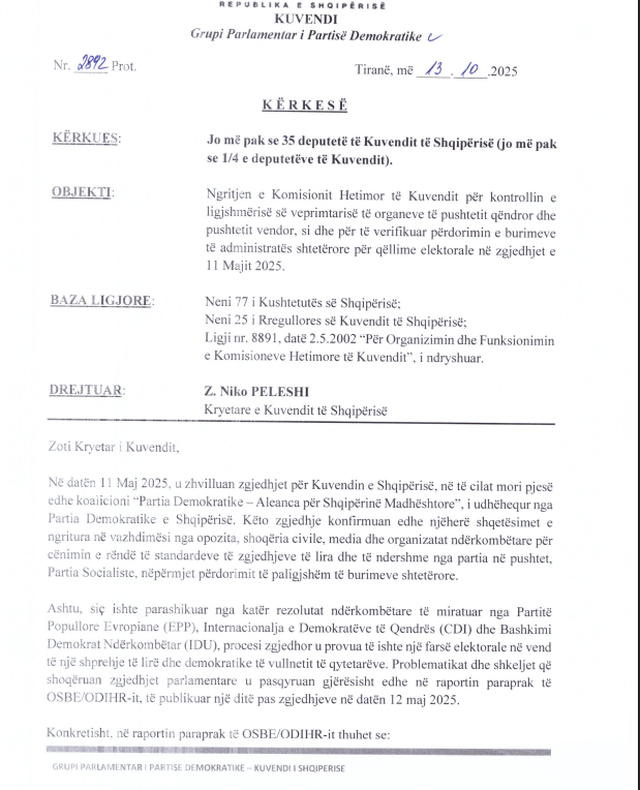
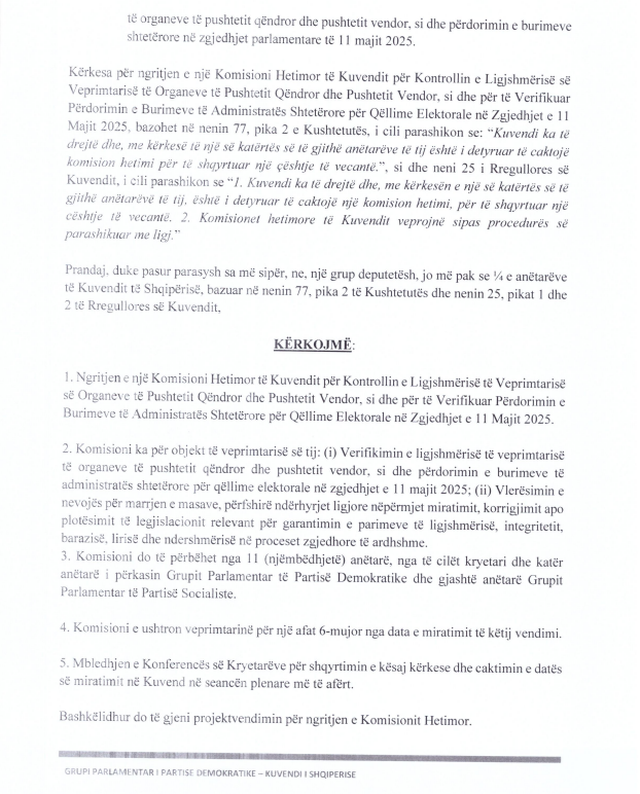
The Commission is proposed to have as its object of activity the verification of the legality of the activities of central and local government bodies, as well as the use of state administration resources for electoral purposes in the elections of May 11, 2025.
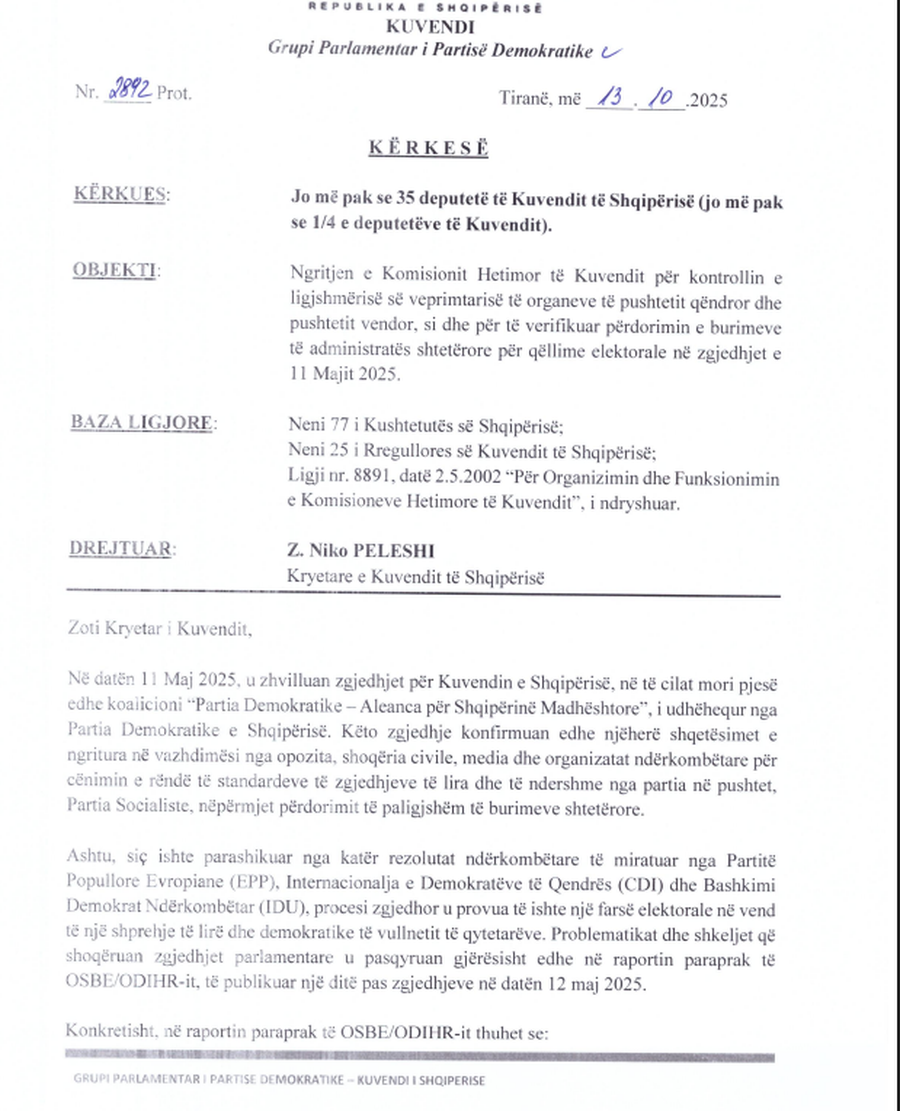
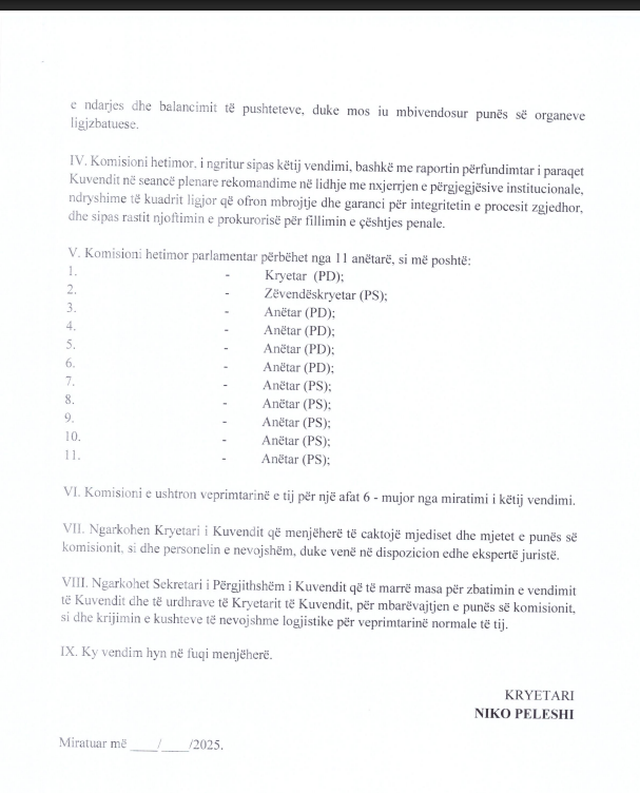
The Democratic Party does not give up on investigating the parliamentary elections of May 11. A request signed by 38 DP deputies calls for the establishment of an Investigative Commission composed of 11 members, where the Democrats will have the minority (5 members), while the Socialists will be represented with 6 members. According to the DP proposal, the Chairman of the Commission will be a representative of the opposition, while the Deputy Chairman will be from the majority.
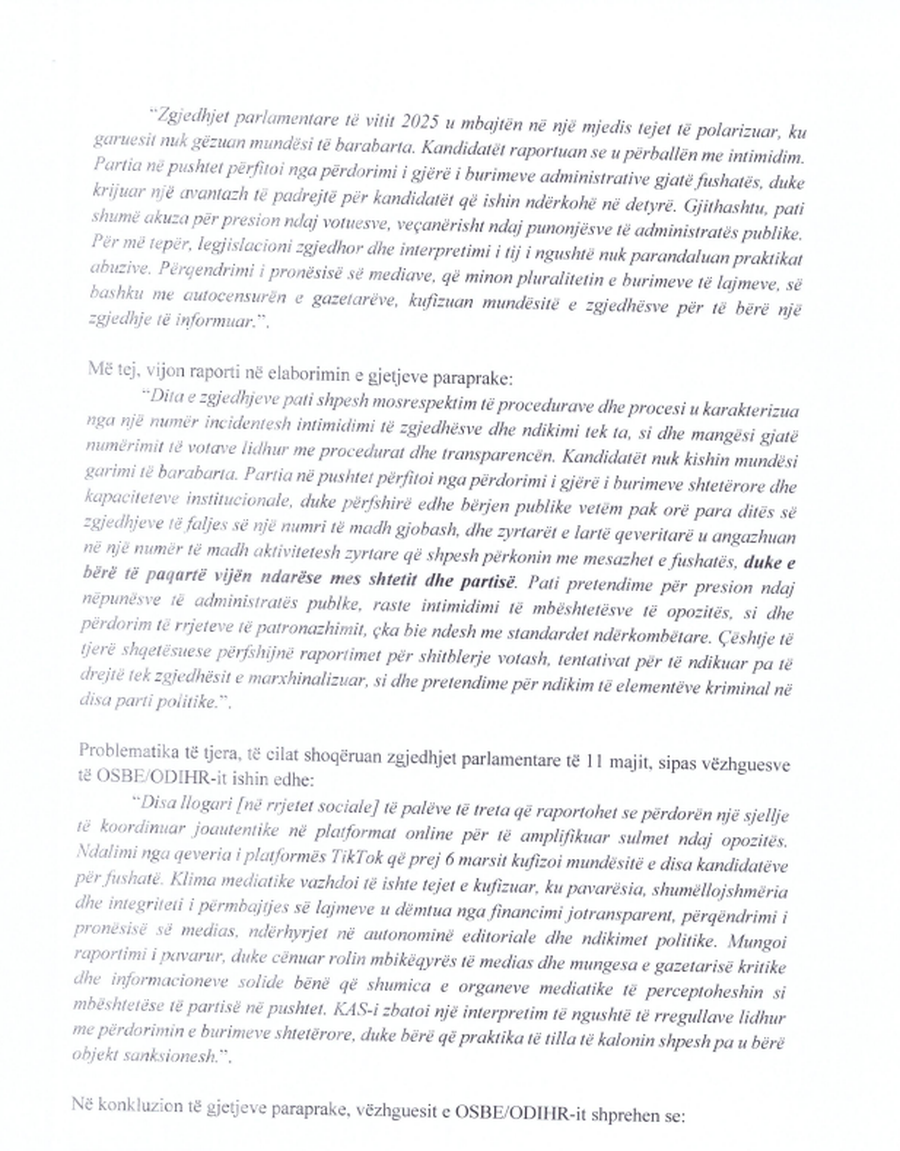
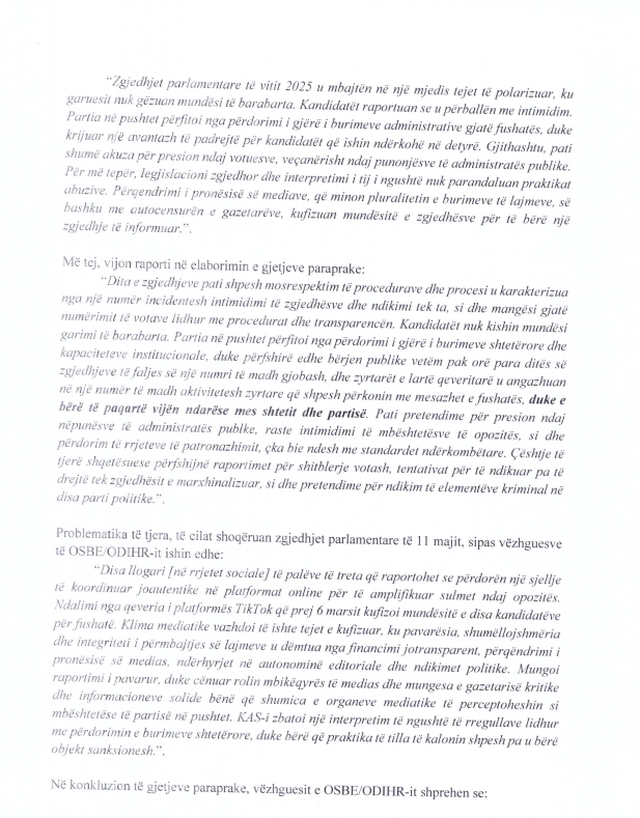
The request highlights that, as foreseen by the four international resolutions adopted by the European People's Parties (EPP), the Centre Democrats International (CDI) and the International Democratic Union (IDU), the electoral process proved to be an electoral farce instead of a free and democratic expression of the will of the citizens. The problems and violations that accompanied the parliamentary elections were also widely reflected in the OSCE/ODIHR preliminary report, published the day after the elections on 12 May 2025.
According to the DP Parliamentary Group, in these international documents, it is clear that the parliamentary elections of May 11, 2025, were severely compromised due to serious violations and problems, especially in terms of: i) vote buying; ii) voter intimidation; iii) the electoral state; iv) the criminal patronage system; v) manipulation of the Diaspora vote; and vi) the finalization of the electoral farce on voting day.
The request also states that, with the aim of obtaining a fourth term in office and preventing rotation at all costs, the government engaged in a systematic abuse of power and state resources to manipulate the electoral process, specifically in the following areas:
1) Misuse of public events;
2) Capture of state institutions;
3) Reactivation of the patronage system;
4) Direct vote buying;
5) Electoral manipulation through subsidies for farmers;
6) Mass cancellation of fines:
7) Approval of 138 licenses for cannabis cultivation across the country;
8) Illegal procurements;
9) Abuse of legalization and construction permits;
10) Illegal employment;
11) Involvement of criminal groups in the campaign;
12) Media Control;
13) The Network of "Patronageists" on Election Day;
14) Illegal election offices of the Socialist Party;
15) Vote Buying and Electoral Manipulation;
16) Confiscation of Identity Cards - Purchase of Voting Rights;
17) Misuse of Personal Data;
18) Widespread use of counterfeit staff and observer badges;
19) Violation of the Secrecy of the Vote;
20) Covert Ballot Manipulation ("Bulgarian Train");
21) The Disappearance of 350 Ballot Boxes and the Appearance of Doubtful Ballots;
22) Diaspora Vote Manipulation and Election Day Irregularities;
23) Failure of Biometric Identification Systems (BIS);
24) Institutional Cooperation and Appeals.
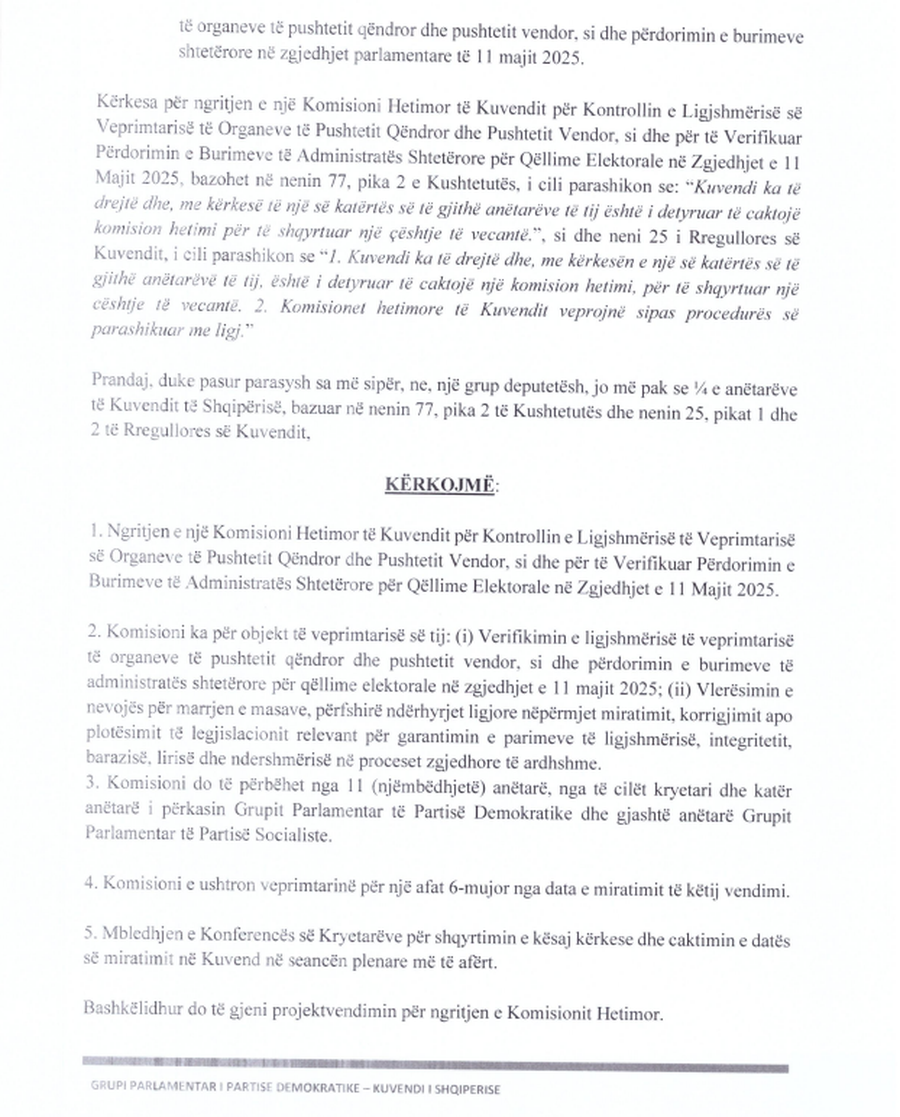
The Commission is proposed to have as its object of activity: (i) Verifying the legality of the activities of central and local government bodies, as well as the use of state administration resources for electoral purposes in the elections of May 11, 2025; (ii) Assessing the need to take measures, including legal interventions through the adoption, correction or supplementation of relevant legislation to guarantee the principles of legality, integrity, equality, freedom and honesty in future electoral processes.
The Commission is proposed to consist of 11 (eleven) members, of whom the chairman and four members belong to the Parliamentary Group of the Democratic Party and six members to the Parliamentary Group of the Socialist Party.
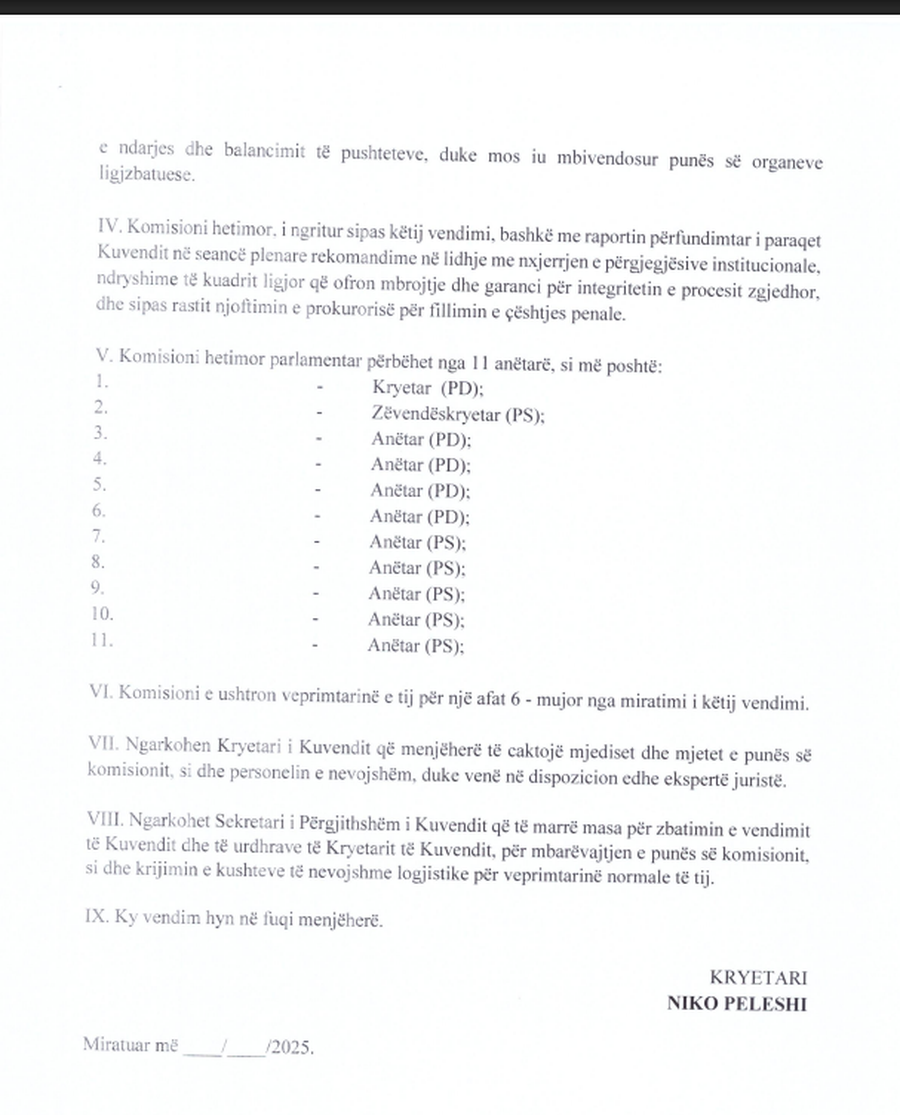
The DP's request states that according to the Constitution, when the Investigative Commission is requested to be established by at least 35 MPs, the Assembly is obliged to approve the establishment of the Commission.



Si nuk vdes ky mut.