


 Shkruar nga Pamfleti
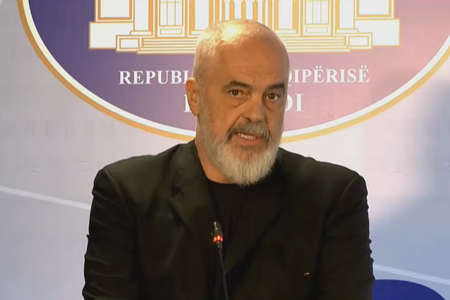
In a conference that was supposed to be purely ceremonial, tensions between the highest state institutions emerged. Prime Minister Edi Rama, present at the event for the 30th anniversary of cooperation between Albania and the Venice Commission, highly praised this body as a "guide and fellow traveler in the justice reform", emphasizing that without this Commission, the vetting would not have been carried out.
"The Venice Commission has been our compass in one of the most delicate processes in Albania's democratic history," Rama said, adding that "there was opposition from international circles to the vetting, but the Venice opinion turned everything in favor."
But while the Prime Minister boasts of international support, the head of the Constitutional Court, Holta Zaçaj, gave a clear institutional signal: Venice opinions cannot be used to overturn the final decisions of the Constitutional Court. She declared that “the consultative process cannot be a means to contest a decision given by the Constitutional Court. The Constitution is not political property, it is a contract with the citizen.”
Zacaj's statements constitute an open rejection of the government's attempts to use the authority of Venice as a political justification for its actions in the justice system. The most flagrant case is that of Olta Xhaçka.







Lini një Përgjigje