


 Shkruar nga Pamfleti
Growing allegations of police abuse in Kosovo are raising uncomfortable questions for the European Union, the main funder and supporter of the country's police force.
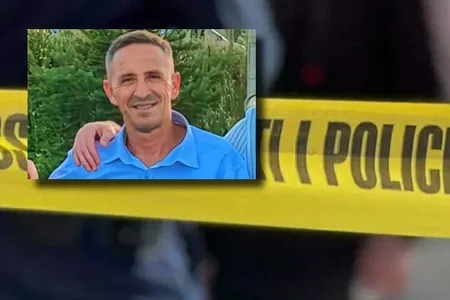
In recent weeks, more than 10 police officers have been suspended in connection with several cases, including the death of 27-year-old Agon Zejnullahu in Lipjan, near Pristina. Five officers now face charges of manslaughter.
The Kosovo Police Force consists of around 10,000 uniformed and civilian personnel. Of these, over 15% are women and around 10% belong to non-Albanian ethnic communities, while the rest are ethnic Albanians.
Over the past five years, the EU has invested €3 million in aid and €1.5 million in training for Kosovo police, along with broader support through its EULEX rule of law mission. Speaking to Euractiv, a senior EU official described police violence in Kosovo as “endemic.”
According to the Kosovo Police Inspectorate (KPI), the number of complaints has increased by more than 20% in three years, mainly from the ethnic Albanian majority in Pristina, where the police presence is strongest.
Decline in public trust
Public trust in Kosovo's police is declining, especially among the Serb population. A 2021 survey found that 77% of ethnic Albanians trusted the police, compared to just 14% of Serbs.
The turning point came in November 2022, when over 600 ethnic Serb officers resigned en masse.
The mass resignations left a huge security vacuum in the Serb-majority north. And rather than replace officers with new Serb recruits, which officials claim are blocked by current legislation, the government responded by deploying mostly Albanian officers to fill the void.
This action further escalated tensions. A 2024 study found that only 1% of Serbs supported the increased police presence, while 35% said it made them feel less safe and 57% were unsure about their sense of security. In contrast, 93% of ethnic Albanians supported the decision and 85% said it made them feel safer.
Those Serbian officers were never replaced, violating Kosovo's constitutional obligation to ensure ethnic representation in public institutions.
Despite EU pressure to find an alternative solution, officials claim that current legislation prevents the reemployment of those who have resigned.
To fill the gap, the government accelerated recruitment: police training was cut from six months to just three, making it the shortest compared to other Balkan countries. Most of the new recruits were ethnic Albanians with no knowledge of the Serbian language. Some even came from militarized units.
Civil society groups and international observers immediately sounded the alarm, especially when reports emerged of officers wearing ethnic or nationalist symbols while on duty, which is in violation of Kosovo's constitution.
In June 2023, the EU froze financial support and cut off high-level contacts, citing the blockade of the ASM and the use of excessive force in the north.
A system under pressure
Whether the Zejnullahu case results in convictions or not, the broader consequences of the hasty training are already apparent, said Mentor Vrajolli, director of the Kosovar Center for Security Studies. Now, the problems extend beyond the north of the country, he added.
Miodrag Miličević, director of the Serb community NGO Aktiv, said he was personally attacked by Kosovo police near the Serbian border in 2022. He criticized the lack of diversity at the PIK, which employs only three ethnic Serbs and two Bosniaks out of a staff of 82. His case is still under reinvestigation.
Kosovo Police acknowledged the shortcomings and told Euractiv in an email that basic training will now be extended to six months in the classroom and a year in the field.
But problems remain. In 2023, the US donated over 500 body cameras in an effort to curb abuse. However, PIK reports show that only 10% of border and traffic officers who received the cameras actually used them. Body cameras were introduced to specialized patrols when allegations of targeted harassment against ethnic Serb women in the north emerged.
The police blamed privacy rules, claiming that the High Court and the Data Protection Agency had restricted the use of the cameras. Both institutions denied this, stating that they had never been consulted beyond the context of border law enforcement.
What about the EU?
The European External Action Service (EEAS), the EU's diplomatic service, did not respond to repeated requests regarding the impact of measures imposed against Kosovo on support for the police.
However, Kosovo's ongoing police actions continue to exacerbate tensions between the EU and Kosovo, which are affecting immediate and future support. These tensions have also raised questions about whether Kosovo's bid for EU membership will ever be taken seriously.
Although Kosovo officially applied to join the EU in 2022, recent events have prompted some officials in Brussels to question Kosovo's willingness to uphold the rule of law and protect minority rights - two essential accession criteria. / Adapted from EurActiv /



Lini një Përgjigje