


 Shkruar nga Pamfleti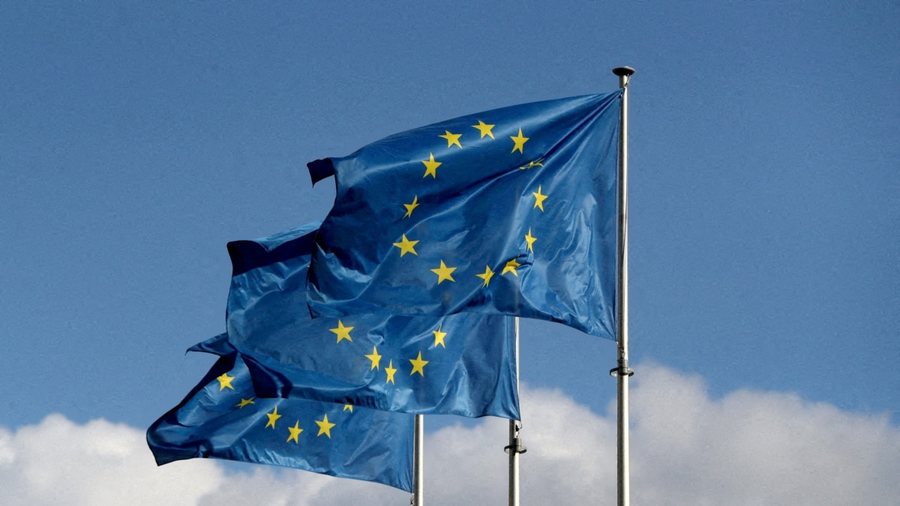
The European Union is expected to ask Kosovo and Serbia to implement the agreement on the normalization of relations reached earlier this year in Brussels and Ohrid, while it aims to transform it into part of Serbia's negotiating framework for membership in the bloc and the steps of Kosovo towards integration.
The ministers for European affairs of the countries of the European Union are discussing the bloc's expansion package on Tuesday, and in this context, the approval of the conclusions is expected, which will be discussed later in the week at the high-level meeting of the member countries.
In the section on Kosovo in the document that VOA has seen and which is the last version that was submitted to the ministers before today's meeting, the central place is occupied by the security situation in its northern municipalities inhabited by a majority of Serbs and the talks with Serbia.
"The Council is deeply concerned about the situation in the north of Kosovo, including security. Some unilateral actions by Kosovo and Serbia, as well as the collective resignation of Kosovo Serbs from Kosovo's institutions and the boycott of April's local elections in the north have further increased tensions. The Council strongly condemns the violent acts of Kosovo Serb protesters against citizens, KFOR troops, law enforcement and the media on May 29, 2023", it is stated, among other things, in the draft conclusions in which it is emphasized that the new local elections in the north of Kosovo should be held as soon as possible and Kosovo Serbs should participate without preconditions. It is also said there, Kosovo Serbs should return to the institutions that abandoned them and this return should be facilitated by Kosovo and encouraged by Serbia.
The European Union imposed punitive measures against Kosovo after the tensions of May, seeking steps to reduce tensions. In the draft conclusions, it is stated that the bloc is ready to remove the punitive measures if "in case of further progress in fulfilling the requirements" for extension, evaluating some of the steps taken by the Kosovo government which reduced the presence of police forces in northern municipalities and approved the legal basis for organizing new elections.
The document states that "The Council reiterates that there is no justification for the violence and strongly condemns the violent attack against the Kosovo Police on September 24, 2023". It is further stated that Kosovo and Serbia should make sustained efforts to reduce tensions, refrain from unilateral and provocative actions that could lead to tensions and violence and stop inflammatory rhetoric, while warning that "the failure of the parties to reduce tensions will have consequences".
"The Council expects that Kosovo and Serbia will find a stable solution for the situation in the north of Kosovo that guarantees security and participatory democracy for all citizens", says the document, which expresses regret that the parties have not implemented the commitments made in the agreement reached in February and March in Brussels and Ohrid.
"The Council asks Kosovo and Serbia to fully and without delay implement them. This also includes the establishment of the Association of municipalities with a Serbian majority. The Council welcomes the readiness of Kosovo and Serbia to accept the draft statute (of the Association) presented by the EU facilitator, which means that the further work should be done on its basis", the text of the conclusions states.
In the part about Serbia, the call is included that the European Commission and the Head of Foreign Policy as soon as possible, no later than January 2024, propose changing the criteria of Serbia's negotiating framework for membership in the bloc to include the obligation of for the implementation of the Agreement for the normalization of relations with Kosovo
The Serbian President, Aleksandar Vučić, has repeated several times in recent days that there is a possibility that the Ohrid Agreement will become part of the membership negotiations.
The agreement for which the parties agreed on February 27 in Brussels and March 18 in Ohrid, requires good neighborly relations between Kosovo and Serbia, recognition of documents and symbols and respect for each other's sovereignty and territorial integrity. It requires that the parties do not hinder each other in the integration processes, but it does not require mutual recognition. The plan also envisages the fulfillment of all agreements previously reached in talks mediated by the European Union.
But Serbian President Vucic reiterated that for Serbia it is unacceptable for Kosovo to "join the United Nations".
All six Western Balkan countries aspire to European integration. On Wednesday, the leaders of these countries are expected to meet in Brussels with the leaders of the European Union to discuss the path and conditions towards European integration.
In the draft conclusions of the Council, the countries that have harmonized their foreign policy with the European Union are congratulated, while expectations are revealed that "Serbia will increase its efforts towards full alignment with the positions of the Common Foreign and Security Policy of the EU and the restrictive measures , including Russia and Belarus, as a matter of priority".
Serbia has refused to join the sanctions against Moscow due to its aggression in Ukraine, primarily because of the Kremlin's support for Serbian claims to Kosovo, whose independence Belgrade continues to oppose./ VOA




Lini një Përgjigje