


 Shkruar nga Alon Ben-Meir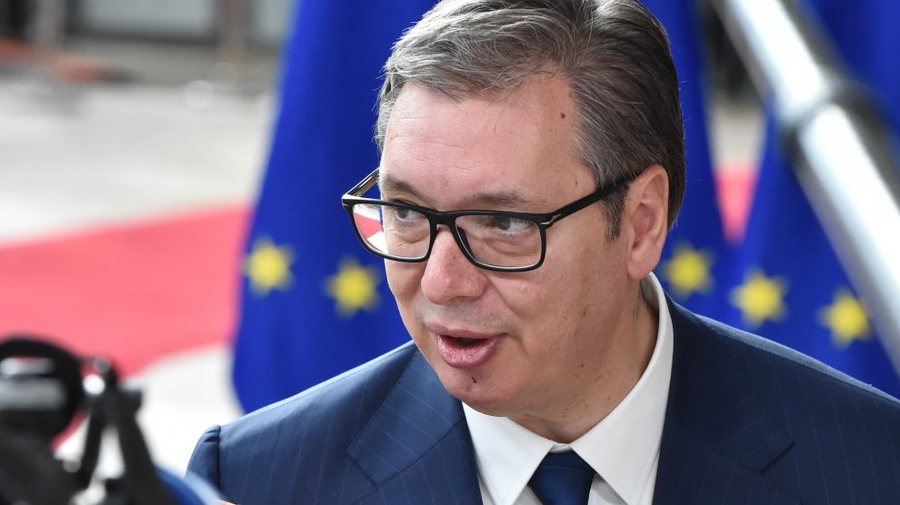
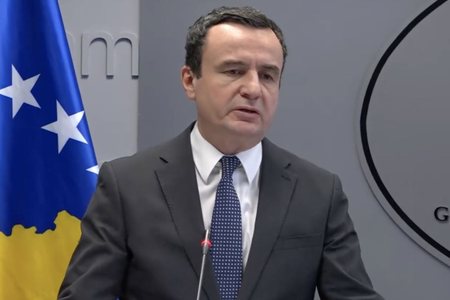
The Prime Minister of Kosovo, Albin Kurti, who must maintain public calm, should not talk so easily about a possible war against Serbia. Because such rhetoric only increases the internal tension in Kosovo, when there is no reason to assume that war will break out again.
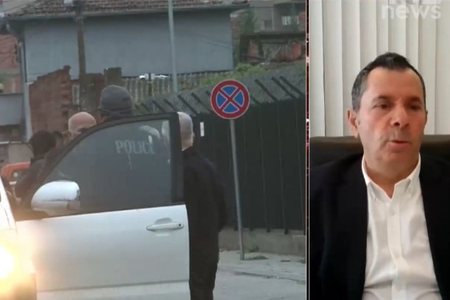
A few months ago, during an interview for "Al Jazeera" television, the prime minister of Kosovo claimed that the attack on the Kosovo police by armed Serbs in the north of the country on September 24, 2023 was planned by Serbian President Aleksandar Vucic in an attempt to " destabilized" Kosovo with the hope of restarting the war.
Such a statement does not serve the public interest, and does not produce political or strategic benefits for it. Not only that, but Serbian President Aleksandar Vucic has nothing to gain by starting a new war against Kosovo.
If this were to happen, he would only be humiliated by NATO, which is committed to the security of the state of Kosovo. A highly developed Information Technology (ICT) sector is helping Kosovo maintain stable levels of economic growth.
While Vucic continues to maintain very close relations with Vladimir Putin, he highly values Serbia's relations with the US, and would not take such a reckless action. As he stated only recently: "For us, it is of great importance that the peace in the region is not disturbed and that Serbia will continue to behave responsibly and contribute to stability in the Balkans".
He added that Serbia and the USA will work to maintain bilateral relations. Moreover, Vucic knows that ultimately, Serbia's alliance with the US and the European Union, rather than with Russia, will best serve Belgrade's long-term national interests.
A truly responsible Serbia?
Aleksandar Vucic wants to project power and sensible leadership to strengthen his positions domestically, while showing the West that he is a responsible leader who will always strive to maintain regional stability.
He recently said that "for us it is of great importance that peace in the region is not broken and that Serbia will continue to act responsibly and contribute to stability in the Balkans". But on the other hand, he promised to continue buying weapons from China and other countries, including anti-aircraft systems, fighter jets and drones.
Meanwhile, he quite likes to show his muscles, as he has several times moved a small part of Serbian troops to the border with Kosovo, movements that have been described as hostile by the troops of the NATO mission in the country.
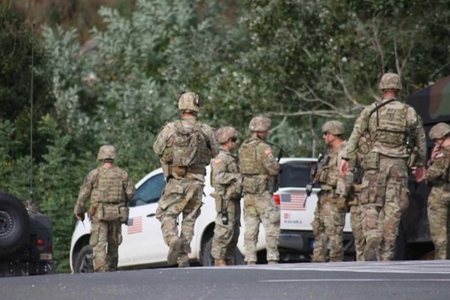
There is no need to take Vucic's words for granted. A closer look at the overall political and military environment of the Balkans suggests that no country in the region wants to escalate the tension, which could accidentally escalate into a violent conflict. NATO's decision in early October 2023 to send an additional 200 British and 130 Romanian soldiers to reinforce its peacekeeping mission in Kosovo is not of such importance that it aims to deter Belgrade in the event of aggression.
Vucic fully understands the great dangers that threaten him and the country he leads if he strays from the line drawn by the West. The purpose of the increase of NATO forces in Kosovo, which is accompanied by the purchase of drones and anti-tank missiles, mainly from Turkey, is to keep tensions in the Western Balkans under control, as stated by the Secretary General of NATO, Jens Stoltenberg.
In this context, the US decision to sell Kosovo 240 Javelin portable missile systems, which can destroy tanks and other armored vehicles, aims to send a message to the President of Russia, Vladimir Putin, that The US is fully engaged and committed to improving the security of its European partners, which is vital to political and economic stability in Europe.
And yet, when the average Kosovar combines Albin Kurti's warning of a possible war with Serbia, the deployment of more NATO peacekeeping forces, and the sale of Javelin missiles by the US, he may conclude that they are really signs of an imminent war with Serbia.
In fact, the last thing Aleksandar Vucic wants is a war against Kosovo, which would immediately involve NATO. It would be a war, which Serbia would not only lose heavily, but at the same time it would irreversibly damage Serbia's prospects for joining the EU. So this is a scenario that Vucic wants to avoid at all costs.
It's time for Kurt to be very discreet
Although Prime Minister Albin Kurti is obliged to guarantee Kosovo's national security, he must see it in the context of NATO's overall commitment to the stability of the Balkans, and how other conflicts may affect this stability.
Although unrest in the Middle East is unlikely to spread to the Balkans, the United States is rightly demonstrating, by word and deed, that it takes security and developments in the Balkan region very seriously, and that it will act immediately to prevent any miscalculation by a potential enemy, and especially by Russia.
The sale of "Javelin" missiles by the US to increase the armed forces of Kosovo will not be the last shipment of military equipment. Other supplies of military equipment will follow, as the Kosovo Security Forces aim to transition to a professional military force by 2028, aiming to meet NATO standards.
For this reason, Kurti will do well to take with reservations what the Serbian president says or does. Aleksandar Vucic is not interested in a violent conflict with Kosovo, as he is acutely aware that in this scenario his losses would outweigh any gains.
Therefore, Kurti's public declaration that Serbia is planning to start a new war against Kosovo does nothing but cause unnecessary public tension and stress, destabilizes the economy and creates a rush among the population to accumulate as many goods as possible. they don't break.
Such actions often fuel inflation, create financial worries and social tensions. In the event that Albin Kurti's warning about a possible war against Serbia was not done deliberately to strengthen his political position and rally the citizens around him in an election year, which I do not believe is the case, he should know now that Vucic really speaks loudly, but in his hand he holds a small stick./ Adapted Pamphlet from "Emerging Europe"
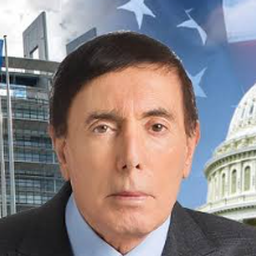
Note : Dr Alon Ben-Meir, retired professor of international relations at the Center for Global Affairs at New York University, USA.




Lini një Përgjigje